Medea
Charles Antoine Coypel|Charles Le Brun
ca. 1715 · Pastel · Drawings and Prints
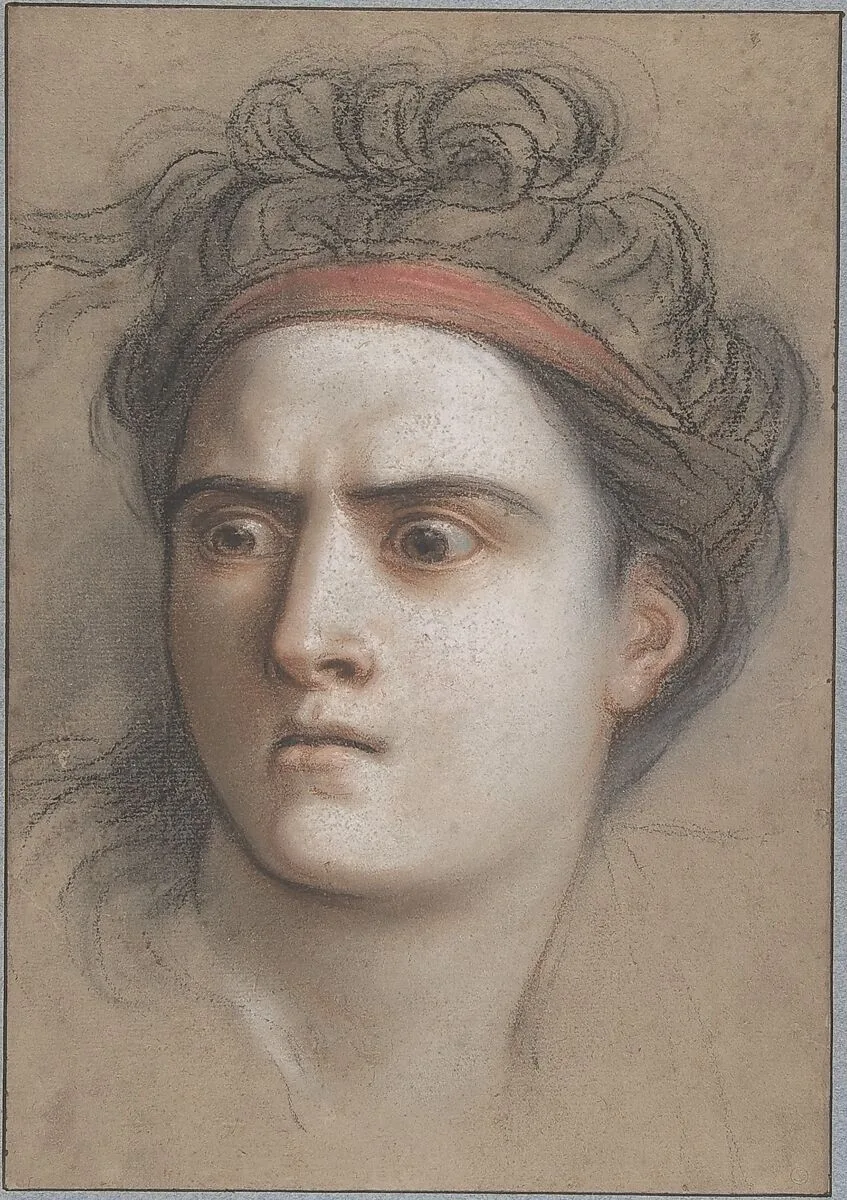
An accomplished pastellist, Charles-Antoine Coypel used the medium not just for finished works, but frequently as a preparatory step in developing his painted compositions. The Metropolitan’s pastel is a study for Coypel’s earliest surviving canvas, Jason and Medea (Charlottenburg Palace, Berlin), which was submitted to the Académie royale as the artist’s reception piece in 1715. Not surprisingly, for an artist who would pursue simultaneously a career as a playwright, Coypel’s conception of the subject was unabashedly theatrical. Set against a curved architectural backdrop, the scene depicts the climax of the story: Medea, having committed her vengeful acts, escapes the wrath of Jason; she is airborne, gripping the reins of her dragon chariot in her left hand while brandishing a dagger in her right. Starkly lit against dark clouds, she is a fearsome sight, every muscle of her face clenched in fury. Before its re-attribution in 2001, the pastel was long considered to be a work by the seventeenth-century painter, Charles Le Brun, whose treatise on facial expression and emotion influenced history painters for well over a century. Coypel, who had a strong interest in theater, was especially drawn to the legibility and dramatic power of Le Brun’s models.
- Artist
- Charles Antoine Coypel|Charles Le Brun
- Date
- ca. 1715
- Medium
- Pastel
- Department
- Drawings and Prints
- Credit line
- Harris Brisbane Dick Fund, 1953