Self-Portrait, from "The Iconography"
Anthony van Dyck|Anthony van Dyck
ca. 1640 · Etching; first state of seven · Drawings and Prints
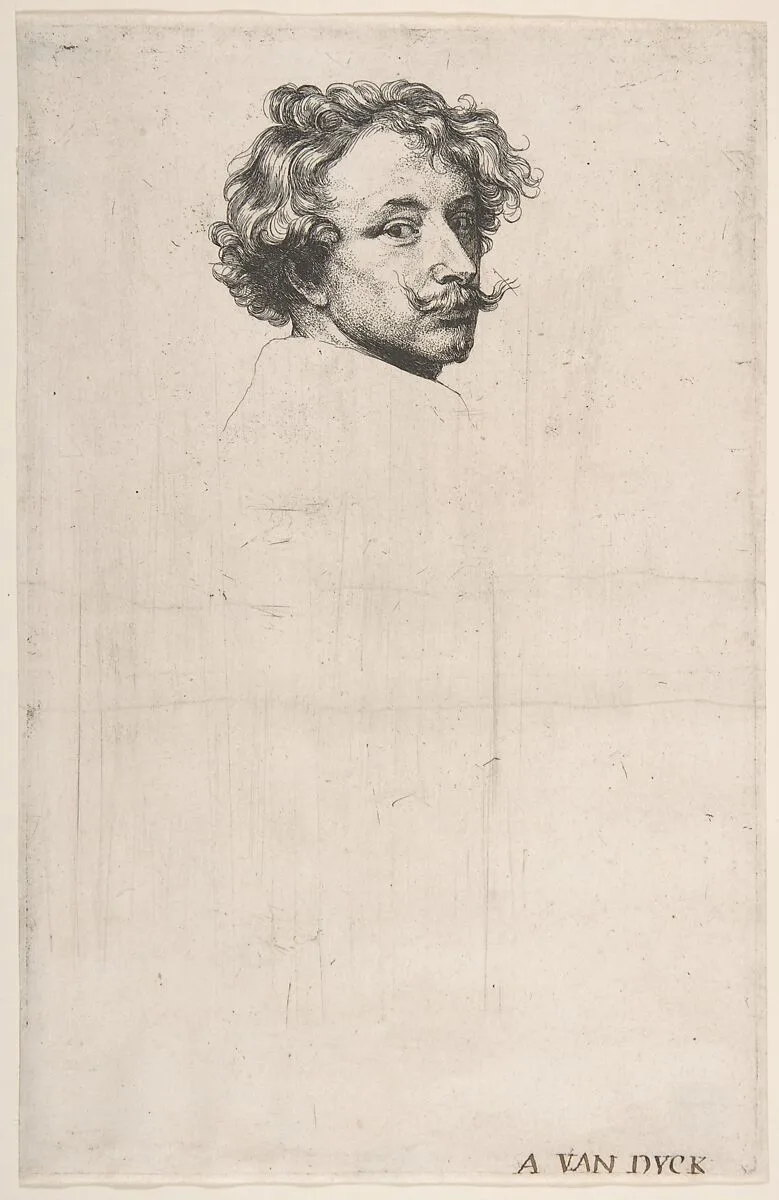
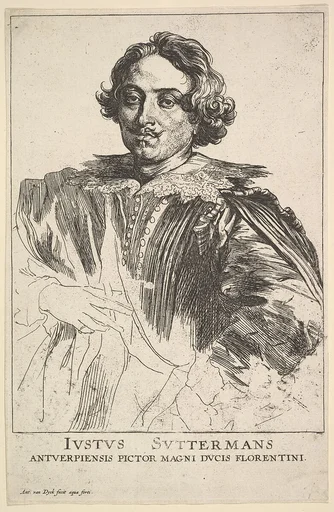
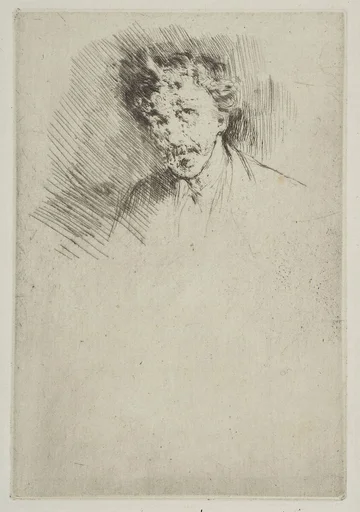
In this lively "Self-Portrait" of about 1640, Anthony van Dyck masterfully etched his rakishly turning head with the spontaneity and fluidity found in his drawings and merely suggested the rest of his body through the sketchy but deftly placed lines indicating his neck and collar. Together with the other prints in his "Iconography"—a portrait series depicting approximately one hundred famous nobles, scholars, and especially artists—Van Dyck's "Self-Portrait" enlivened this established genre with its fresh and original depiction of the sitter. The plates to the "Iconography," of which fifteen were executed by Van Dyck and the remainder by nine hired printmakers, underwent modification and reprinting many times over the centuries; fortunately, early states of those etched by Van Dyck himself survive, such as this first state of the "Self-Portrait." Evident in later editions of the "Iconography," the engraver Jacques Neeffs completed the composition with a sculptural bust and pedestal—whether or not this was Van Dyck's intention remains unknown.
- Artist
- Anthony van Dyck|Anthony van Dyck
- Date
- ca. 1640
- Medium
- Etching; first state of seven
- Department
- Drawings and Prints
- Credit line
- Bequest of Mary Stillman Harkness, 1950