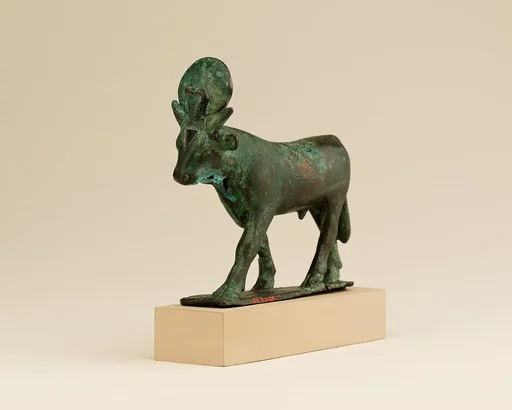
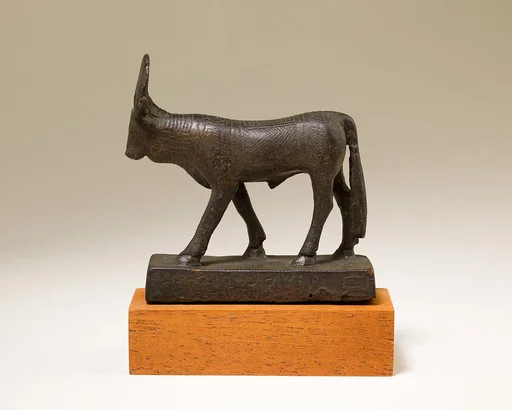
Figure of a Sacred (likely Apis) Bull
Unknown
664–30 B.C. · Cupreous metal · Egyptian Art
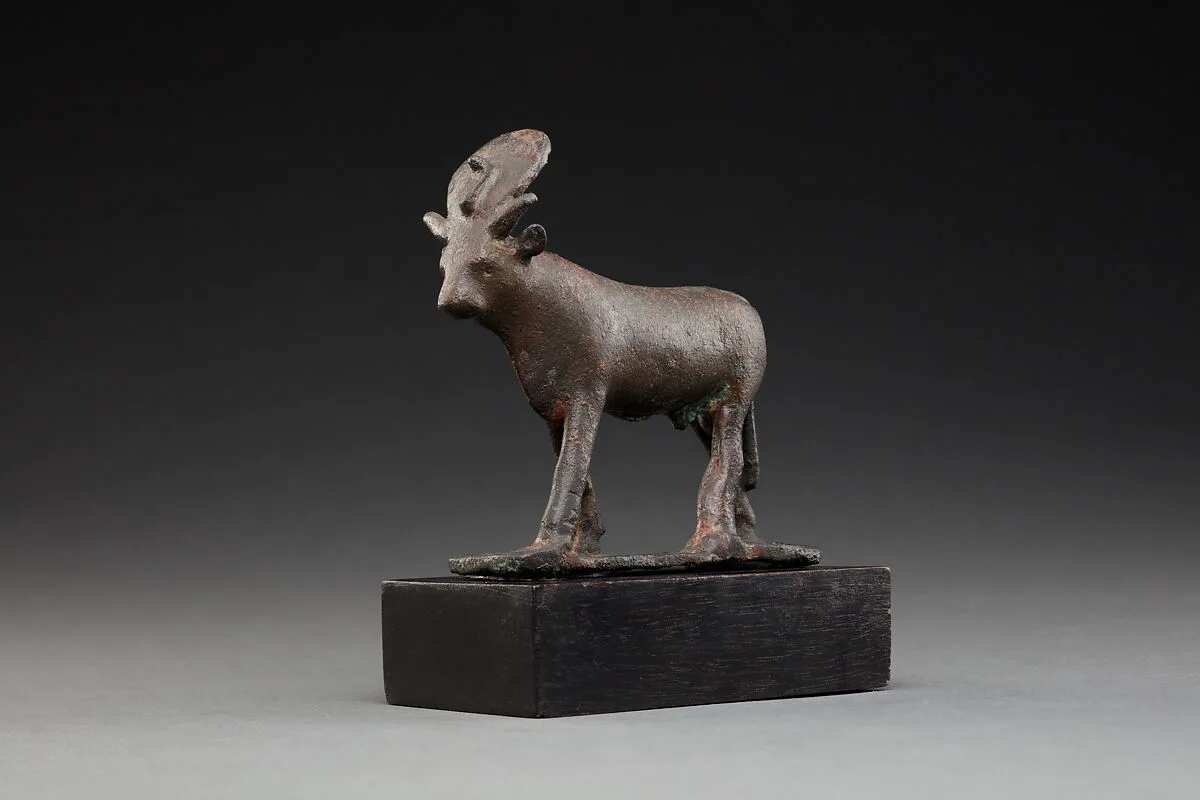
Although uninscribed, the sun disk and horns identify this figure as the image of a sacred bull, most likely the Apis. Such figures come in a variety of sizes and qualities, and can be decorated with trappings such as engraved blankets or amulets. Inscribed examples show that they were often dedicated to the god by specific people wishing to share in the cult. This example might represent an offering from a less wealthy patron. The worship of the Apis, considered the earthly incarnation of the god Ptah and also seen as a deity in its own right, is attested as early as Dynasty 1. The single living representative, chosen according to specific markings such as a white triangle on the forehead and black patches resembling winged birds or scarabs on the body, was stabled near the temple of Ptah at Memphis, and, starting at least in the reign of Amenhotep III (ca. 1350 B.C.) buried in a vast catacomb known as the Serapeum at the Memphite necropolis of Saqqara.
- Artist
- Unknown
- Date
- 664–30 B.C.
- Medium
- Cupreous metal
- Department
- Egyptian Art
- Credit line
- Bequest of Nanette B. Kelekian, 2020