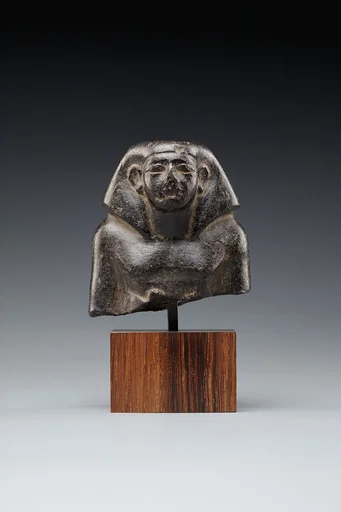
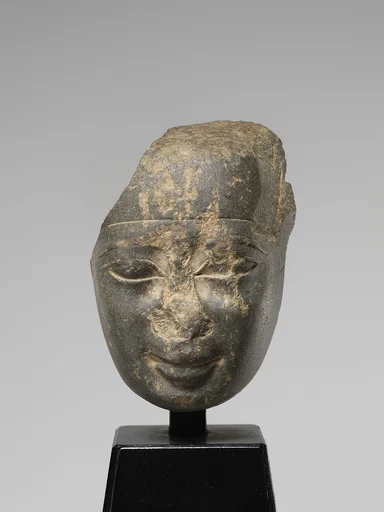
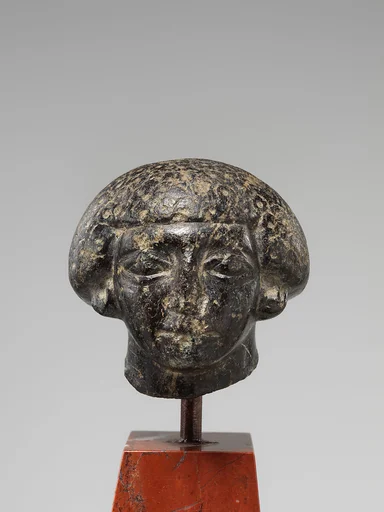
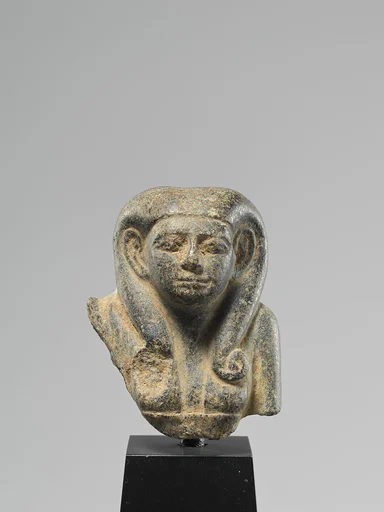
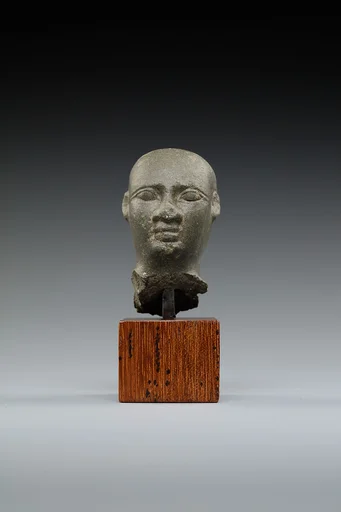
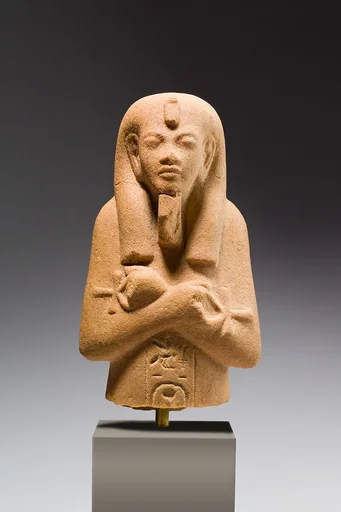
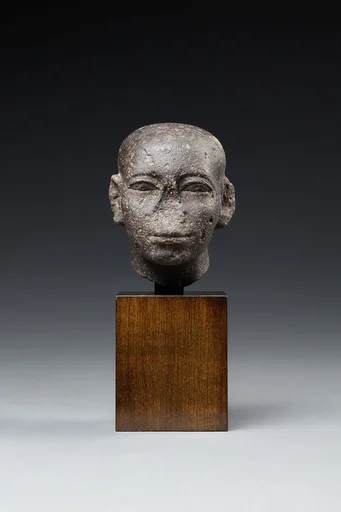
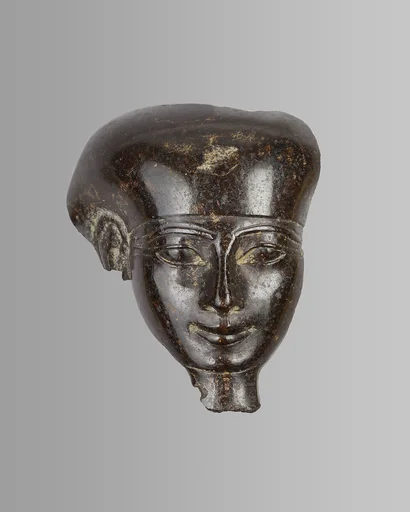
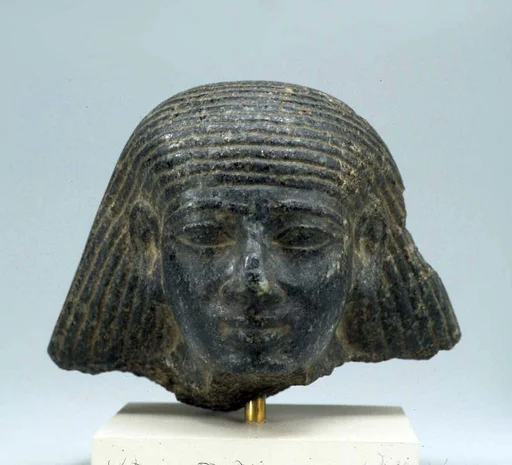
Head and chest of a shabti figure
Unknown
ca. 1850–1650 B.C. · Steatite or serpentinite · Egyptian Art
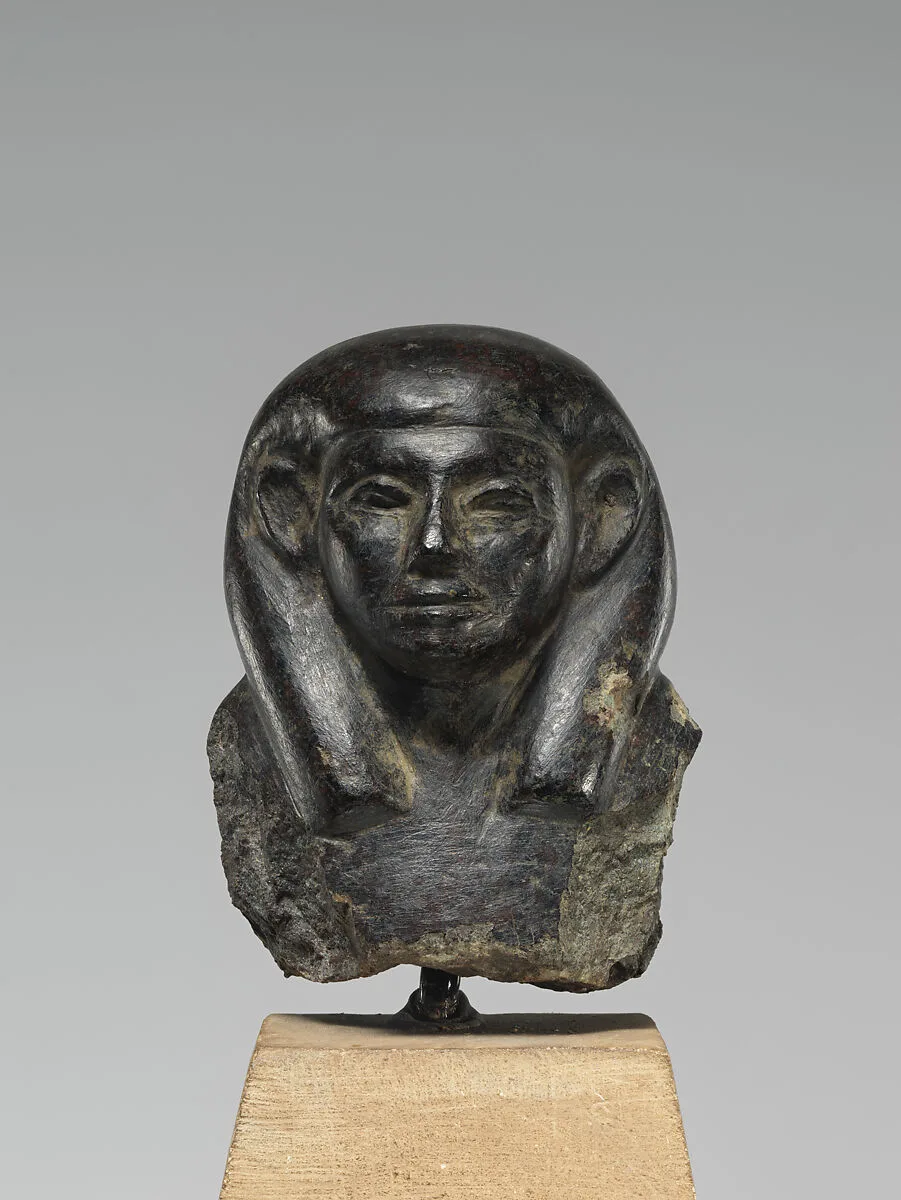
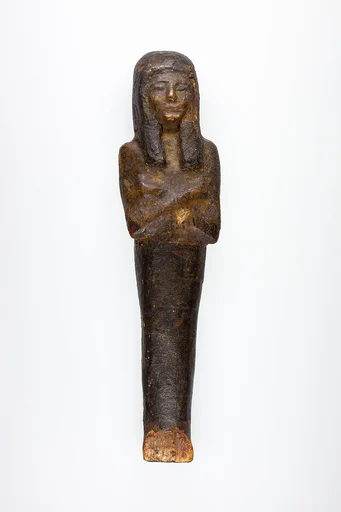
Carved in stone, this shabti dates from the Middle Kingdom, toward the end of the period when such objects first appear. Found most often in tombs as part of the burial equipment, these figures were meant to serve as substitutes for the deceased. Typically represented as a wrapped mummy, shabtis can be uninscribed, or can be carved or painted with the name and titles of the owner, in some cases with a prayer asking for offerings. Later examples can bear a spell (usually from Chapter 6 of the Book of the Dead) promising that the figure will perform labor in the afterlife, and many are equipped with agricultural tools. For a complete, excavated example of a stone funerary figure of this era, see the granodiorite shabti of Nebankh, 08.200.17.
- Artist
- Unknown
- Date
- ca. 1850–1650 B.C.
- Medium
- Steatite or serpentinite
- Department
- Egyptian Art
- Credit line
- Bequest of Nanette B. Kelekian, 2020