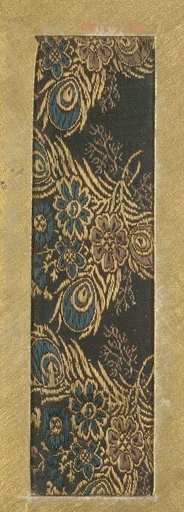
Fragment of textile with horses
Unknown
ca. 5th–7th century CE · Silk textile · Ancient Near Eastern Art

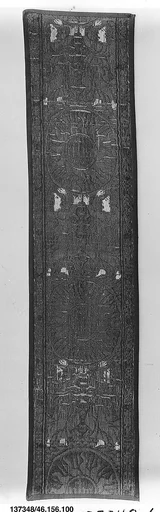
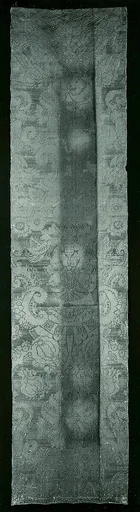
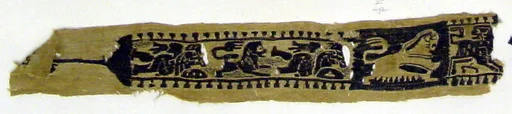
This vertical strip of silk-weave fabric has a repeating pattern of winged horses in pearl roundels. The horses alternate facing left and right, with outstretched wings and knotted tails. Each wears a pearl band with fluttering ribbons around the neck, a ball-and-crescent headdress supported by a shaft, and ankle fillets. The roundels’ pearl border is interrupted at the top, bottom, and sides by concentric squares. In the background, stylized blossoming trees are flanked by floral elements enclosed in a motif with a rounded top. This textile motif is typically Sasanian and similar patterns appear on the rock reliefs of Taq-i Bustan, Iran. Winged horses are also featured on Sasanian metalwork and stamp seals, and the ball-and-crescent headdress is comparable to royal crowns depicted on Sasanian coins. Sasanian textiles were exported throughout the ancient world and their manufacture and iconography reflect the artistic transformations and adaptations that occurred along the Silk Road. Their major centers of production, however, remain unknown.
- Artist
- Unknown
- Date
- ca. 5th–7th century CE
- Medium
- Silk textile
- Culture
- Sasanian
- Department
- Ancient Near Eastern Art
- Credit line
- Purchase, Friends of Inanna Gifts and Rogers Fund, 2004