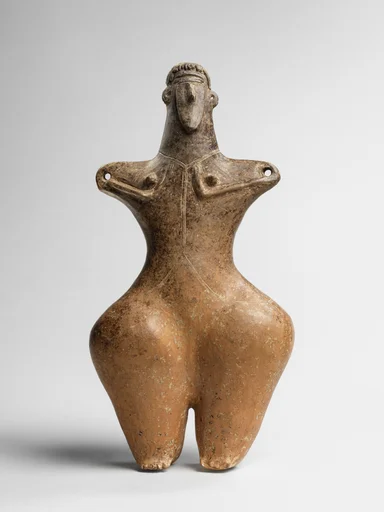
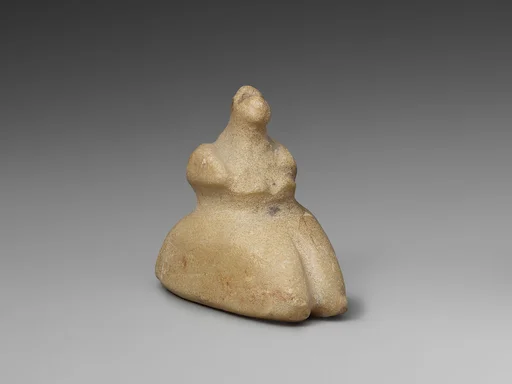
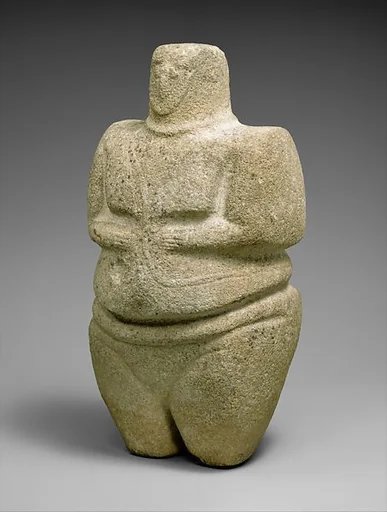
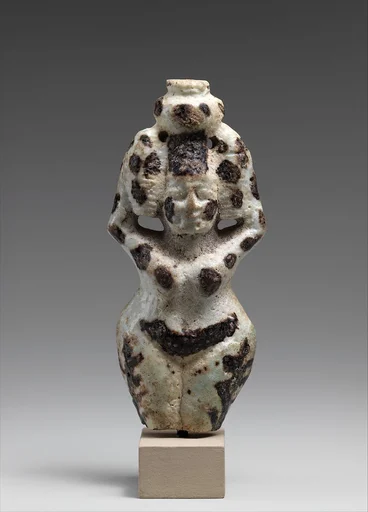
Seated female
Unknown
ca. late 3rd–early 2nd millennium BCE · Steatite or chlorite, alabaster · Ancient Near Eastern Art
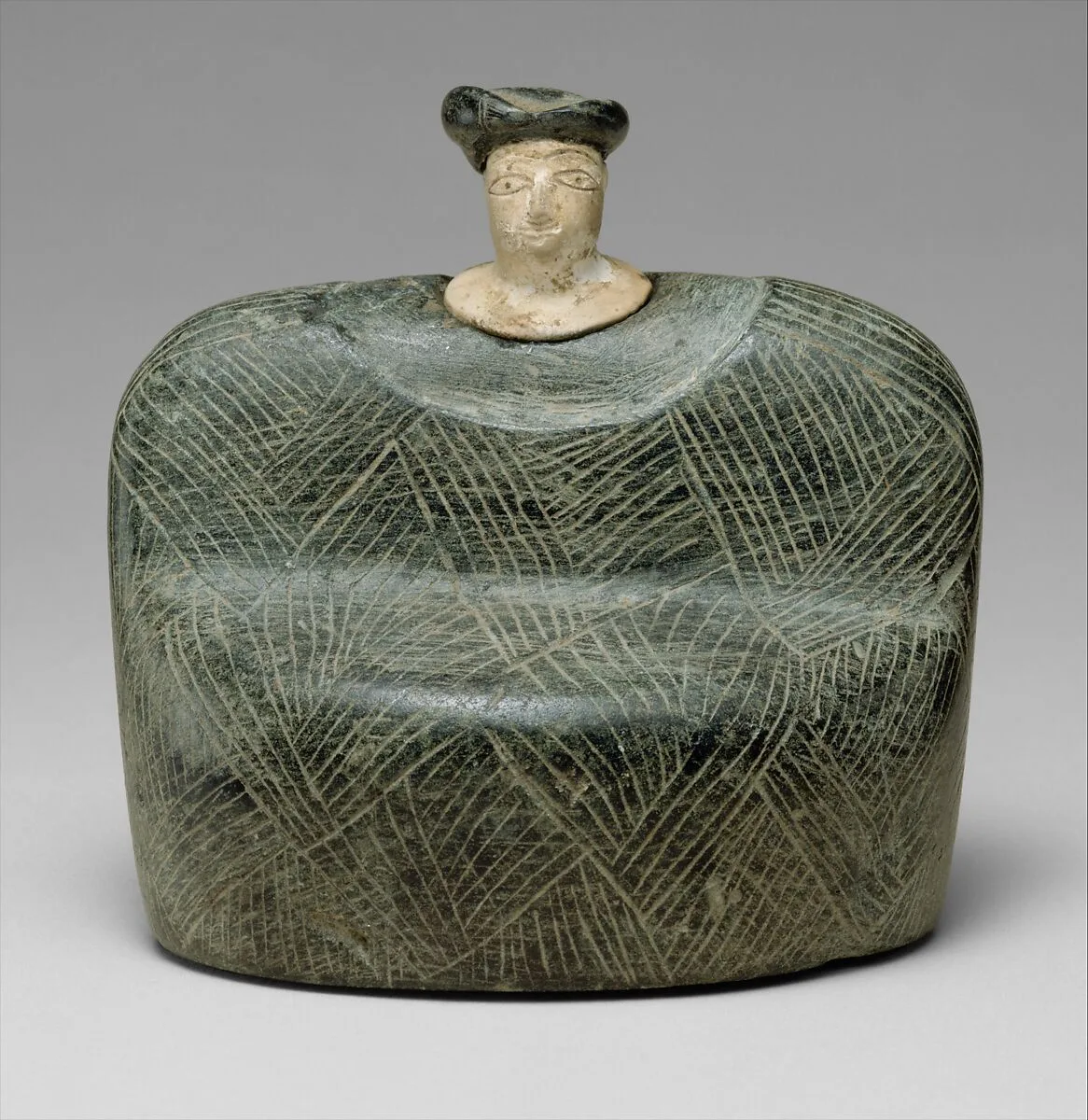
Western Central Asia, now known as Turkmenistan, Uzbekistan, and northern Afghanistan, has yielded objects attesting to a highly developed civilization in the late third and early second millennium B.C. Artifacts from the region indicate that there were contacts with Iran to the southwest. Among the few three-dimensional images assigned to this period in Central Asia are a group of stone female figures seated or squatting on a platform and wearing a robe decorated with a pattern, perhaps imitating sheep's fleece. They are always composite figures of soft green chlorite or steatite, with heads of white limestone. This example has a typical abstract form with an armless body and legs represented by a protruding ledge. Excavated examples of this figure type come from sites in Margiana in southern Turkmenistan, a possible center of their production. Similar seated females on cylinder seal impressions from southwestern Iran appear to depict royal figures. On compartmented stamp seals from western Central Asia, a possible version of the female figure appears where she is sometimes flanked by or seated upon animals or mythical creatures. These attributes could indicate a divine quality.
- Artist
- Unknown
- Date
- ca. late 3rd–early 2nd millennium BCE
- Medium
- Steatite or chlorite, alabaster
- Culture
- Bactria-Margiana Archaeological Complex
- Department
- Ancient Near Eastern Art
- Credit line
- Gift of Norbert Schimmel Trust, 1989