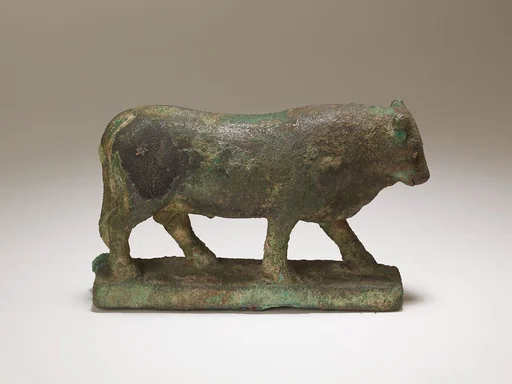
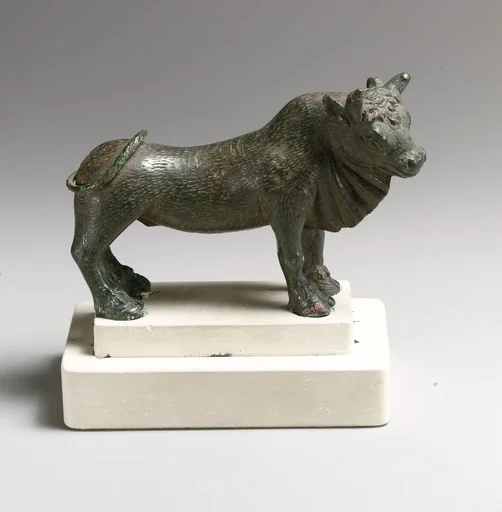
Standing bull
Unknown
ca. mid- to late 1st millennium BCE · Copper alloy, shell · Ancient Near Eastern Art
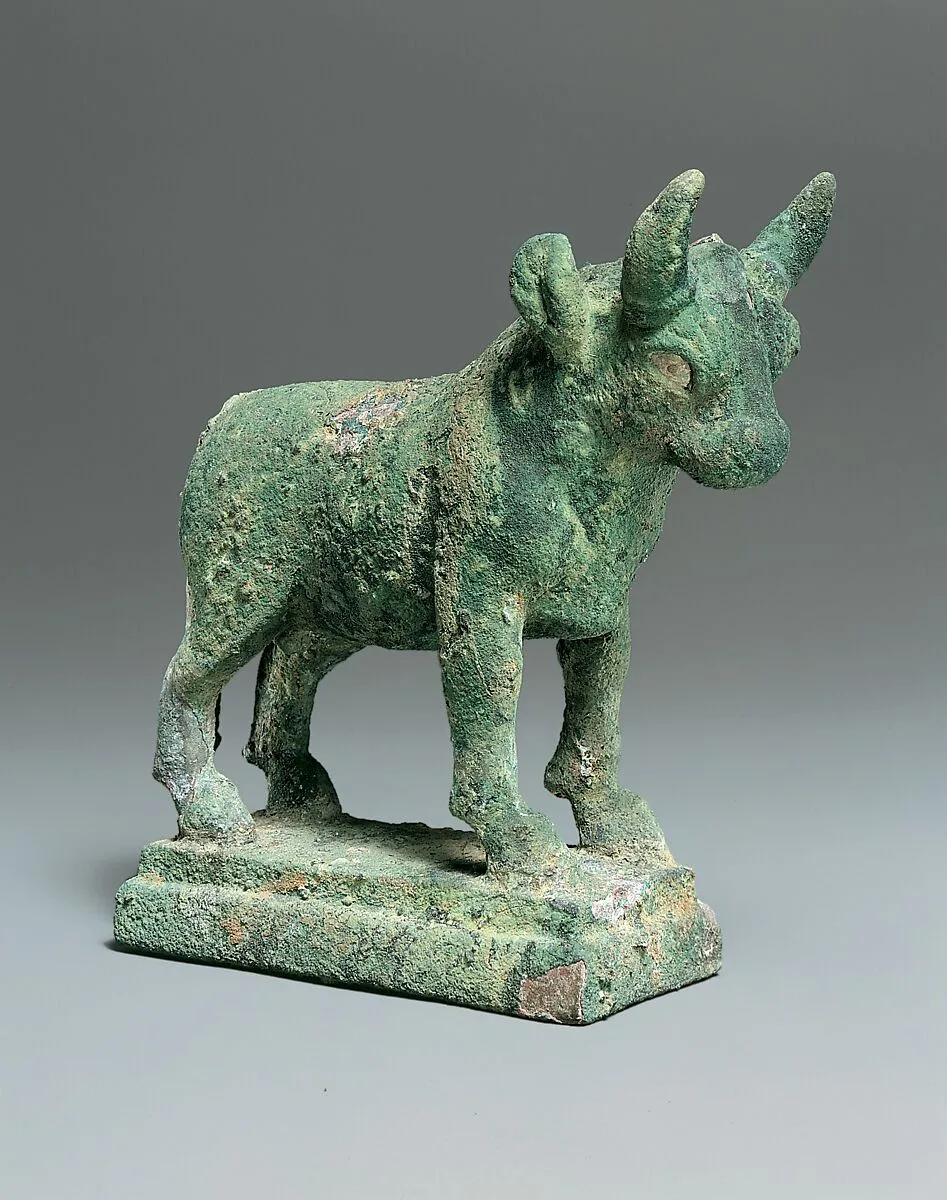
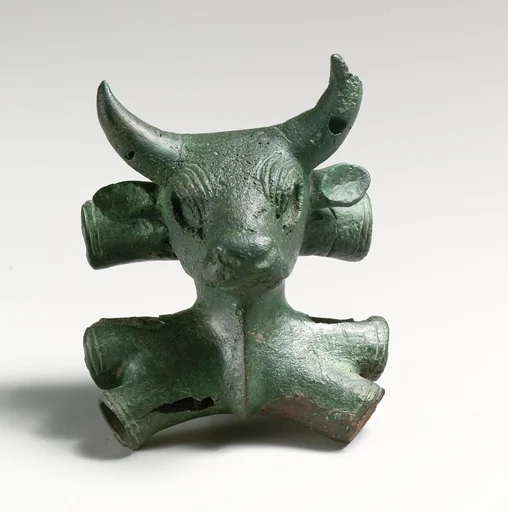
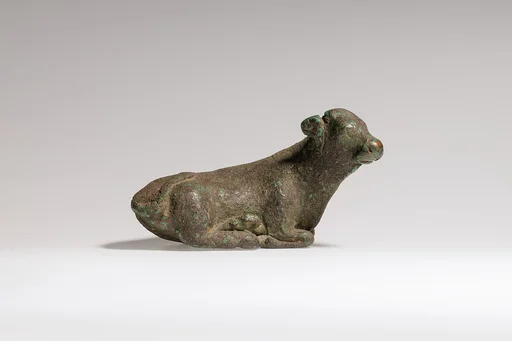
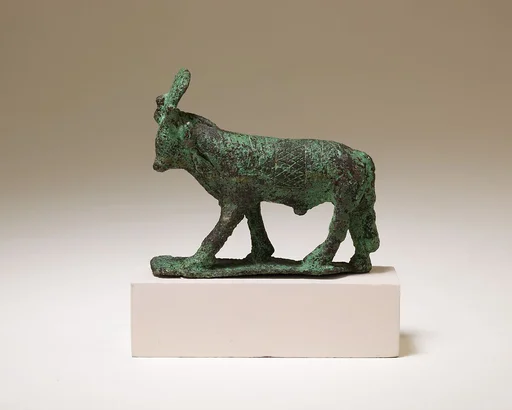
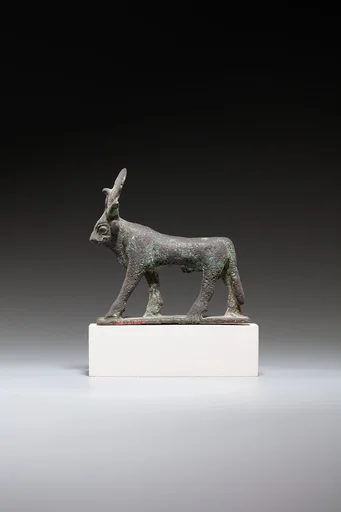
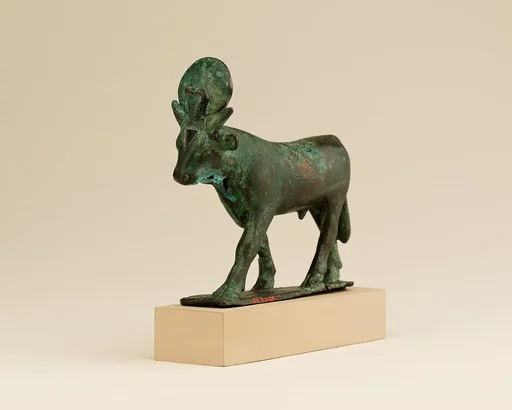
This bronze bull stands on a double-based plinth. Its head is strongly sculpted with upright ears behind horns that curve up and slightly inward. Heavy brows arch over the eyes, which are inlaid with shell. The tail hangs straight down to the hooves and parallels those of southwestern Arabian statues of standing bulls sculpted in alabaster, suggesting that this piece dates to the late first millennium B.C. like the alabaster bulls. By the middle of the first millennium B.C., kingdoms had emerged in southwestern Arabia whose power was based on control of the trade in frankincense and myrrh, which are native to the region. The kingdoms' immense wealth is reflected in the use of bronze to cast large sculptures, as well as smaller objects, which were produced throughout most of the first millennium B.C. Bulls are commonly represented and can be found on funerary stelae, seals, and sculpture.
- Artist
- Unknown
- Date
- ca. mid- to late 1st millennium BCE
- Medium
- Copper alloy, shell
- Department
- Ancient Near Eastern Art
- Credit line
- Purchase, Michael Ward and Friends of Inanna Gifts, 2002
![Apis with an inscription invoking Ptah for the benefit of Pasheryta[...] whose mother was Isetemhat](https://d2pvxr3eb77vb4.cloudfront.net/assets/v1/59/59621f3848d5633cd1c42cb39ff069286dccdf8cb2e3dc5c8c0fc3afa09e81fb/graph.webp)