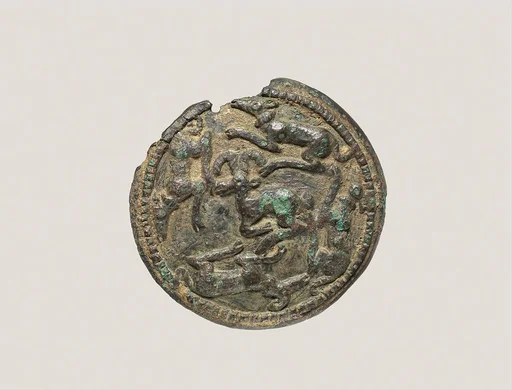
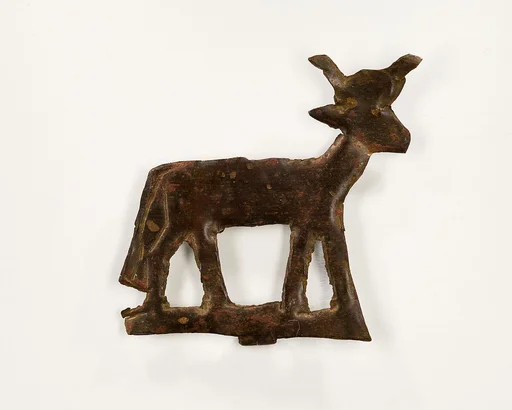
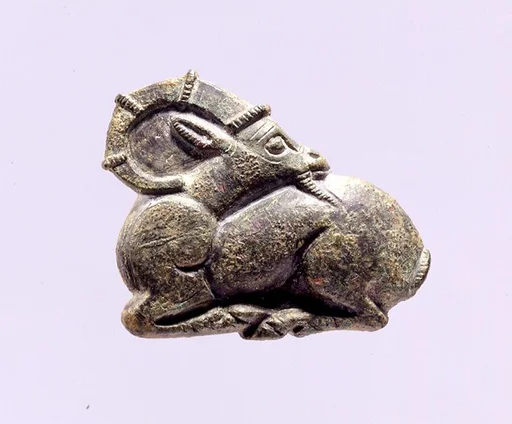
Plate with reclining zebu
Unknown
ca. late 3rd–early 2nd millennium BCE · Copper alloy · Ancient Near Eastern Art
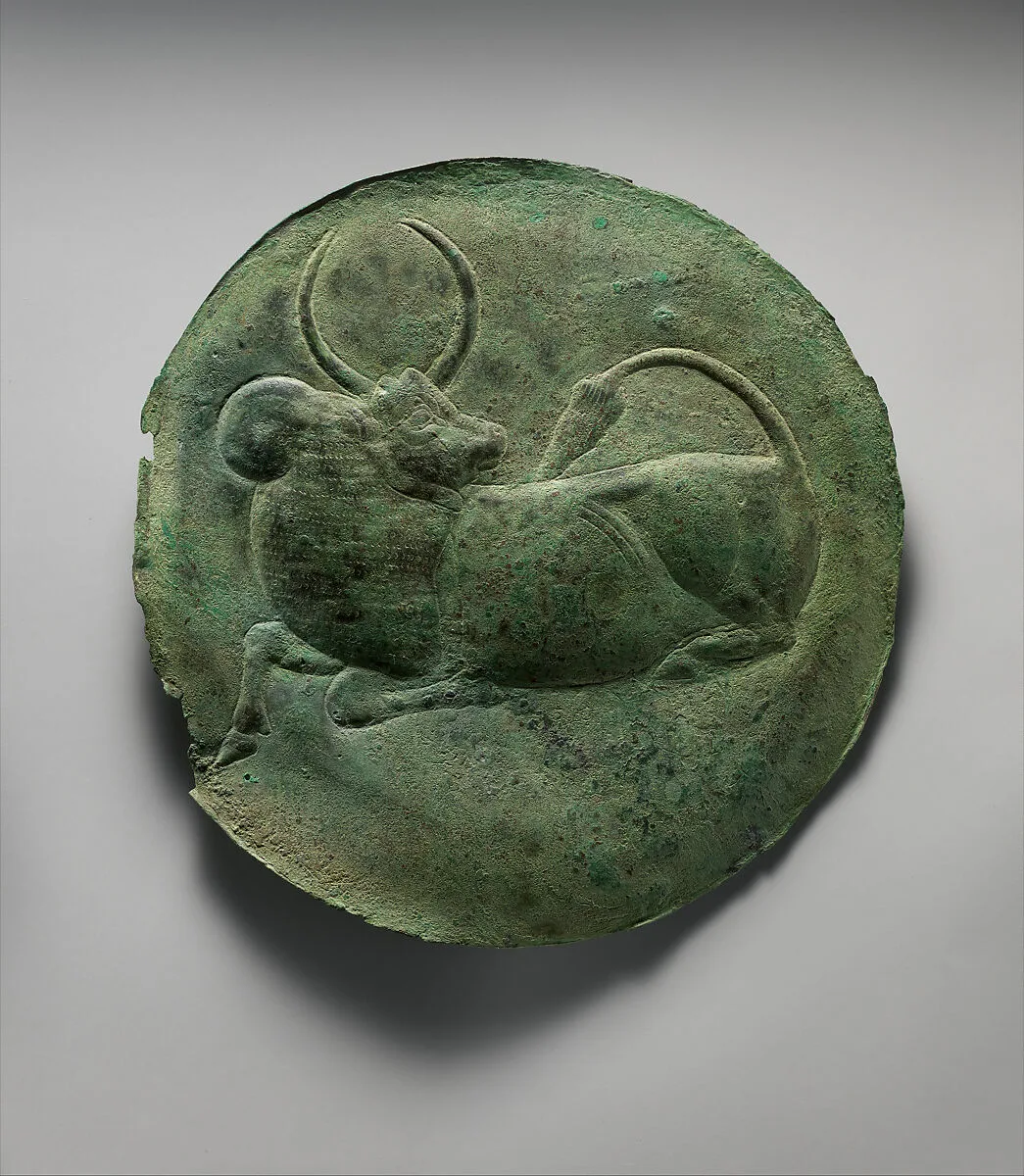
Made from a sheet of copper alloy with a rim that has now broken away, this shallow plate is decorated at the center with an image of a zebu, a breed of cattle from southwestern Asia. The zebu’s distinctive hump and upraised curved horns are clearly visible as the recumbent animal turns to face its rump and arched tail. Details such as the texture of the fur on the neck and chest and the long tuft of hair at the tip of the tail are incised. The body is formed in low relief, and the modeling of the face is especially delicate, combining the techniques of repoussé and chasing. The Bronze Age cemetery at Shahdad, in southeastern Iran, yielded three copper-alloy plates similar to this piece, which were likewise decorated with animals in low relief. Another low-sided copper plate, embellished with a lion attacking a bull, comes from a Bronze Age level at the site of Tepe Hissar, in northwestern Iran. These closely related, excavated examples suggest that The Met's plate also comes from Iran.
- Artist
- Unknown
- Date
- ca. late 3rd–early 2nd millennium BCE
- Medium
- Copper alloy
- Department
- Ancient Near Eastern Art
- Credit line
- Gift of Evelyn Kranes Kossak, The Kronos Collections, 2015