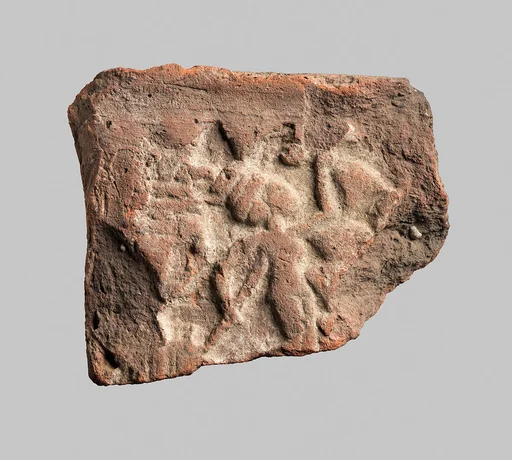
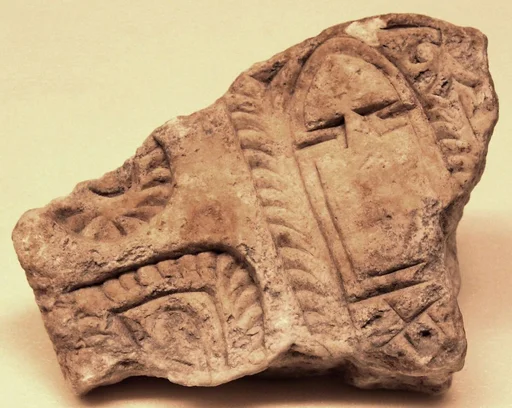
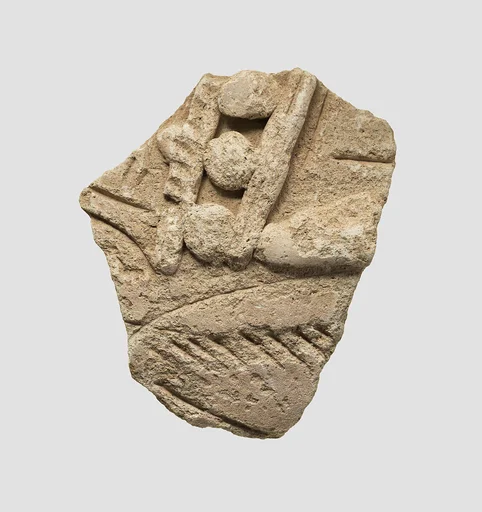
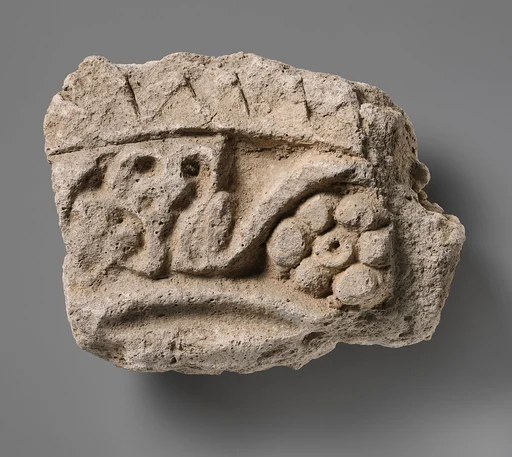
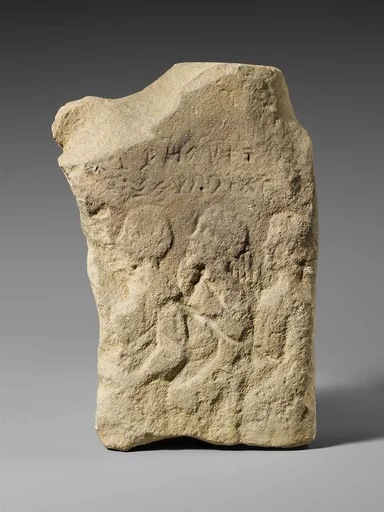
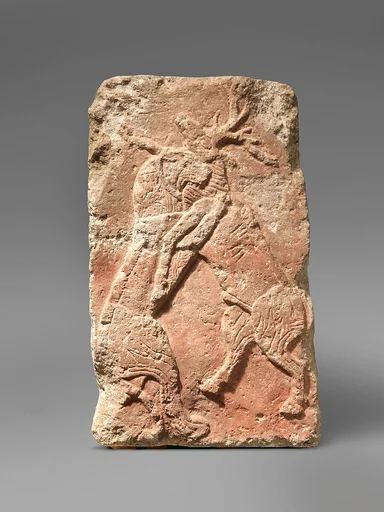
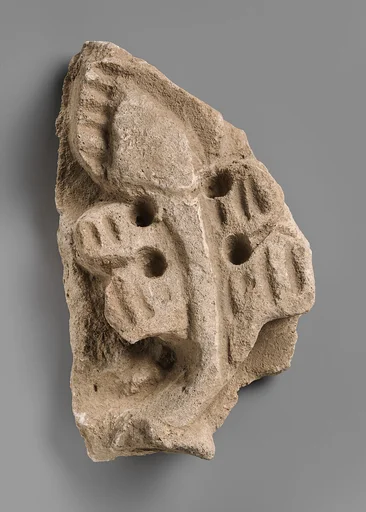
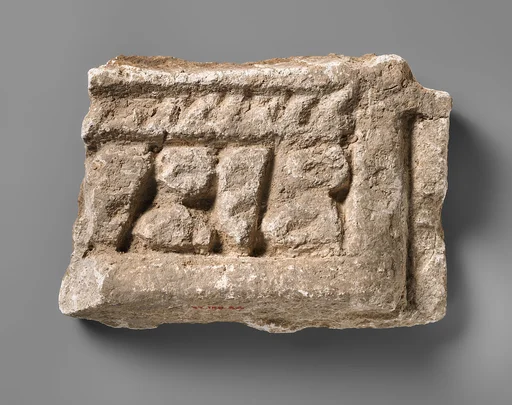
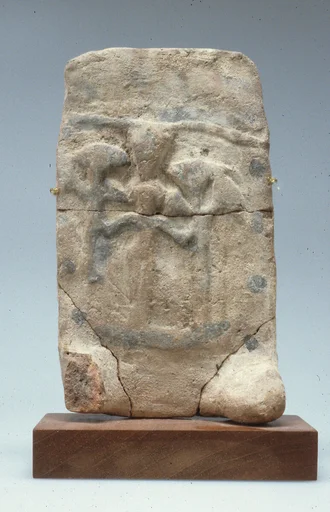
Ceramic imitation of bronze roller with two kilted figures
Unknown
ca. 2100–1750 BCE · Ceramic · Ancient Near Eastern Art
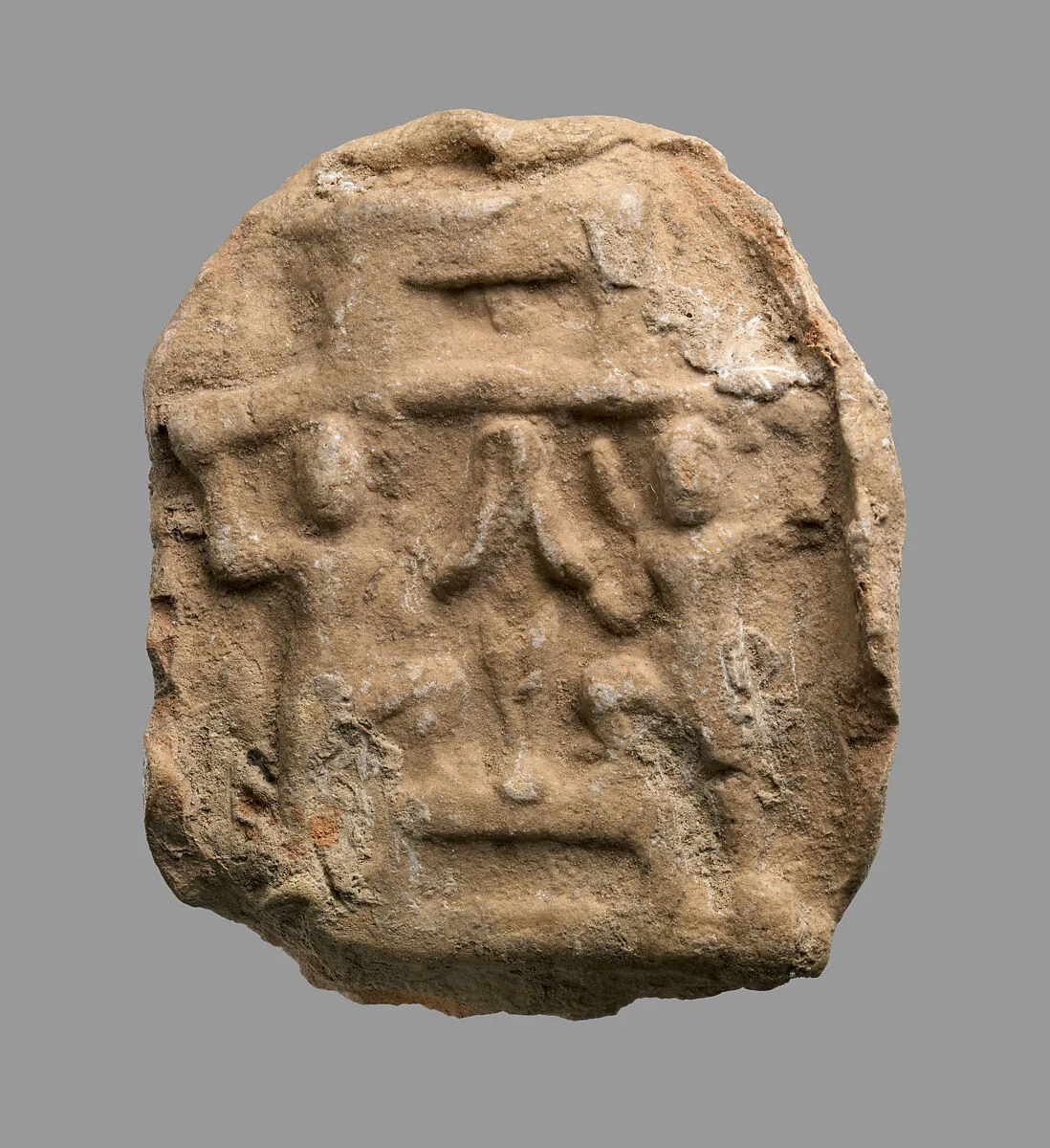
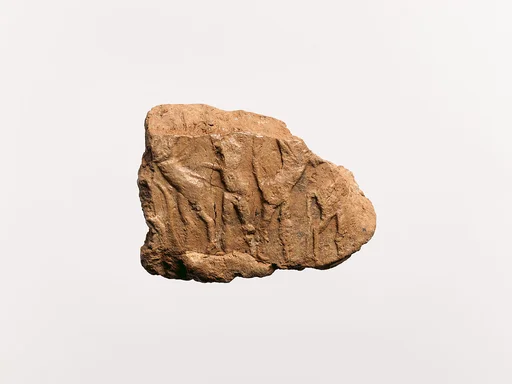
This terracotta relief was produced by pressing wet clay into an inwardly-carved mold. The edges of the clay wrap forward and traces of fingerprints are available on the flattened back. Two brackets and three figures appear on the impressed image: in the center a small nude female with indistinctly rendered arms stands between the brackets; on either side of her, two larger kilted males stand legs askew with outer arms supporting the upper bracket. All three figures face outward toward the viewer. Thermoluminescence dating shows that the object was fired in antiquity, hardening the clay and preserving the impression. The appearance of brackets and the selection of figures on the piece call to mind openwork bronzes produced in the early second millennium B.C. (see especially 1998.31), but this object is smaller in size than many bronzes and is also reminiscent of terracotta plaques, known in much larger quantities from the same time. Openwork bronzes were three-dimensional pieces produced using the lost-wax casting method, in contrast to the flat-back terracotta plaques which were made using an open mold. While it is tempting to identify this object as a trial piece for an openwork bronze, the different production methods suggest that it is not the byproduct of a craftsman’s workshop, but rather an intentionally preserved object and a viable ‘finished’ image in its own right.
- Artist
- Unknown
- Date
- ca. 2100–1750 BCE
- Medium
- Ceramic
- Department
- Ancient Near Eastern Art
- Credit line
- Anonymous Gift, 1998