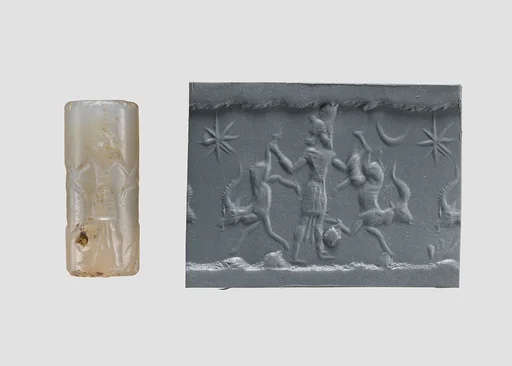
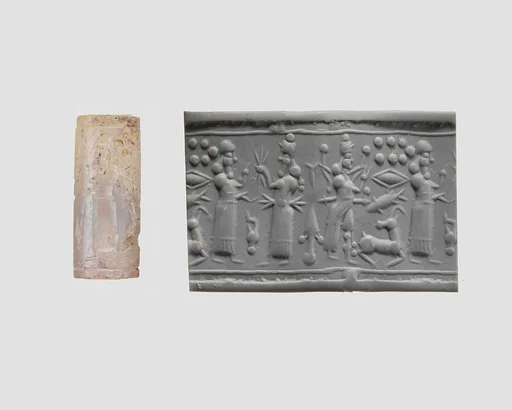
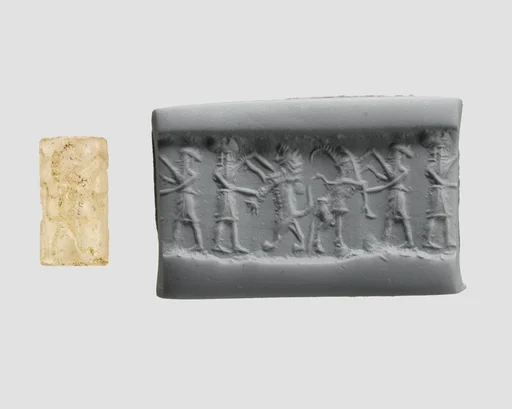
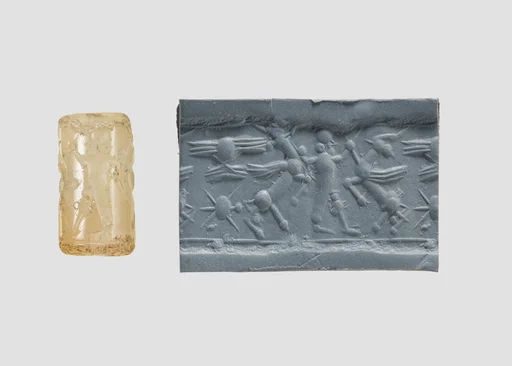
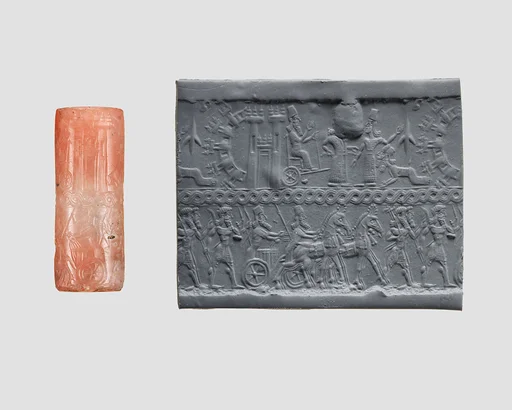
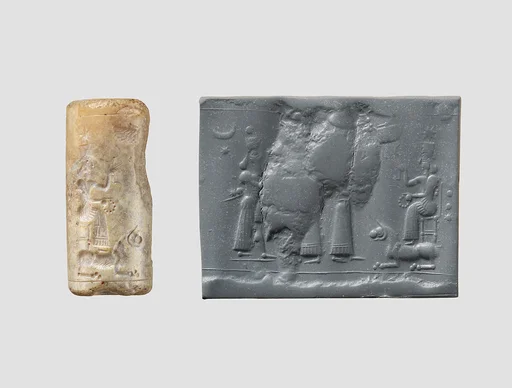
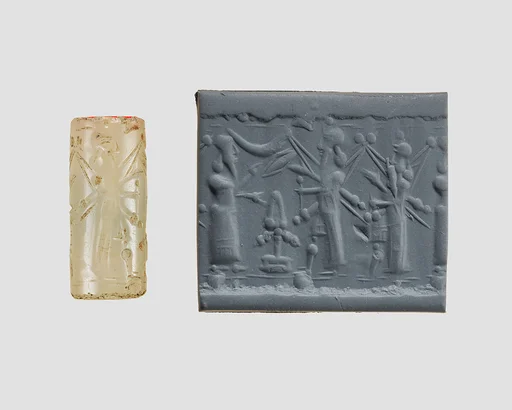
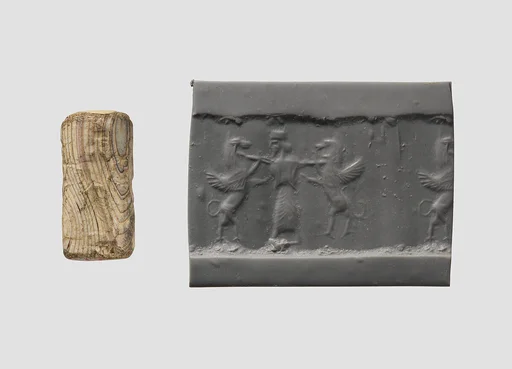
Cylinder seal with cultic scene
Unknown
late 9th–early 8th century BCE · Flawed neutral Chalcedony (Quartz) · Ancient Near Eastern Art
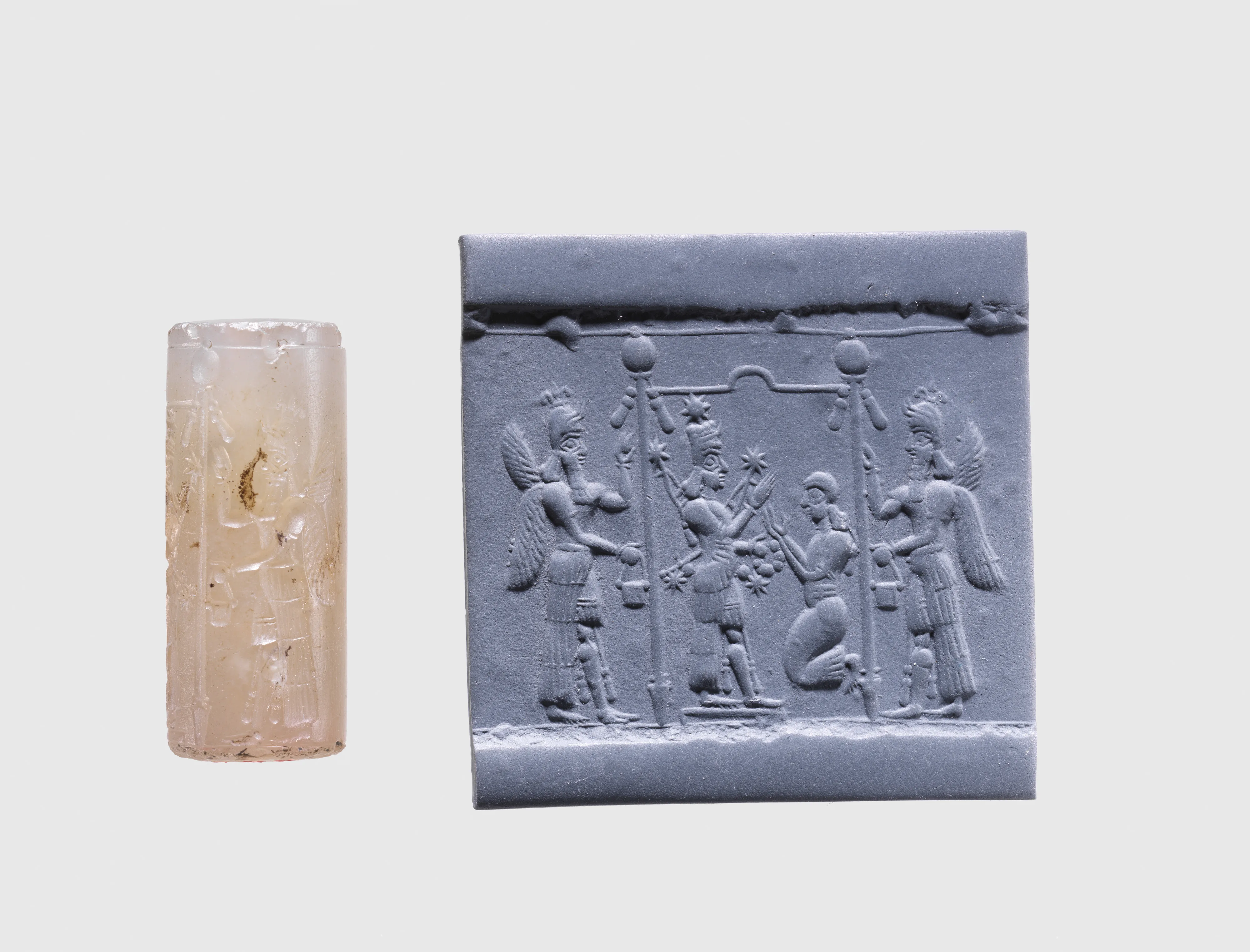
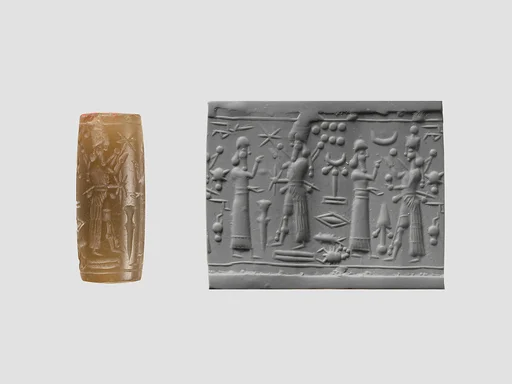
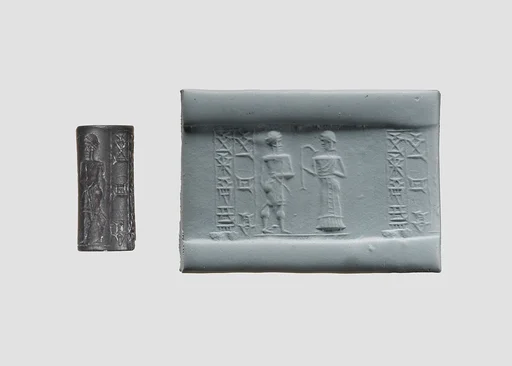
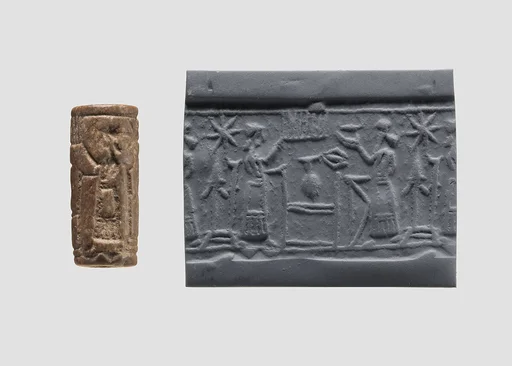
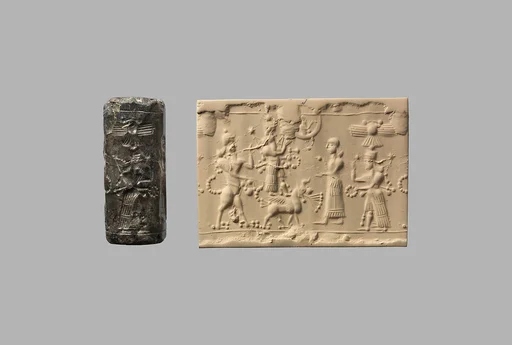
Seals of the early first millennium B.C. in Babylonia and Assyria were carved in the linear, drilled, cut, and modeled styles. The modeled style illustrated here derives from earlier Middle Assyrian seal carving and from the modeled sculpture in the palace of Sargon II (r. 721–705 B.C.), king of Assyria at Khorsabad. This style was used predominantly on seals showing scenes of contest and worship. On this cylinder seal a statue of the goddess Ishtar stands on a platform within a canopied enclosure. Ishtar is identified by crossed quivers, a starred crown, and stars encircling her body. Two winged genies protect the enclosure, while a kneeling figure worships.
- Artist
- Unknown
- Date
- late 9th–early 8th century BCE
- Medium
- Flawed neutral Chalcedony (Quartz)
- Culture
- Assyrian
- Department
- Ancient Near Eastern Art
- Credit line
- Gift of Martin and Sarah Cherkasky, 1989