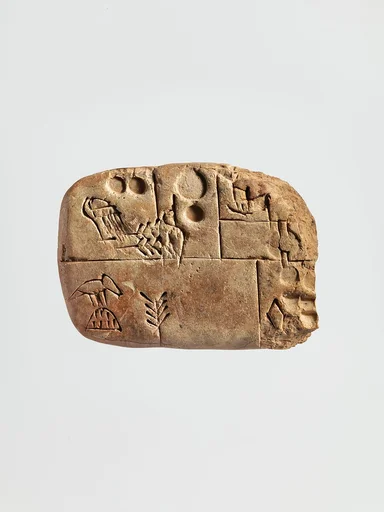
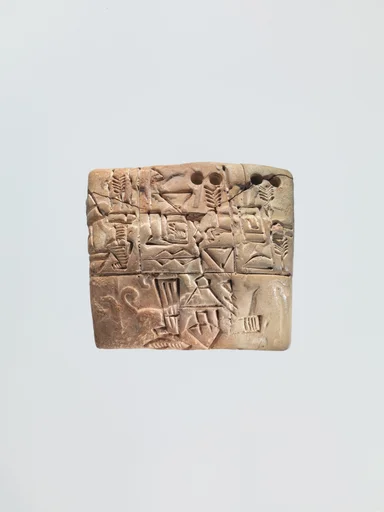
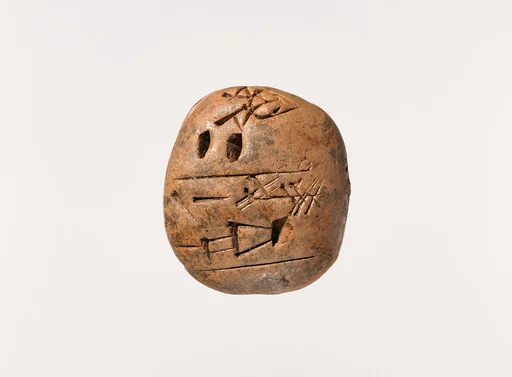
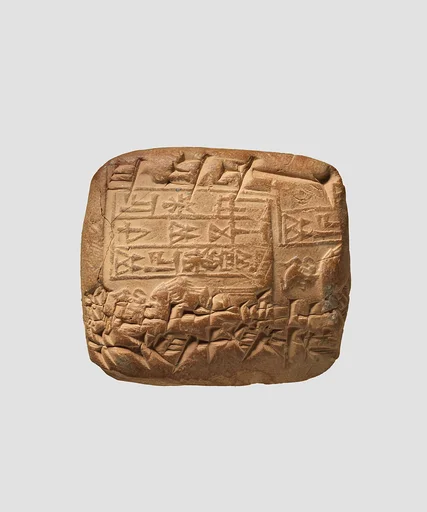
Cuneiform tablet: administrative account with entries concerning malt and barley groats
Unknown
ca. 3100–2900 BCE · Clay · Ancient Near Eastern Art
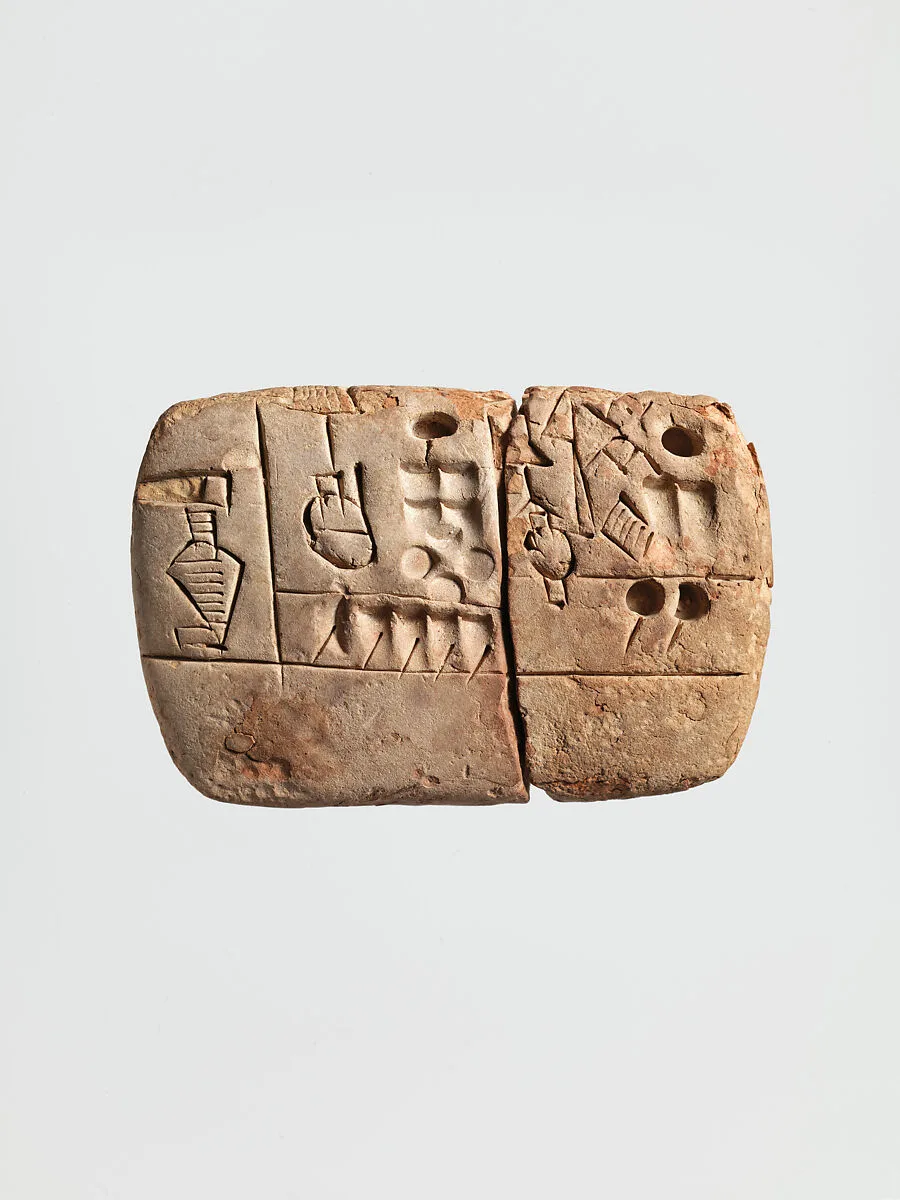
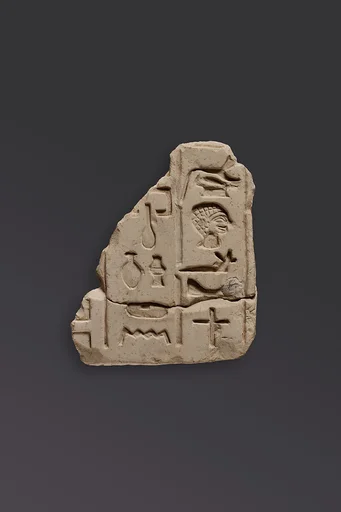
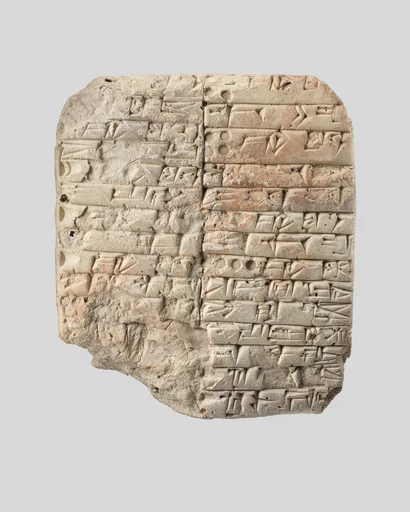
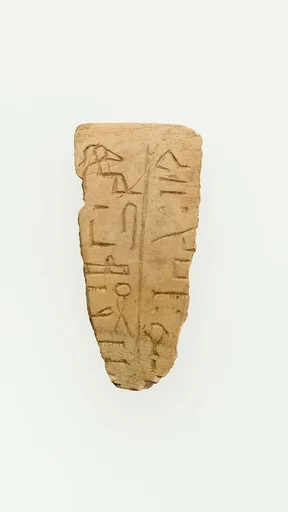
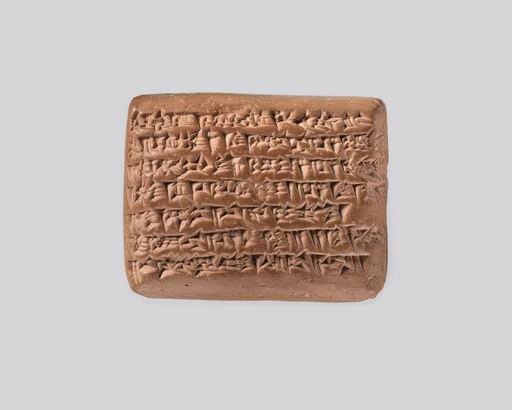
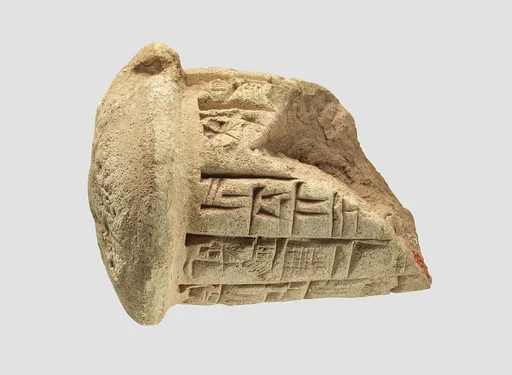
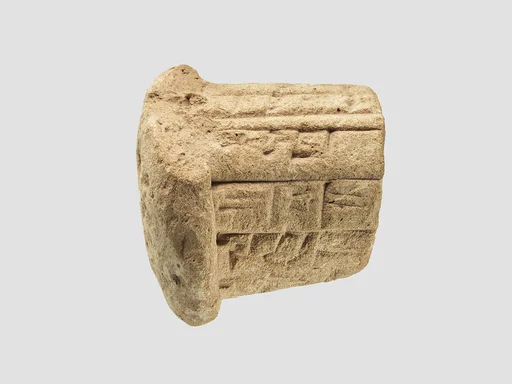
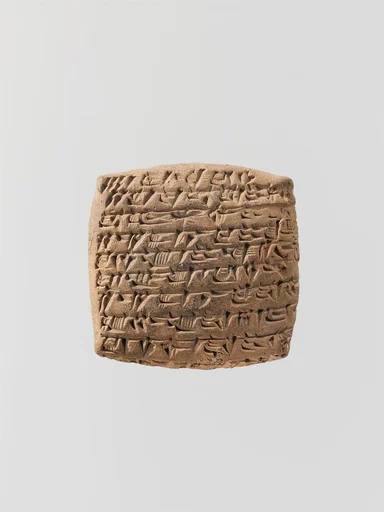
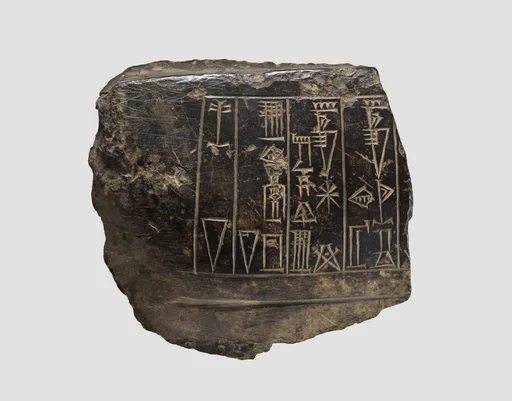
This tablet with early writing most likely documents grain distributed by a large temple. Scholars have distinguished two phases in the development of writing in southern Mesopotamia. The earliest tablets, probably dating to around 3300 B.C., record economic information using pictographs and numerals drawn in the clay. A later phase, as represented by this tablet, reflects changes in the techniques of writing that altered the shapes of signs. Symbols stood for nouns, primarily names of commodities, as well as a few basic adjectives, but no grammatical elements. Such a system could be read in any language, but it is generally accepted that the underlying language is Sumerian. Indeed, by the first half of the third millennium B.C., the script had sufficiently developed to faithfully represent the Sumerian language, and the scope and application of writing was expanded to include written poetry. Nonetheless, even these later scribes rarely included grammatical elements, and the texts, created as memory aids, cannot be easily read today.
- Artist
- Unknown
- Date
- ca. 3100–2900 BCE
- Medium
- Clay
- Culture
- Sumerian
- Department
- Ancient Near Eastern Art
- Credit line
- Purchase, Raymond and Beverly Sackler Gift, 1988