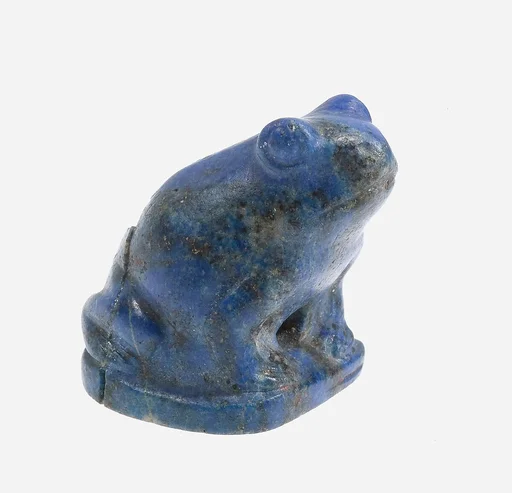
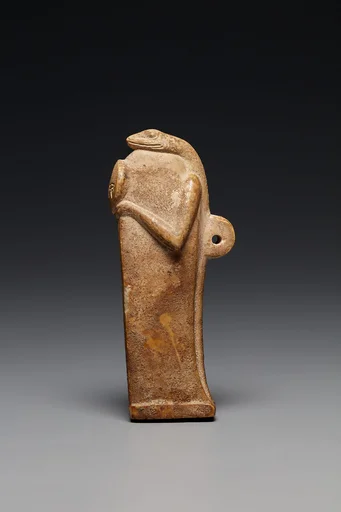
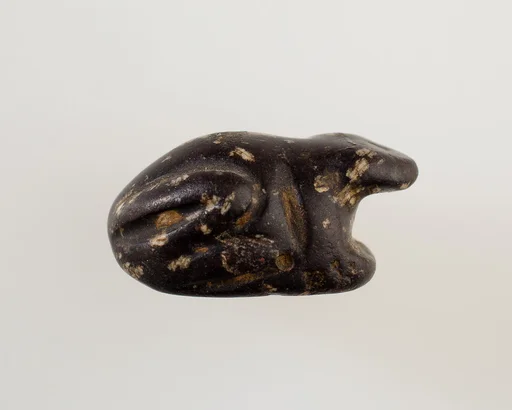
Weight in shape of frog
Unknown
ca. 2000–1600 BCE · Diorite or andesite · Ancient Near Eastern Art
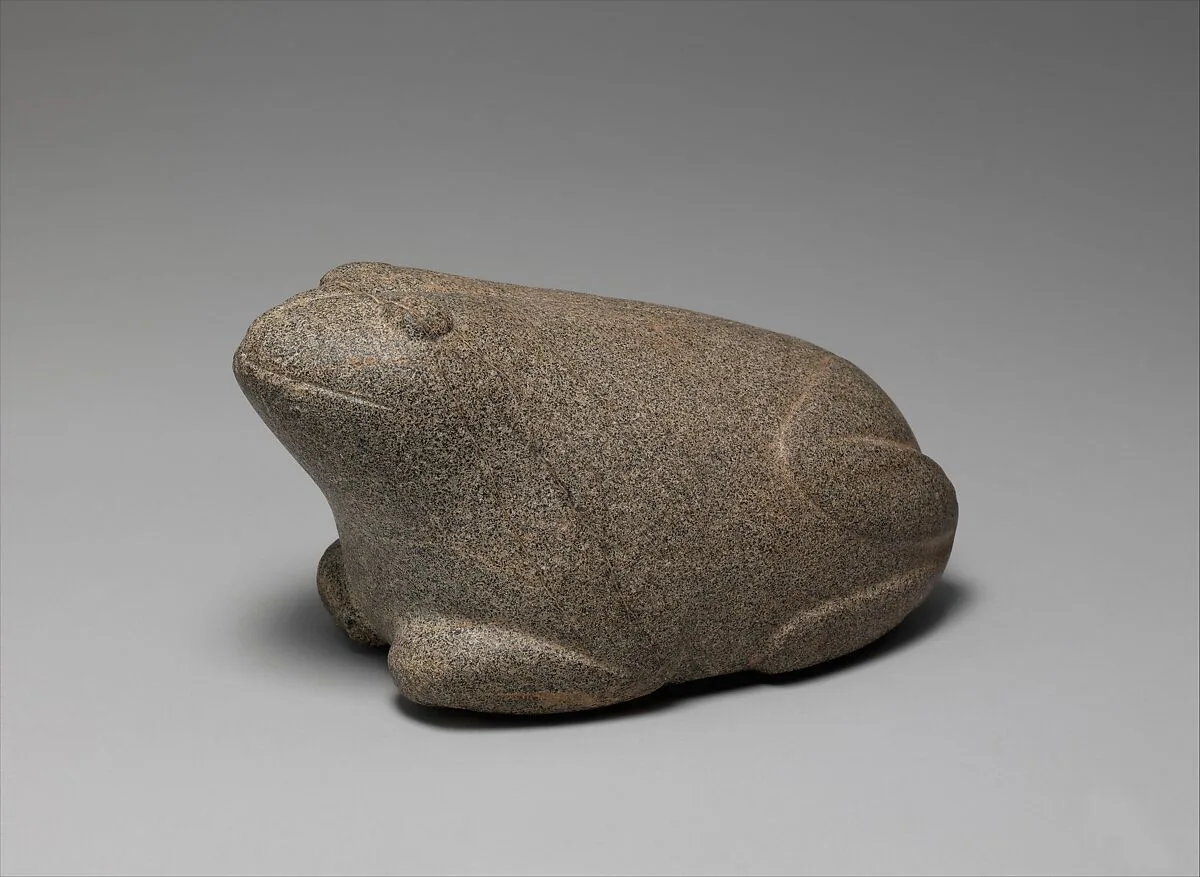
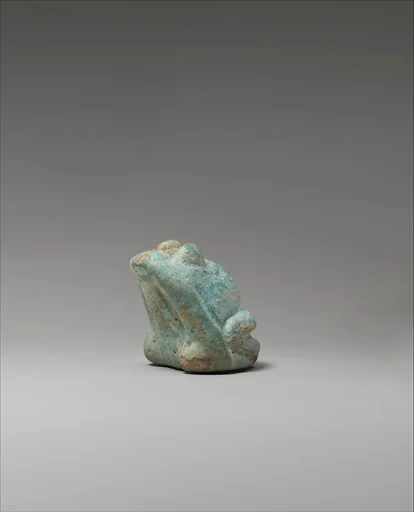
Zoomorphic weights were widespread in the ancient world. Weights in the shape of frogs and toads were rare in the Near East, but they do occur in Egypt. This frog weight is dated to the second millennium B.C. on the basis of the four line Akkadian inscription under its throat: "a frog [weighing] 10 minas, a legitimate weight of the god Shamash, belonging to Iddin-Nergal, son of Arkat-ili-damqa." The mina was the Mesopotamian unit of measure, weighing about 500 grams (18 ounces). The weight system was based on the talent or the average load that could be carried by a man or animal (about 30 kilograms). According to the Sumerian sexagesimal system, the talent was divided into 60 minas, and a mina was divided into 60 shekels.
- Artist
- Unknown
- Date
- ca. 2000–1600 BCE
- Medium
- Diorite or andesite
- Culture
- Babylonian
- Department
- Ancient Near Eastern Art
- Credit line
- Purchase, Leon Levy and Shelby White Gift, Rogers Fund and Nathaniel Spear Jr. Gift, 1988