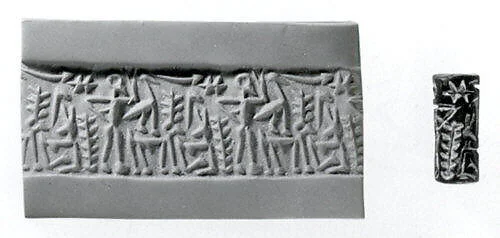
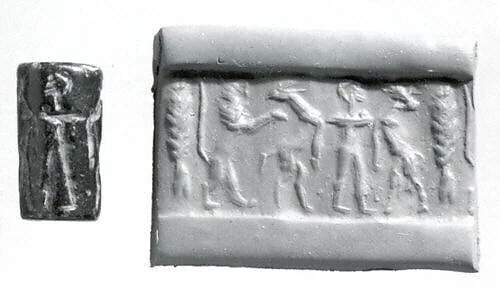
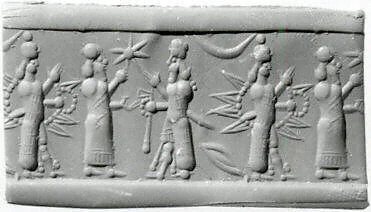
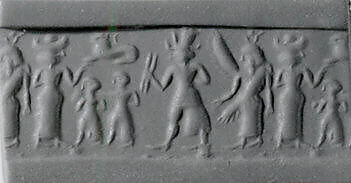
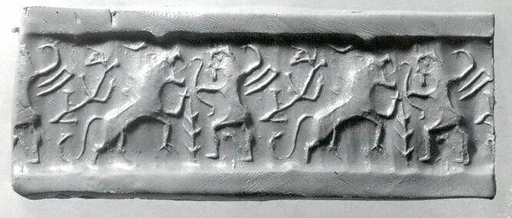
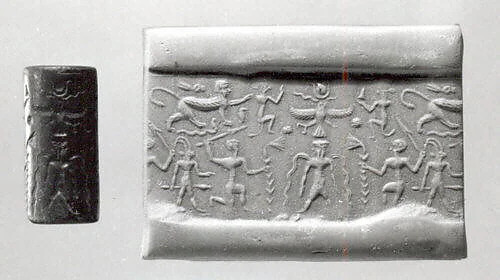
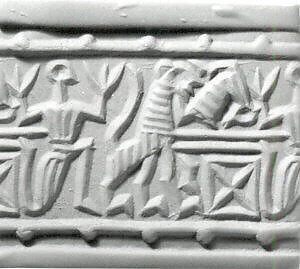
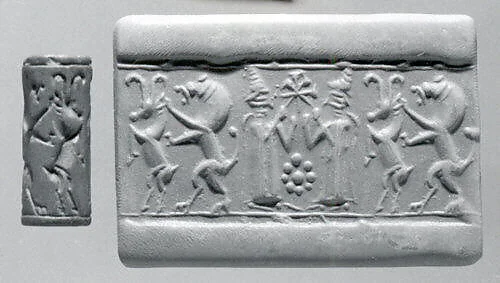
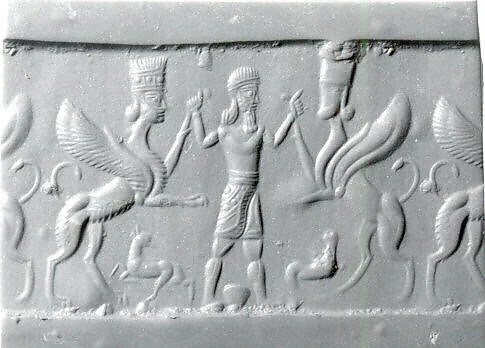
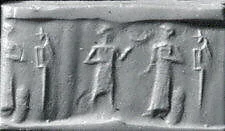
Cylinder seal and modern impression: mistress of animals flanked by rampant horned animals
Unknown
ca. 14th century BCE · Hematite · Ancient Near Eastern Art
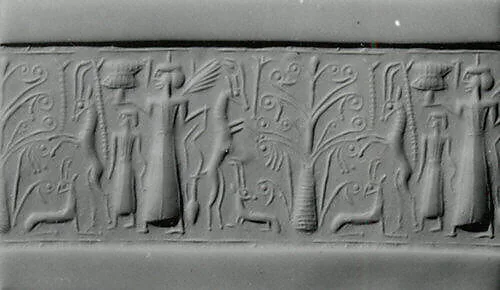
Although engraved stones had been used as early as the seventh millennium B.C. to stamp impressions in clay, the invention in the fourth millennium B.C. of carved cylinders that could be rolled over clay allowed the development of more complex seal designs. These cylinder seals, first used in Mesopotamia, served as a mark of ownership or identification. Seals were either impressed on lumps of clay that were used to close jars, doors, and baskets, or they were rolled onto clay tablets that recorded information about commercial or legal transactions. The seals were often made of precious stones. Protective properties may have been ascribed to both the material itself and the carved designs. Seals are important to the study of ancient Near Eastern art because many examples survive from every period and can, therefore, help to define chronological phases. Often preserving imagery no longer extant in any other medium, they serve as a visual chronicle of style and iconography. The modern impression of the seal is shown so that the entire design can be seen. This seal shows a female figure flanked by two rampant caprids who in turn flank a tree. Below the figure’s right arm stands a small female figure and above it an ingot shaped object. A vase with flowing water stands below her left hand and a branch above. Two smaller recumbent caprids flank the base of the tree.
- Artist
- Unknown
- Date
- ca. 14th century BCE
- Medium
- Hematite
- Culture
- Cypriot
- Department
- Ancient Near Eastern Art
- Credit line
- Gift of The Right Reverend Paul Moore Jr., 1985