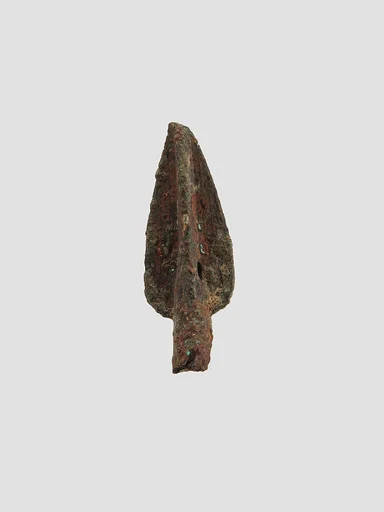
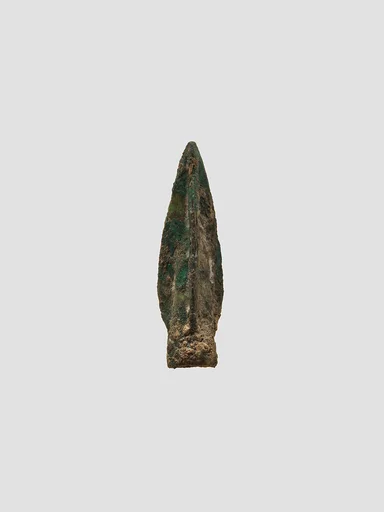
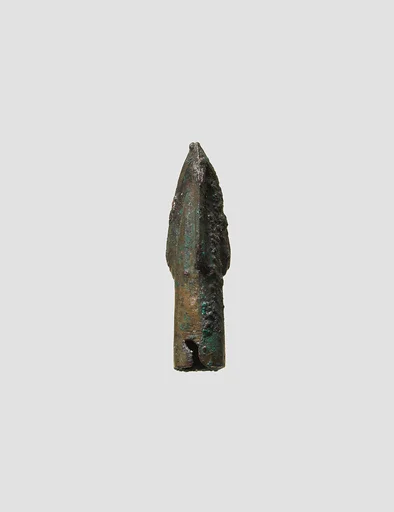
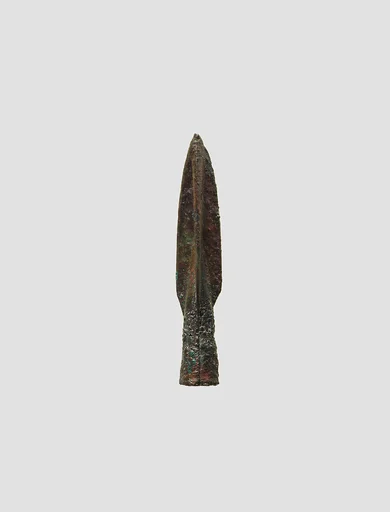
Arrowhead
Unknown
4th–3rd century BCE · Bronze · Ancient Near Eastern Art
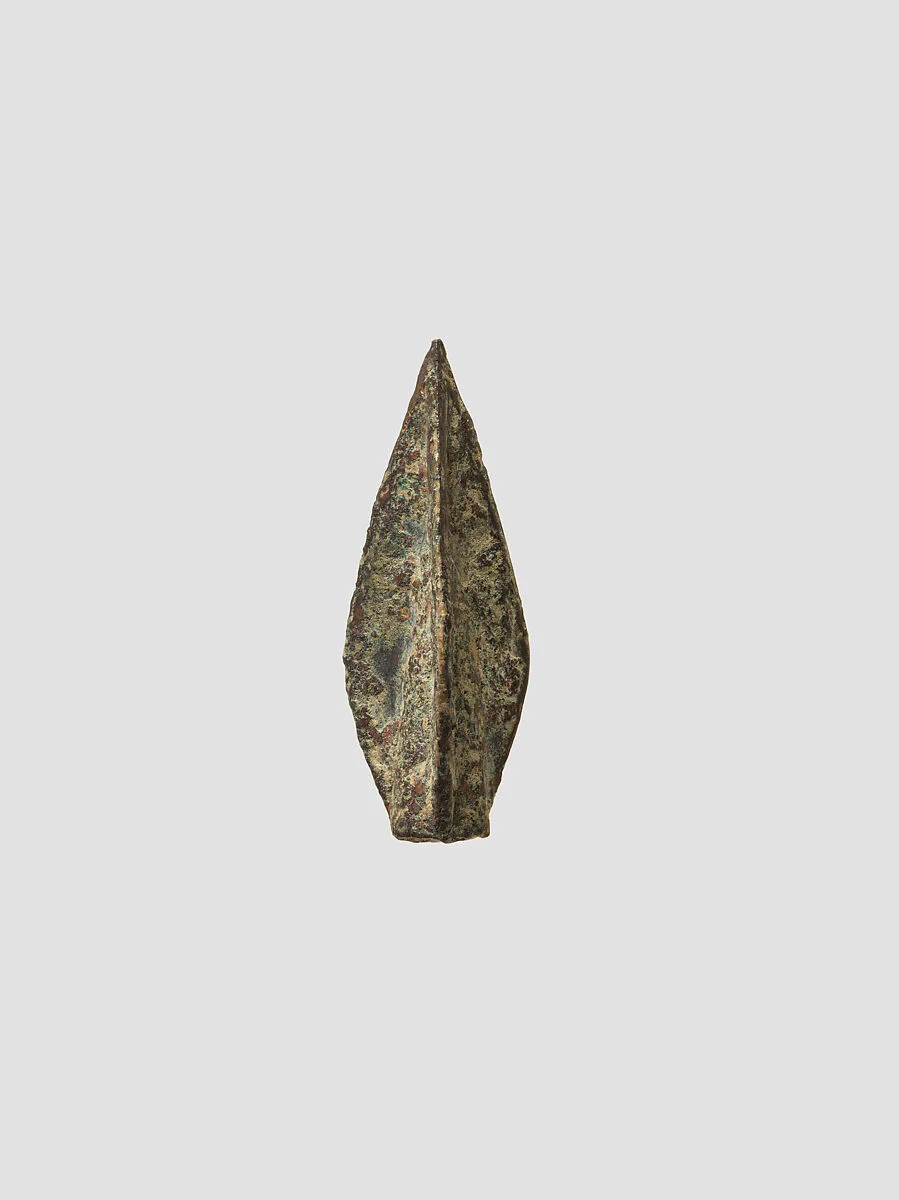
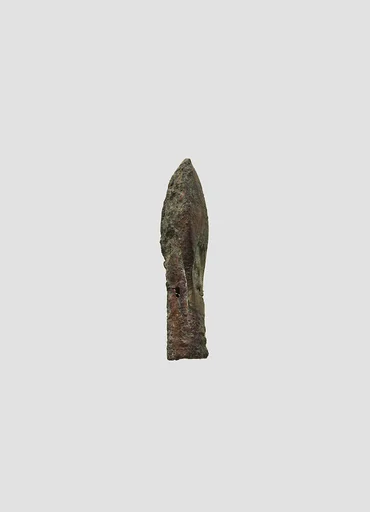
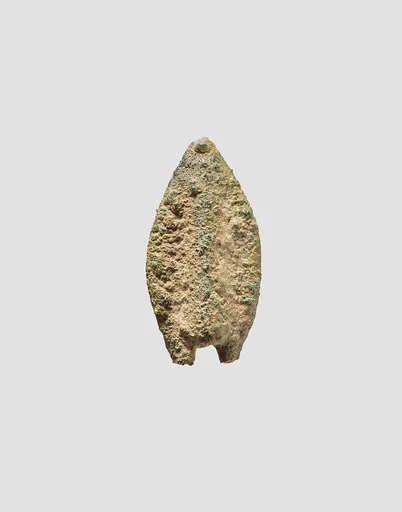
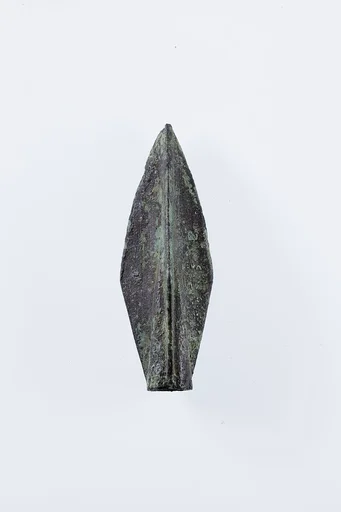
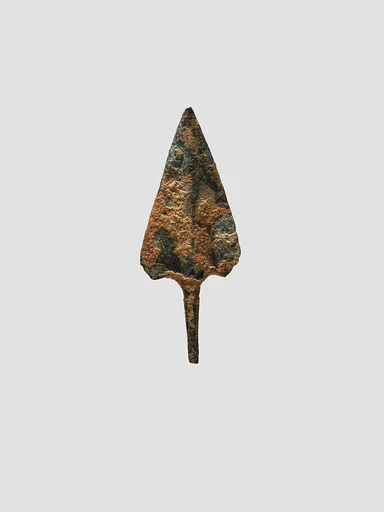
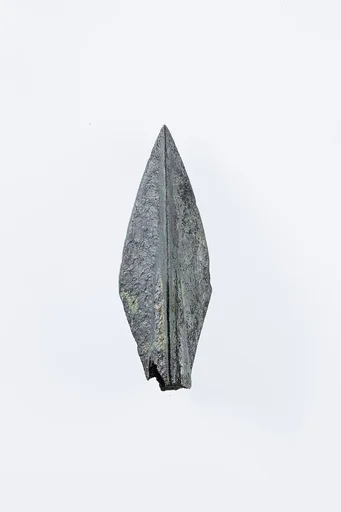
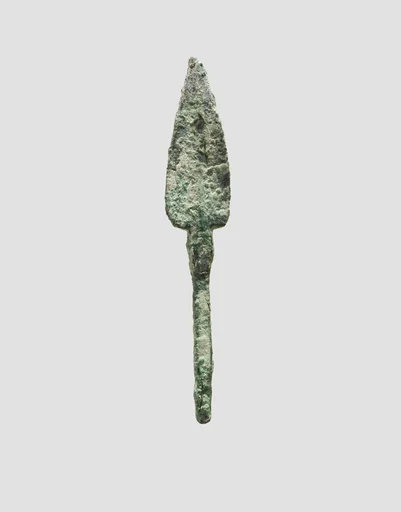
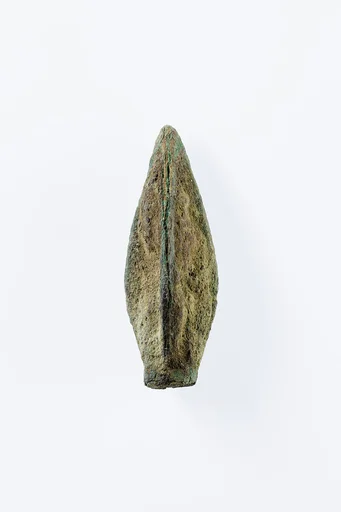
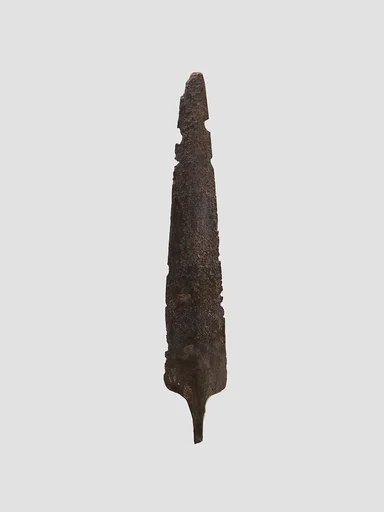
This is a bronze socketed trilobate (i.e., ‘three-bladed’) arrowhead. It was discovered in an unstratified context at the Tall-i Takht at Pasargadae, about 55 miles northeast of Shiraz, Iran. Pasargadae was founded by Cyrus the Great (reigned ca. 550-530 B.C.) as the first capital of the Achaemenid Persian Empire. Trilobate arrowheads were once associated with the Scythians and Cimmerians, nomadic peoples from the Eurasian steppe who invaded the Near East in the 8th century B.C. However, this type of arrowhead appears far and wide in space and time, indicating it was widely used in the ancient Near East, doubtless on account of its efficacy at piercing armor. More than 3000 of them were found at Persepolis, which replaced Pasargadae as the Achaemenid capital, suggesting that this was the standard type of arrowhead used by the Persians.
- Artist
- Unknown
- Date
- 4th–3rd century BCE
- Medium
- Bronze
- Culture
- Achaemenid or Seleucid
- Department
- Ancient Near Eastern Art
- Credit line
- Purchase, H. Dunscombe Colt Gift, 1978