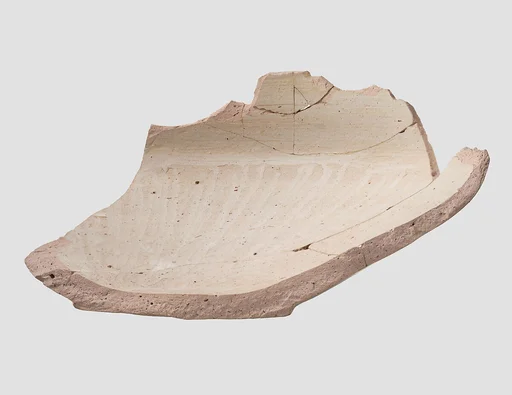
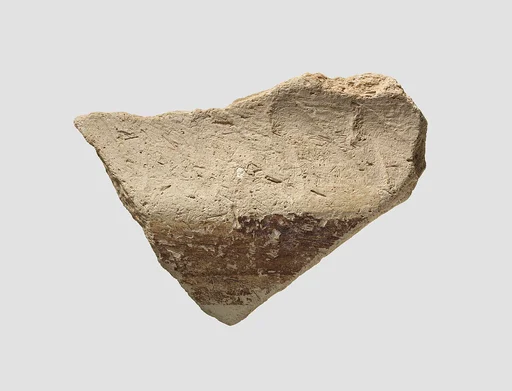
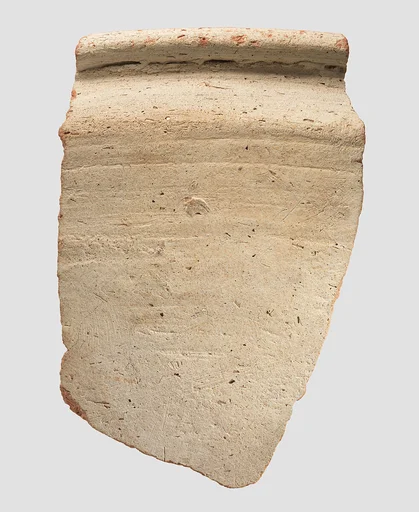
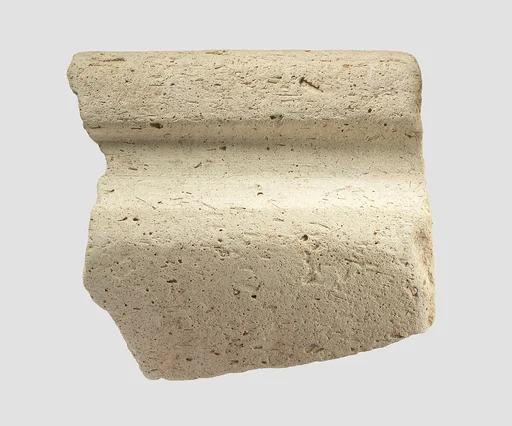
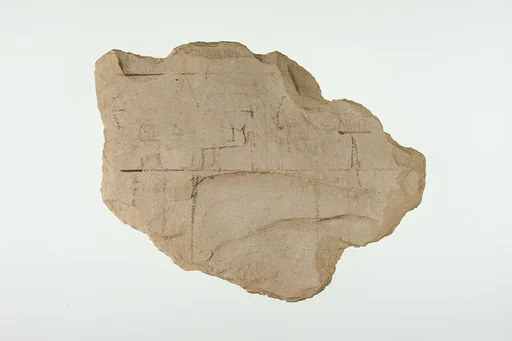
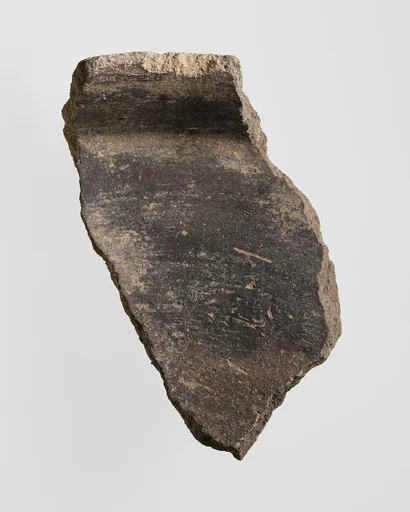
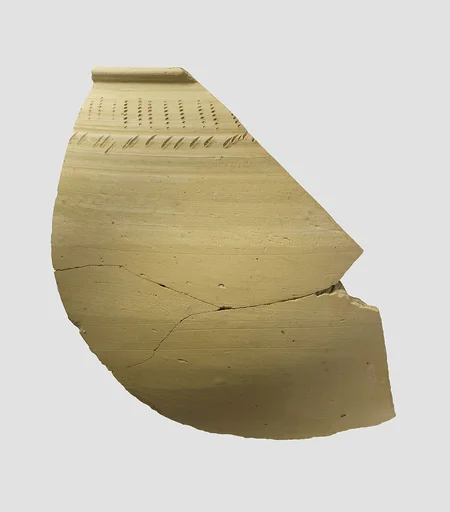
Bowl sherd
Unknown
4th–3rd century BCE · Ceramic · Ancient Near Eastern Art
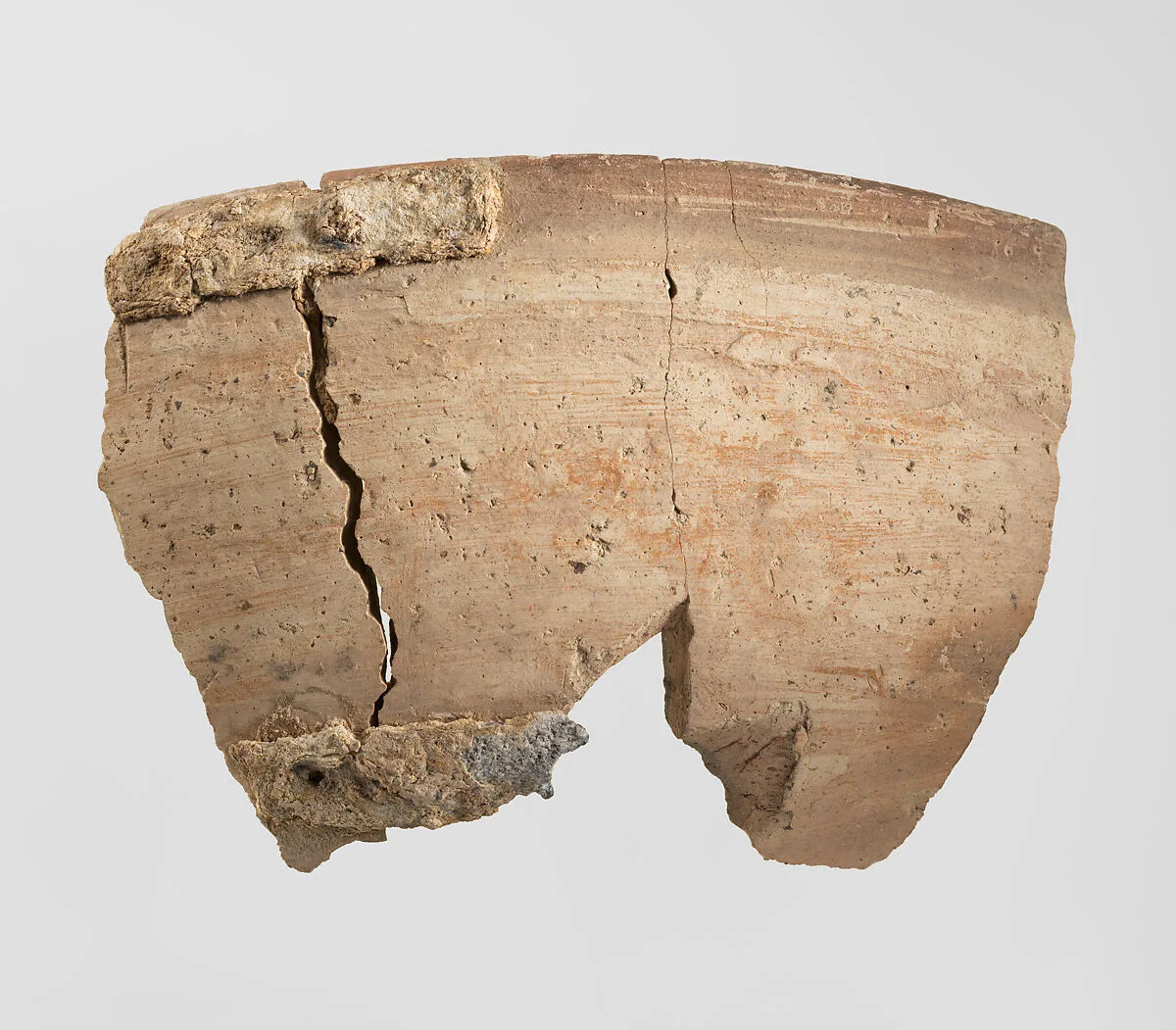
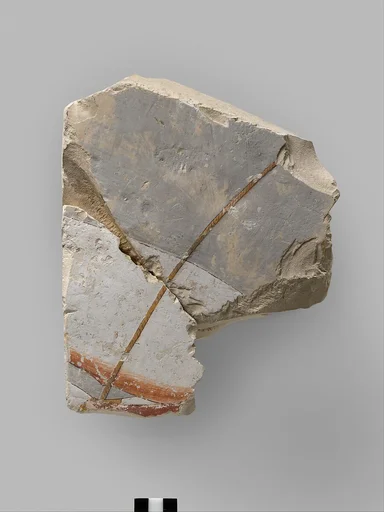
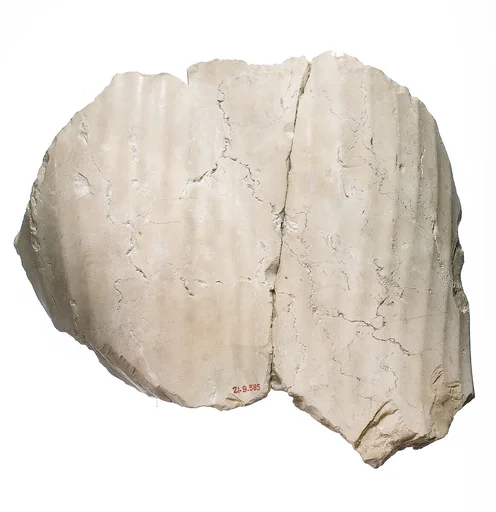
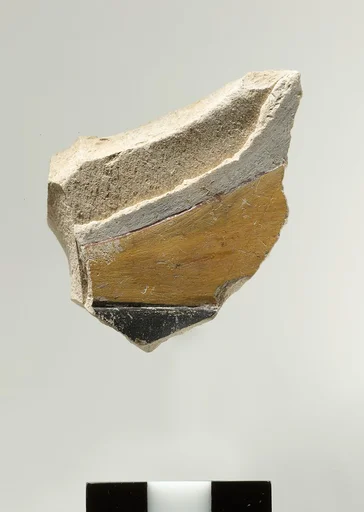
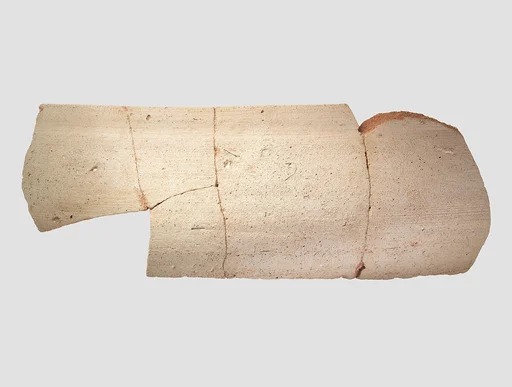
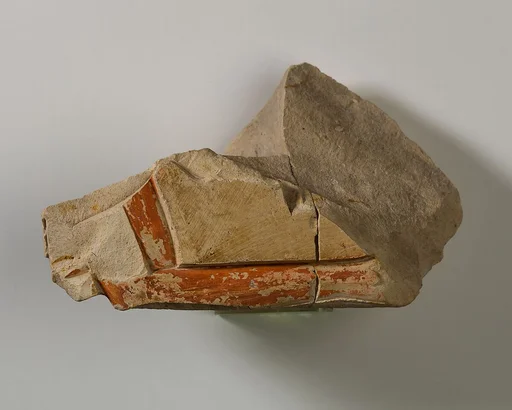
These two fragments of a ceramic bowl are connected by two iron braces which have been riveted to the clay. The bowl must have broken in antiquity and been repaired. Indeed, the braces ensured that these two fragments stayed together even after the rest of the bowl had been destroyed! The bowl was excavated at Pasargadae in southwestern Iran, about 90 km northeast of Shiraz. Pasargadae was the first capital of the Achaemenid Persian Empire, founded by Cyrus the Great c. 546 B.C. The bowl was found at the Tall-i Takht, a massive artificial platform presumably built as the site of a royal palace but converted into a fortified compound after Darius established a new capital at Persepolis around 520. However, the coin hoards and other finds from the Takht, including this lamp, show that it continued to be occupied down into the second century B.C., long after the fall of the Achaemenid Empire. The bowl was found in a room in the northern corner of the Takht.
- Artist
- Unknown
- Date
- 4th–3rd century BCE
- Medium
- Ceramic
- Culture
- Seleucid
- Department
- Ancient Near Eastern Art
- Credit line
- Purchase, H. Dunscombe Colt Gift, 1978