Vessel
Unknown
ca. 5000–4500 BCE · Ceramic · Ancient Near Eastern Art
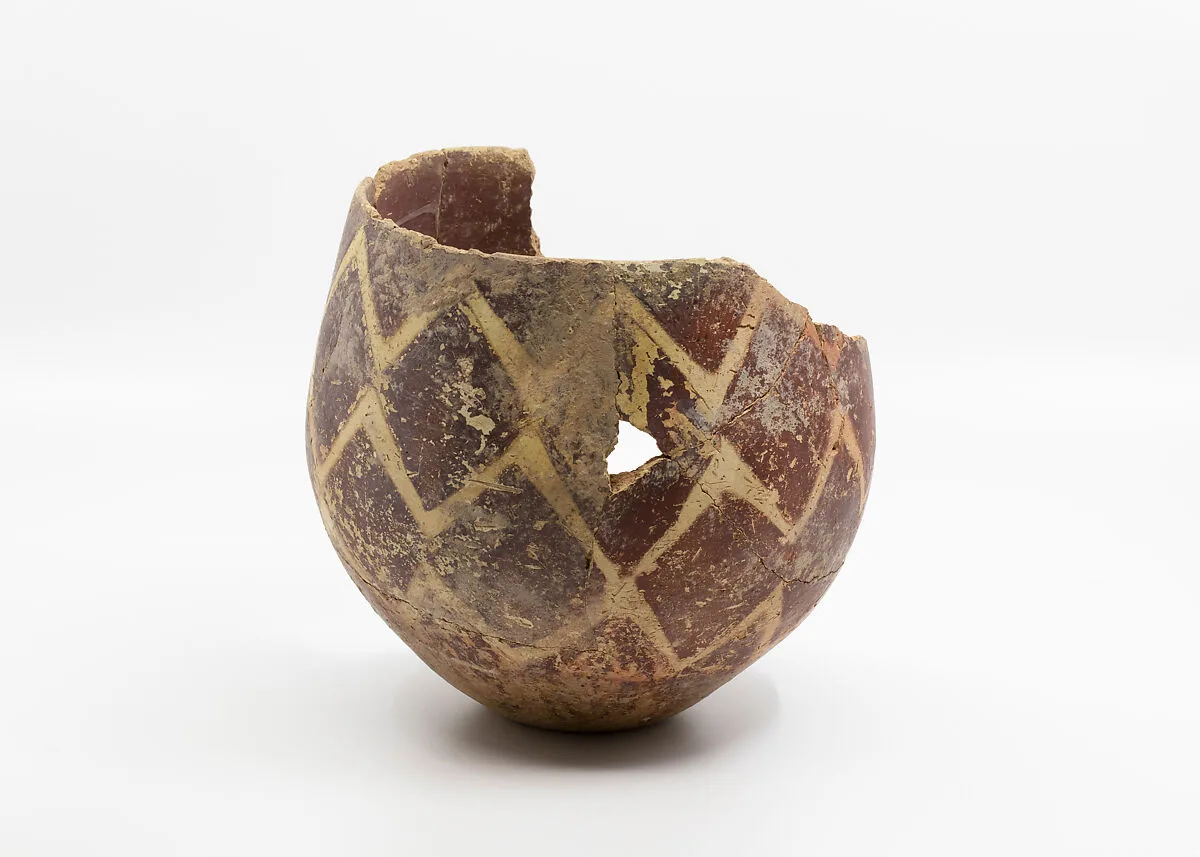
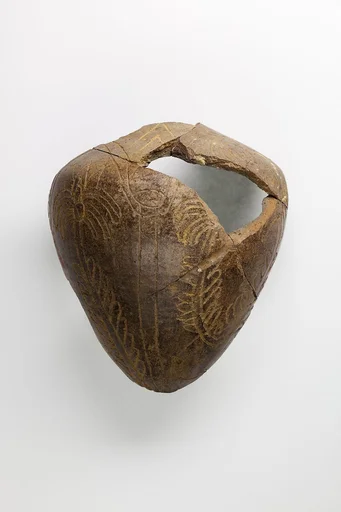
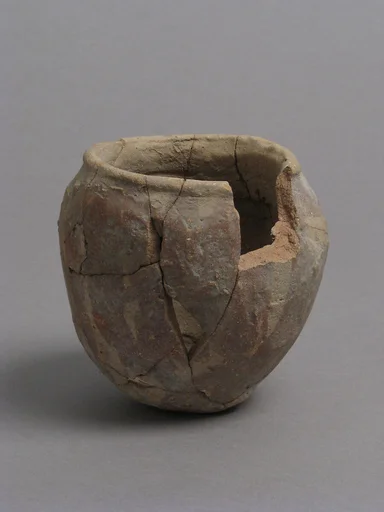
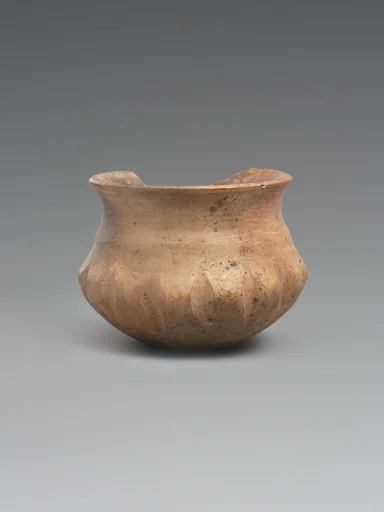
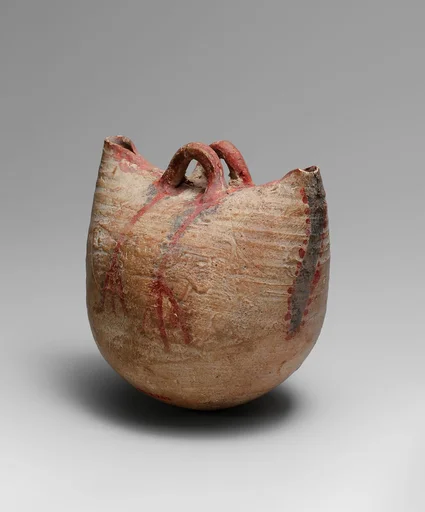
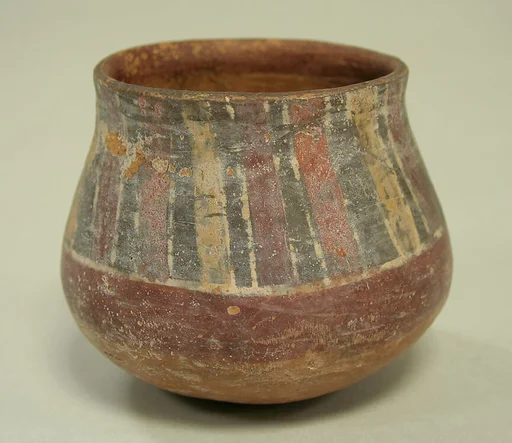
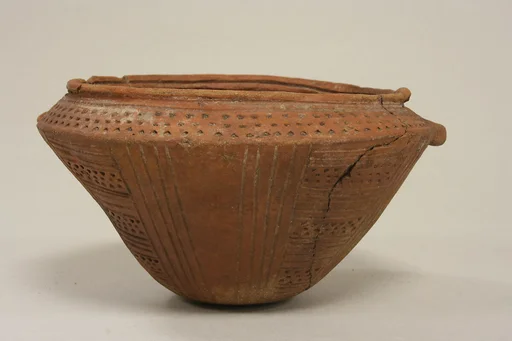
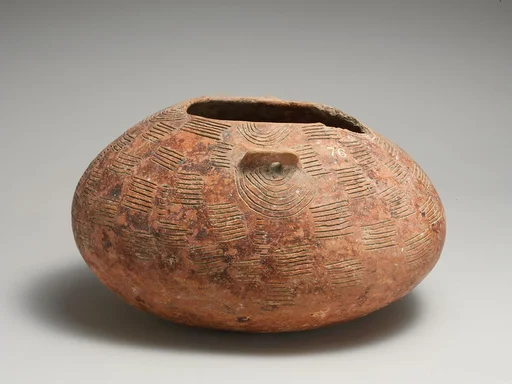
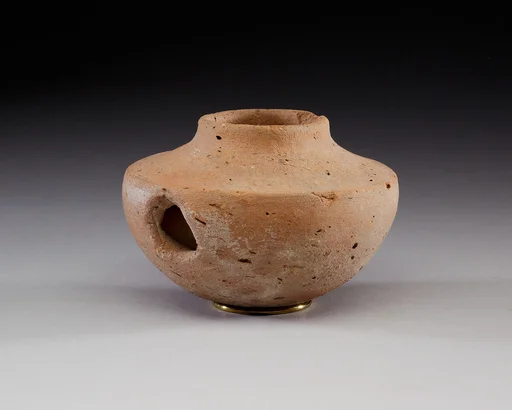
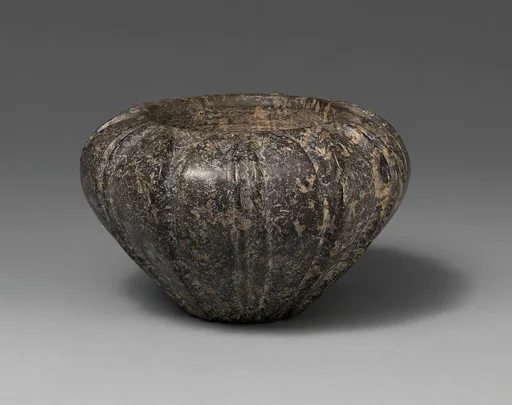
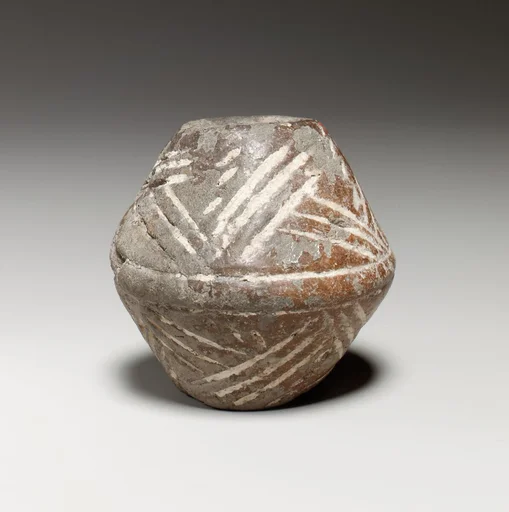
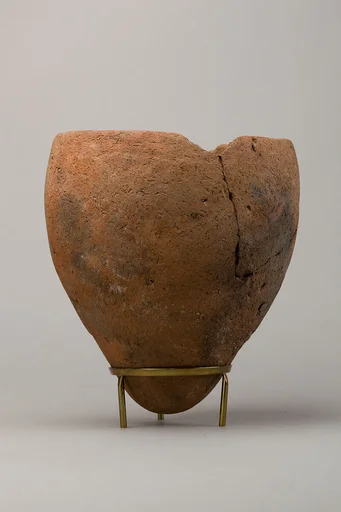
This squat, round vessel has a narrow, flat base and a wide mouth. It is made of a buff clay with reddish brown paint on the interior and exterior. On the exterior, the paint has been reserved to form a zigzag pattern. About one quarter of the original vessel is missing. This vessel was excavated at Dalma Tepe in northwestern Ian in 1961. Since the excavations were very brief, it is difficult to say much about the site, but it appears to have been a settlement during the Chalcolithic period (ca. 5000-4500 B.C.). The flat base of this vessel suggests it was intended to be placed on a surface, like a table or a floor. The size (the rim is more than five inches in diameter) makes it somewhat too large to be a cup, but perhaps it was intended for use with a straw. Alternatively, it might have been a small bowl, used for solid food. During the first half of the fifth millennium B.C., pottery of this type (known as ‘Dalma Ware’) was made throughout western Iran, from the Lake Urmia basin in the northwestern to the area around modern Kermanshah, as well as in eastern Iraq. The makers of this pottery were probably transhumant pastoralists, who lived part of the year in permanent valley settlements, such as Dalma Tepe, and part of the year in camps in the Zagros and Caucasus Mountains.
- Artist
- Unknown
- Date
- ca. 5000–4500 BCE
- Medium
- Ceramic
- Culture
- Iran
- Department
- Ancient Near Eastern Art
- Credit line
- Purchase, The Adelaide Milton de Groot Fund, in memory of the de Groot and Hawley families, 1976