Bowl
Unknown
3rd century BC–1st century AD · Ceramic · Ancient Near Eastern Art
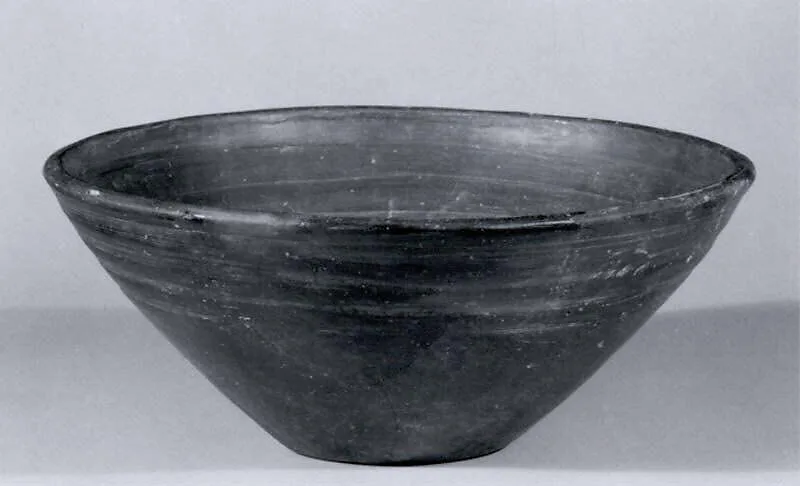
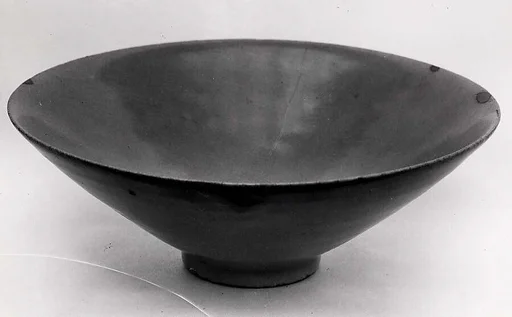
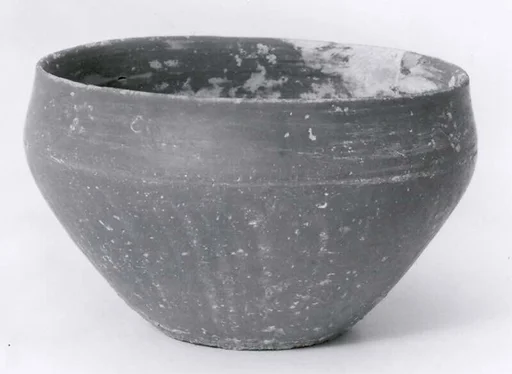
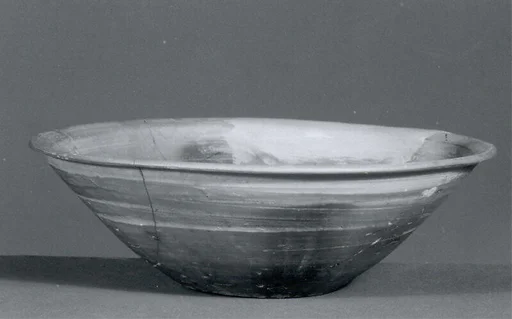
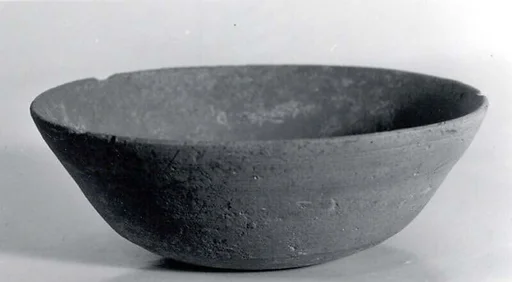
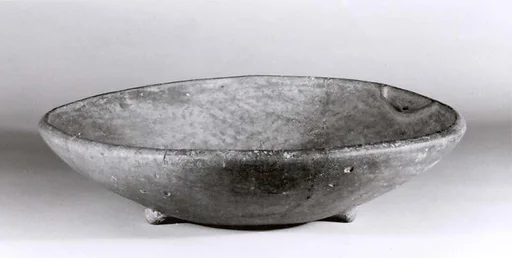
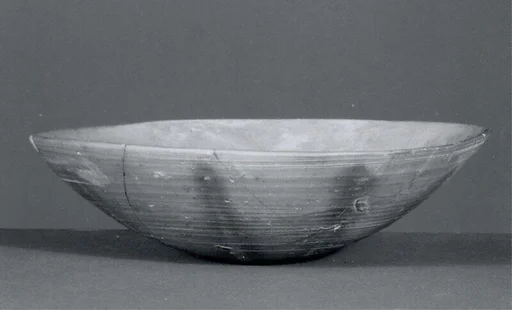
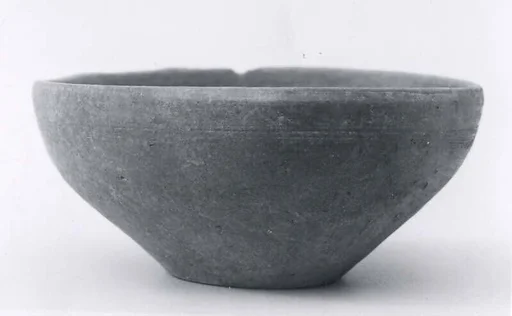
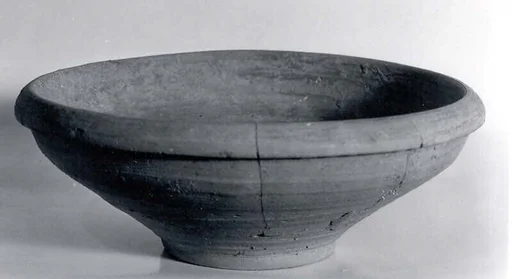
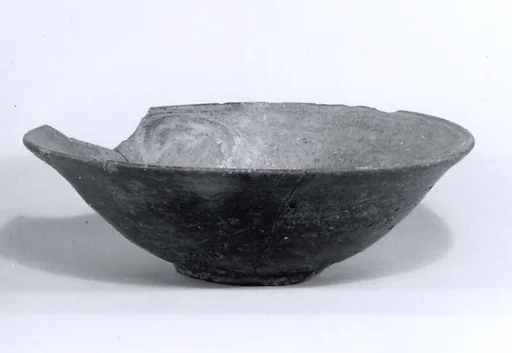
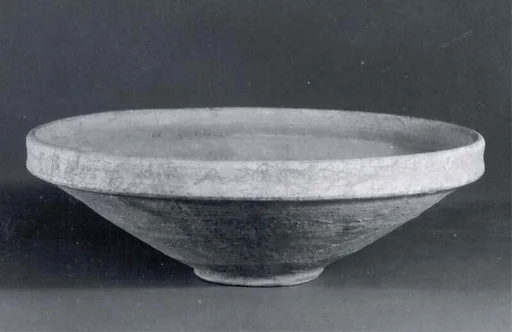
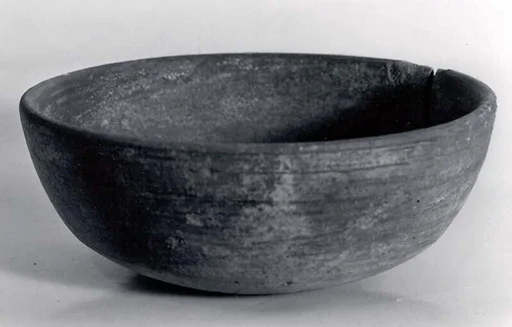
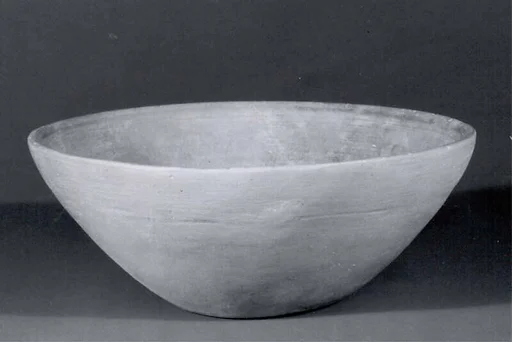
This conical bowl has a flat base and shallow horizontal ribs below the rim. The surface has been burnished. It is made of a dark gray clay, using a potter’s wheel. It was excavated at Shahr-i Qumis in northern Iran, which has been identified as the ancient city of Hecatompylos, established by the Parthians as their capital by about 200 B.C. In Greek Hecatompylos means ‘a hundred gates,’ suggesting that the city was quite large. Indeed, the modern archaeological site includes several mounds, only a few of which have been excavated, and a vast area covered with potsherds. This vessel comes from Site VII, a building which may have originally been an elite residence but which was subsequently reused as a funerary structure. Thus it is unclear whether this bowl was a banqueting vessel or a funerary object, or both.
- Artist
- Unknown
- Date
- 3rd century BC–1st century AD
- Medium
- Ceramic
- Culture
- Parthian
- Department
- Ancient Near Eastern Art
- Credit line
- Purchase, H. Dunscombe Colt Gift, 1969