Scale plate
Unknown
ca. 2nd–3rd century CE · Bronze · Ancient Near Eastern Art
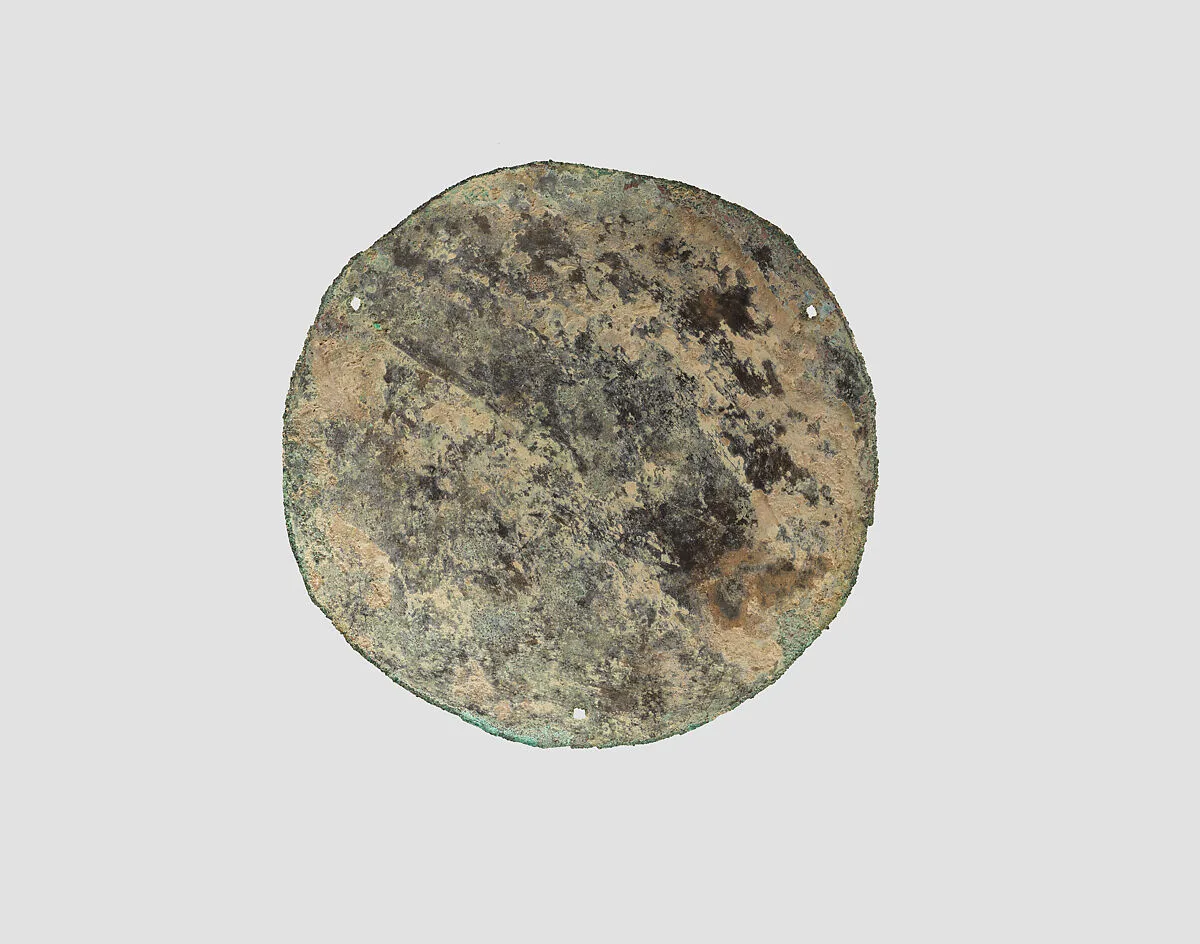
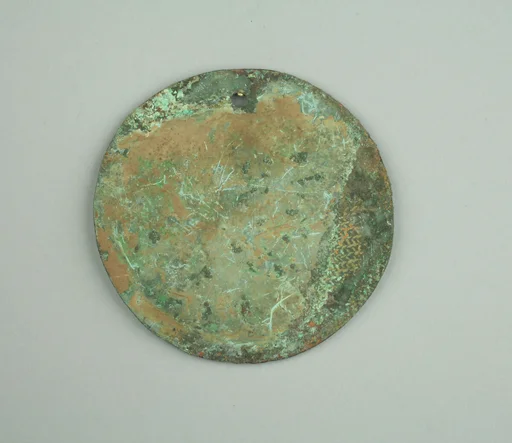
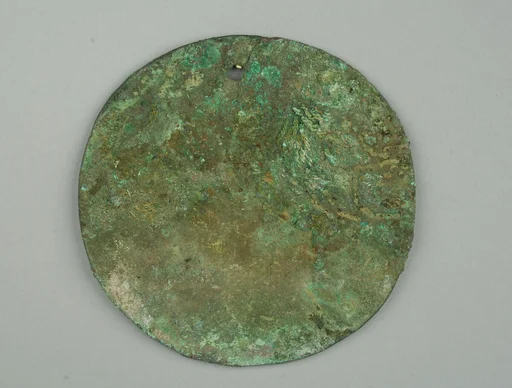
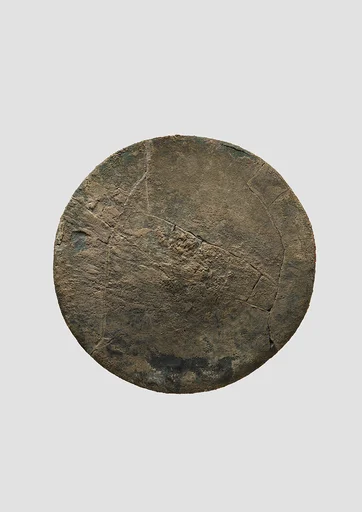
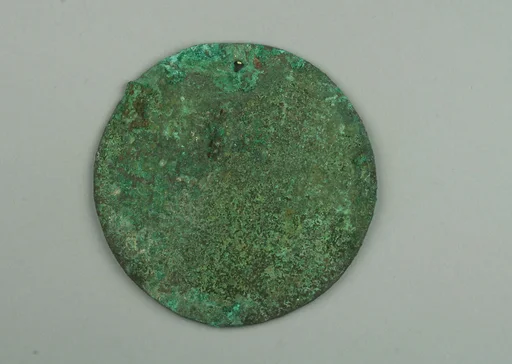
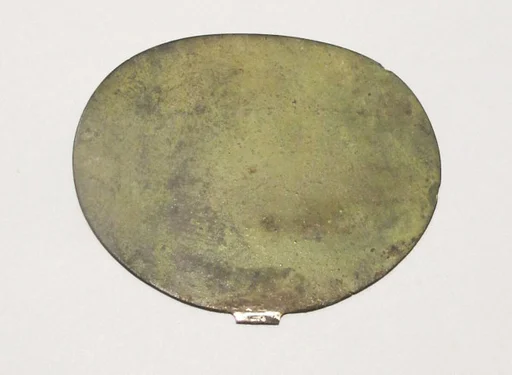
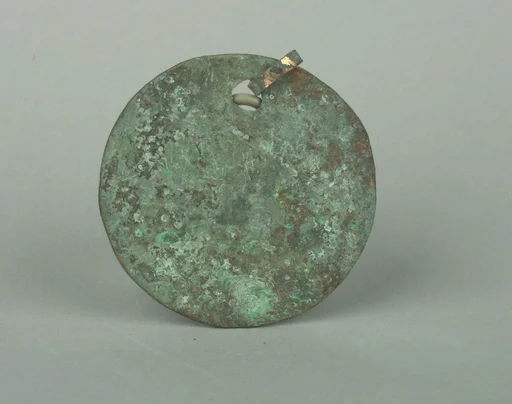
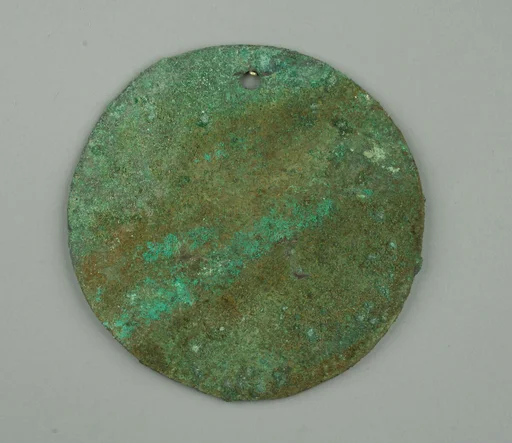
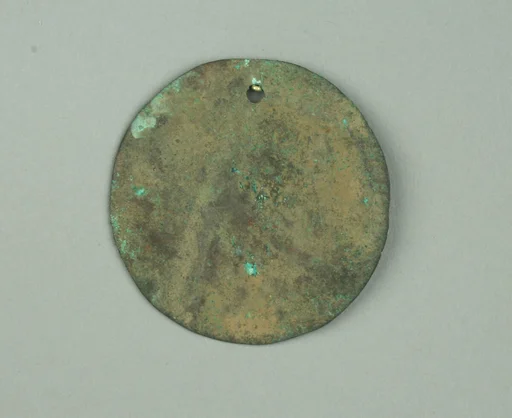
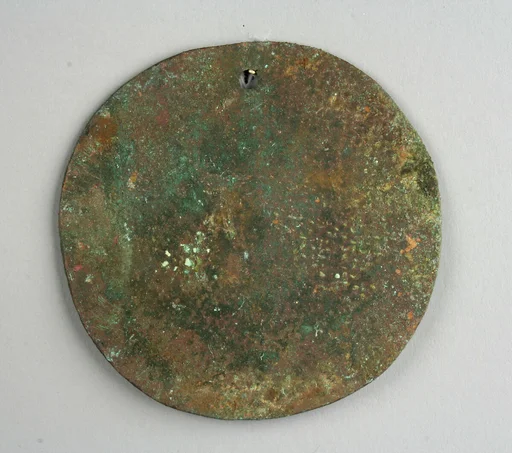
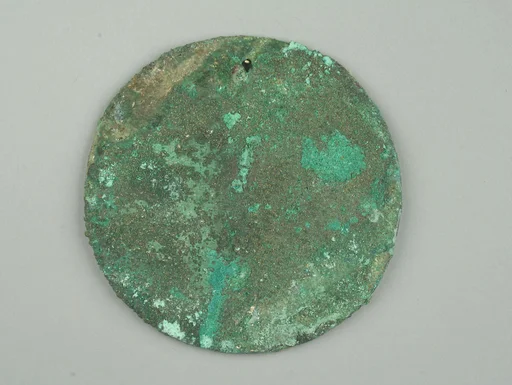
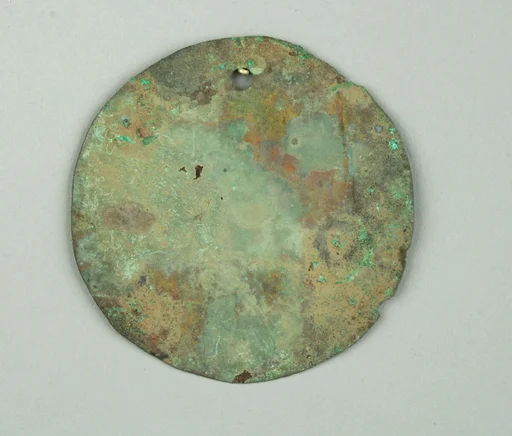
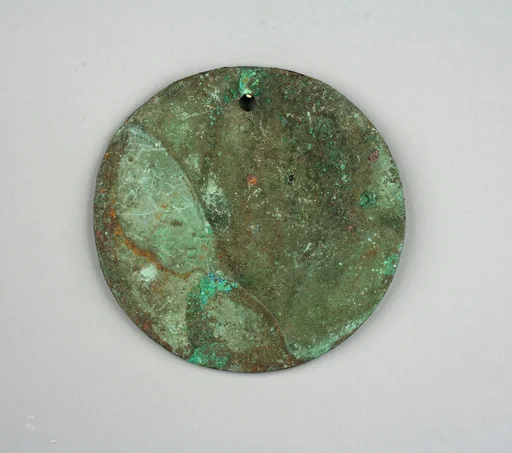
This bronze plate is round and slightly concave. It has three equidistant holes, probably used for suspension, suggesting it was originally one of a pair of balance weights. It was excavated at Shahr-i Qumis in northern Iran, which has been identified as the ancient city of Hecatompylos, established by the Parthians as their capital by about 200 B.C. In Greek Hecatompylos means ‘a hundred gates,’ suggesting that the city was quite large. Indeed, the modern archaeological site includes several mounds, only a few of which have been excavated, and a vast area covered with potsherds. This plate comes from Site VI, a building which has been interpreted as a fortified garrison.
- Artist
- Unknown
- Date
- ca. 2nd–3rd century CE
- Medium
- Bronze
- Culture
- Parthian
- Department
- Ancient Near Eastern Art
- Credit line
- Purchase, H. Dunscombe Colt Gift, 1969