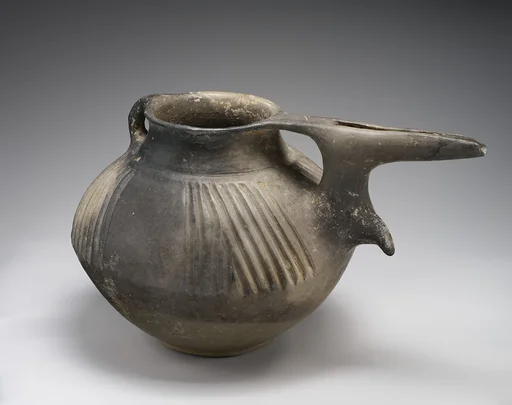
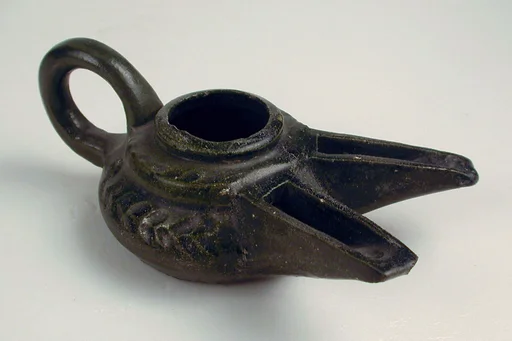
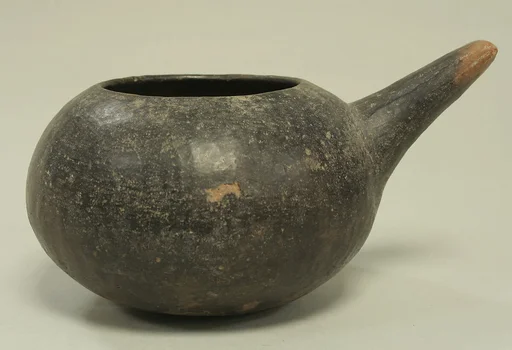
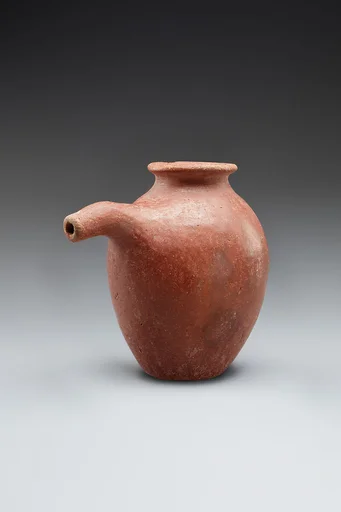
Spouted pitcher
Unknown
ca. 1050–800 BCE · Ceramic · Ancient Near Eastern Art
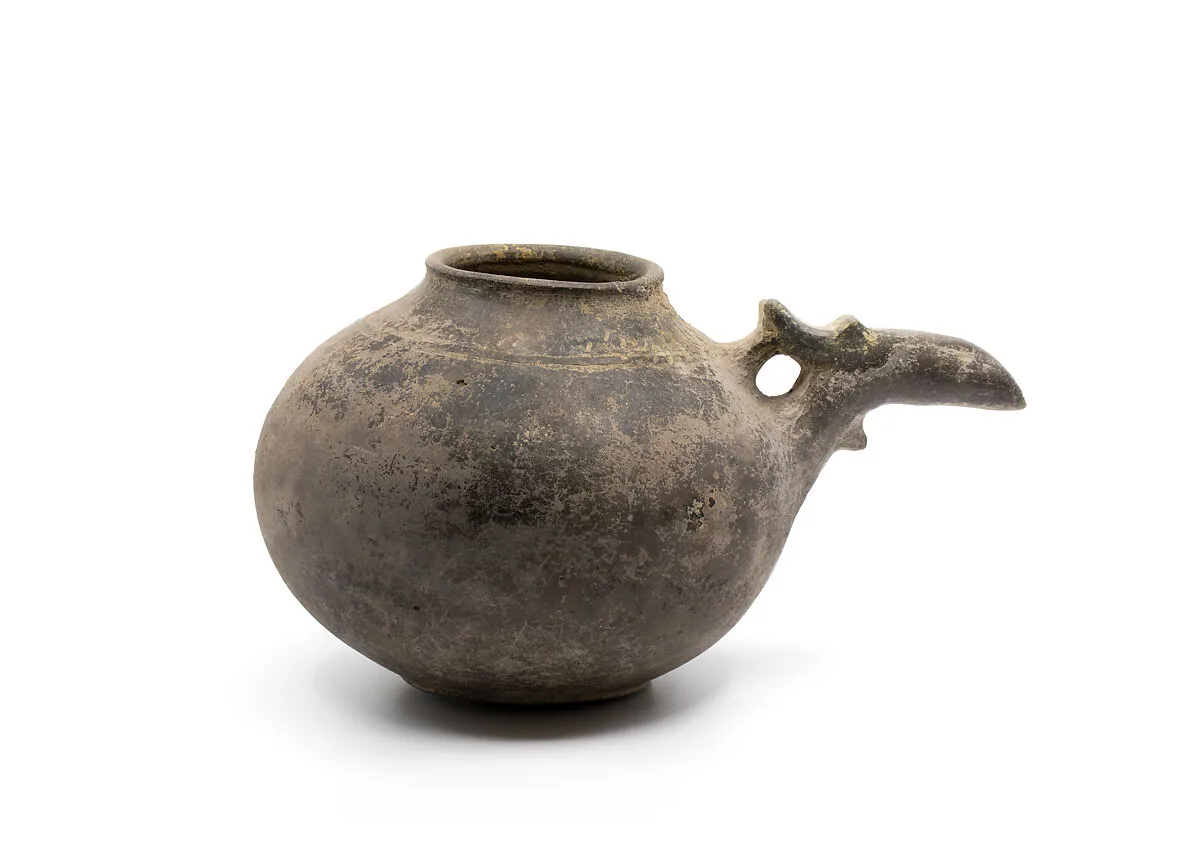
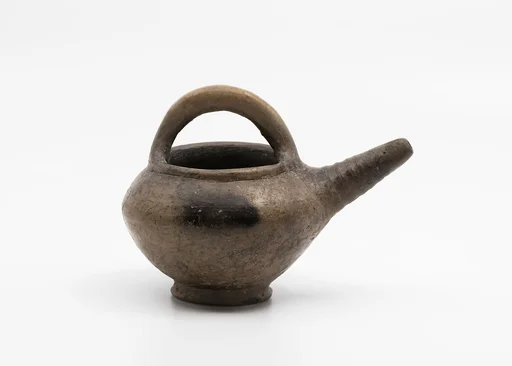
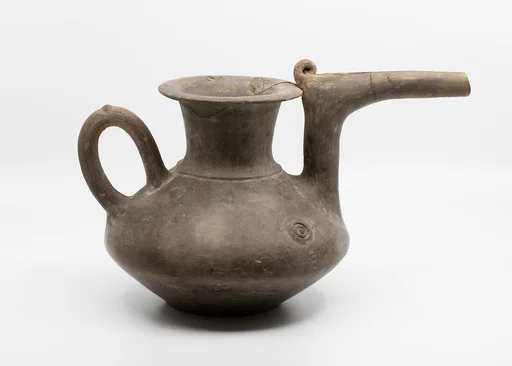
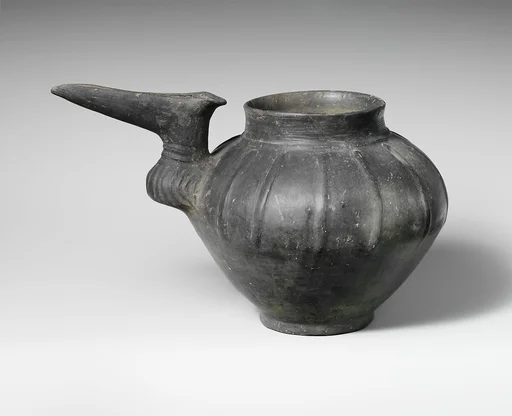
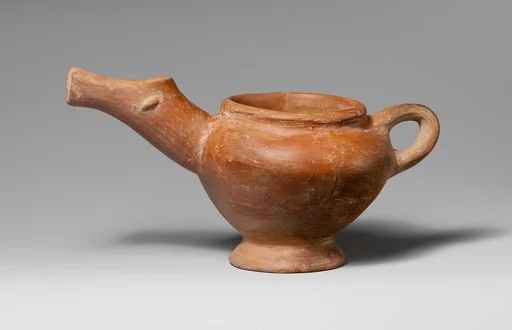
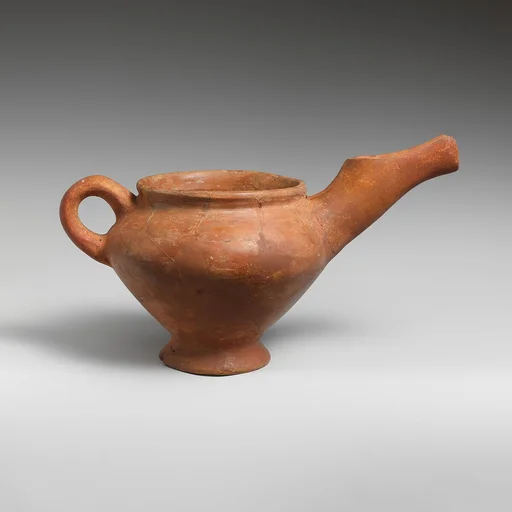
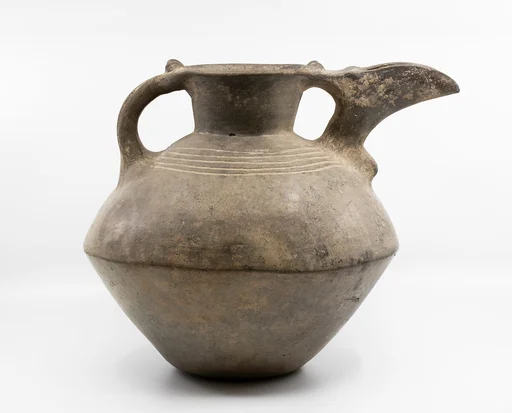
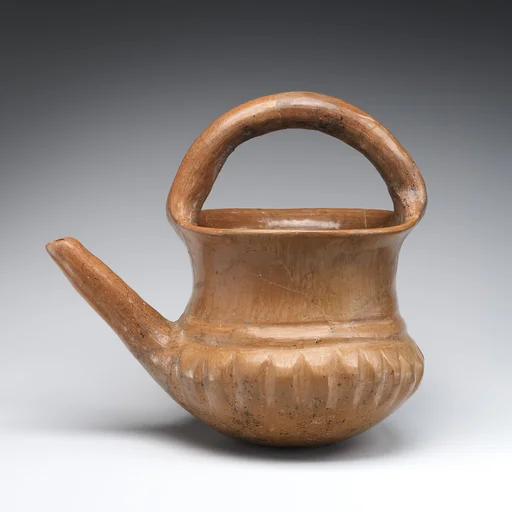
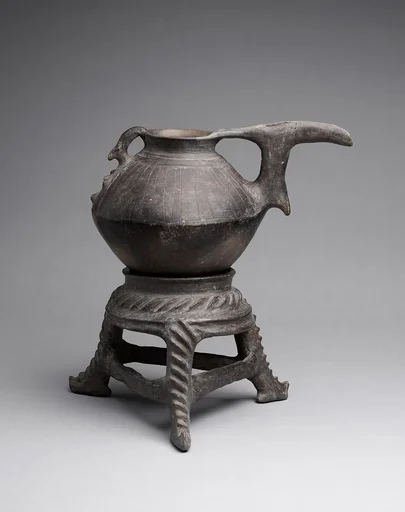
This pitcher has a globular body, a ring base and a rounded rim. A pointed spout emerges from the body of the pitcher at an angle before extending horizontally. The back of the spout is connected to the vessel by a bridge whose jointed shaped parallels that of the spout itself. Below the spout is a pointed projection. The combination of the pointed spout and projection below may suggest the form of a bird with a long beak and a crop in its neck. The pitcher is made of burnished grey clay. The body was likely made in two separate pieces on a wheel, with the spout added later. This pitcher was excavated from a grave at Dinkha Tepe in northwestern Iran. During the Iron Age Dinkha Tepe was a small settlement, probably ruled by Hasanlu, a major site fifteen miles to the east. Presumably this pitcher was used to pour a liquid containing dregs, such as wine, since the round body and spout would prevent the dregs from ending up in the cup. Possibly it was used in a funerary banquet or ritual before it was placed in the grave. Two cups were also found in the grave.
- Artist
- Unknown
- Date
- ca. 1050–800 BCE
- Medium
- Ceramic
- Culture
- Iran
- Department
- Ancient Near Eastern Art
- Credit line
- Rogers Fund, 1966