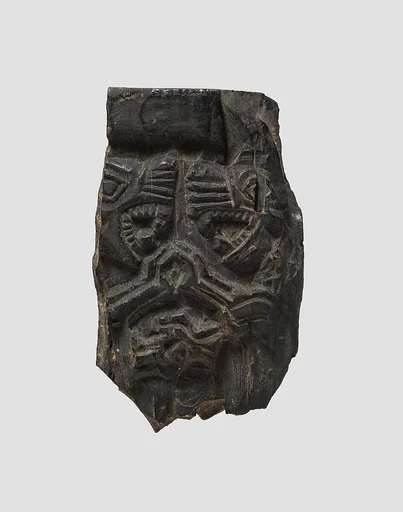
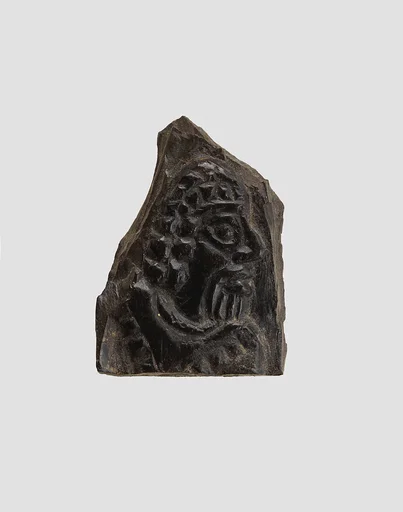
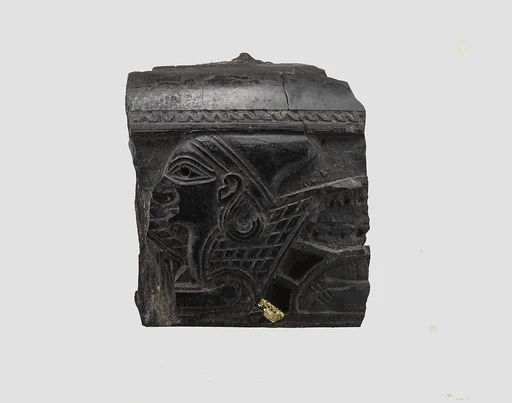
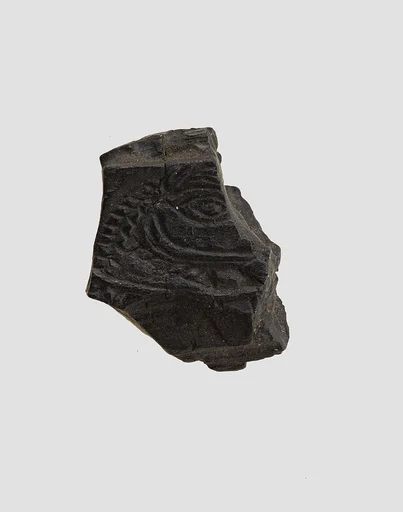
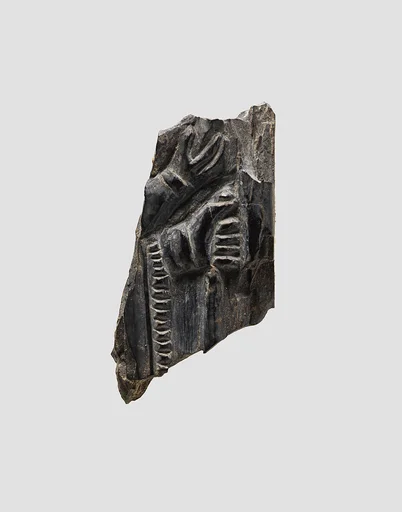
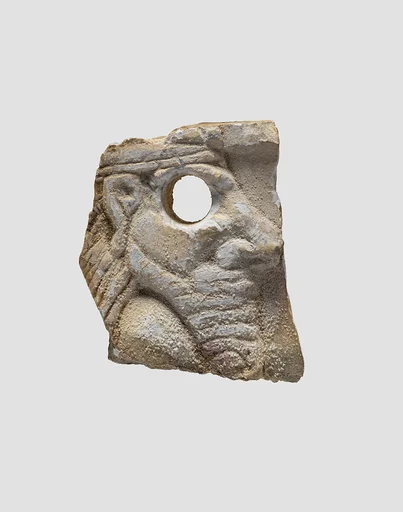
Furniture plaque carved in relief with man holding vessel to his mouth
Unknown
ca. 9th century BCE · Ivory · Ancient Near Eastern Art
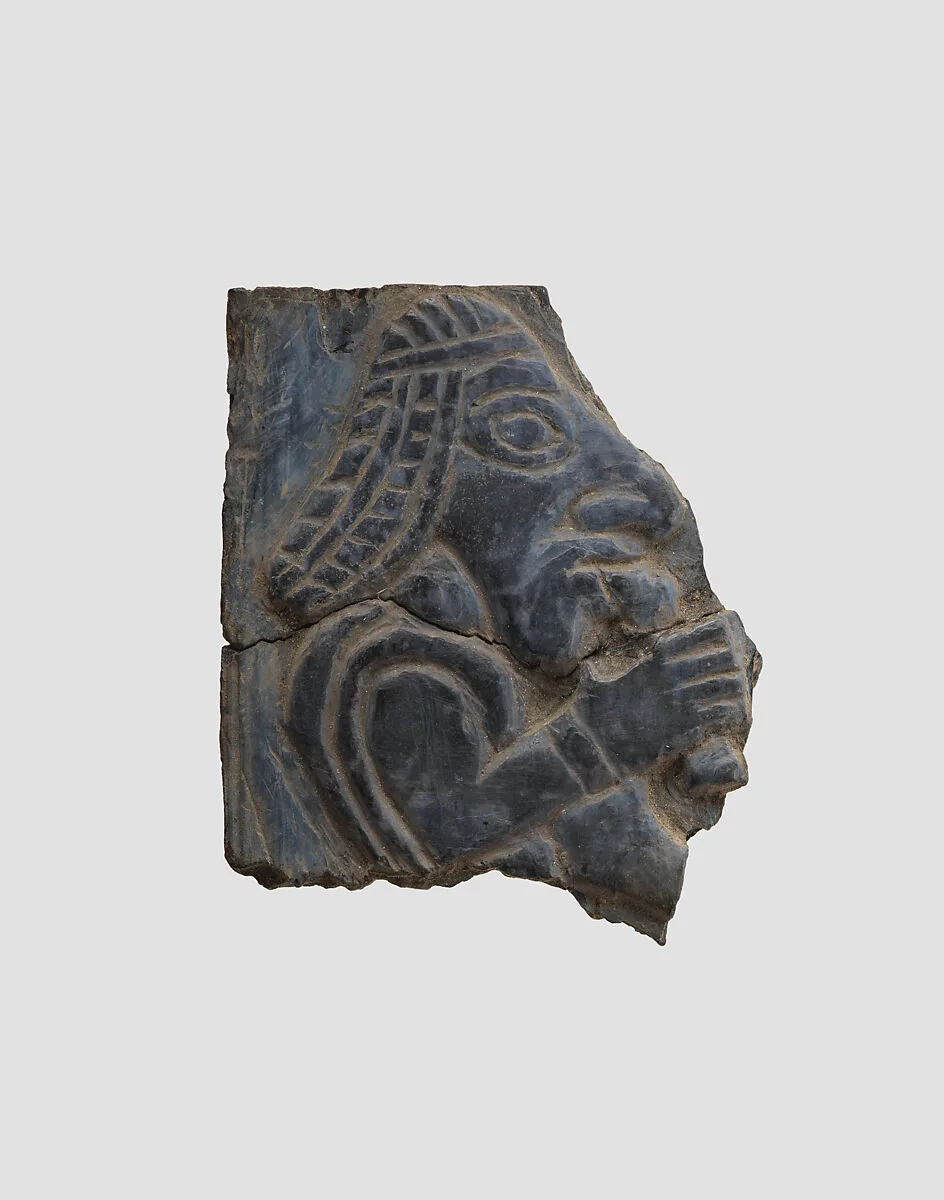
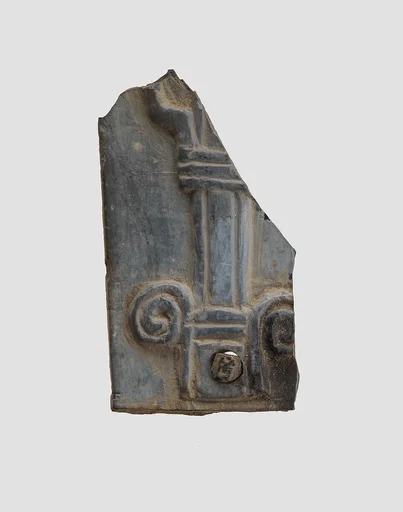
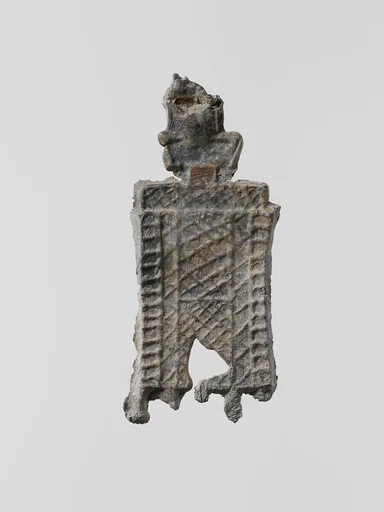
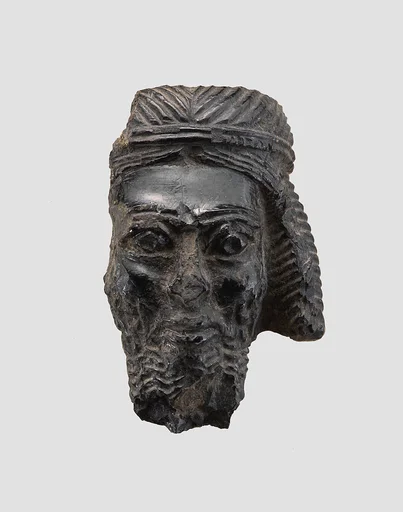
Excavations at Hasanlu in Iran yielded a large number of carved ivory fragments, many in a distinctive style found only at this site, which probably decorated wooden furniture or were used as small precious objects such as boxes. The citadel at Hasanlu was attacked and destroyed around 800 B.C., most likely by military forces of the powerful state of Urartu, centered in present-day Armenia, eastern Turkey, and northwestern Iran. In the fire that destroyed the citadel, many objects were crushed and shattered. The blackened appearance of most of the Hasanlu ivories is due to their exposure to high temperatures at the time of the citadel’s destruction. On this fragment, a figure faces right and drinks from a cup, the base of which can be seen protruding below his fist. His hair covers the back of the neck and is held at the forehead with a fillet. The eye and nose are emphasized over the rest of the features. Bunched fabric can be seen draped over his shoulder, but the details of the garment are difficult to make out. A bracelet at the wrist has a subtle oval swelling that may represent decoration. The plaque was probably attached to a wooden frame by means of dowels, to form a piece of furniture.
- Artist
- Unknown
- Date
- ca. 9th century BCE
- Medium
- Ivory
- Culture
- Iran
- Department
- Ancient Near Eastern Art
- Credit line
- Rogers Fund, 1965