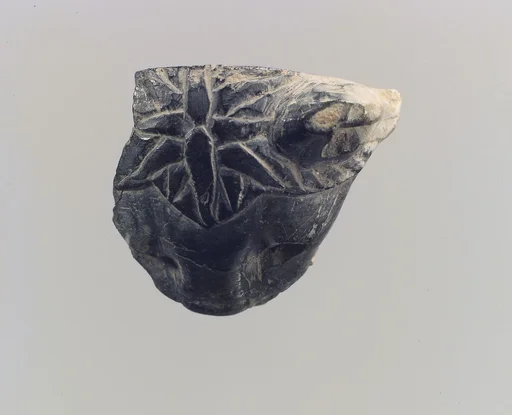
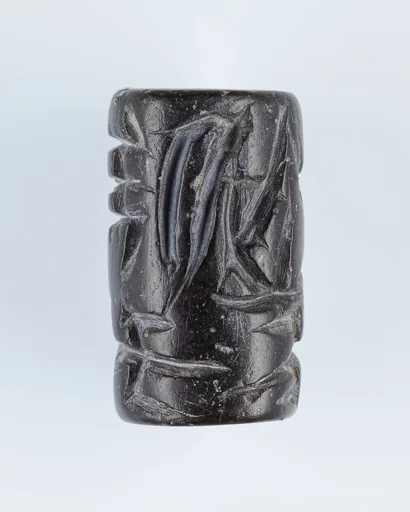
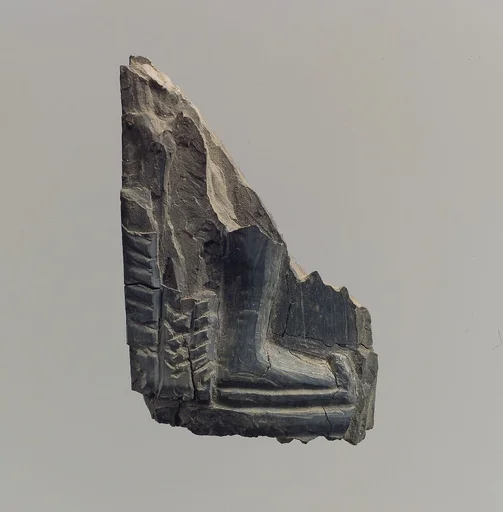
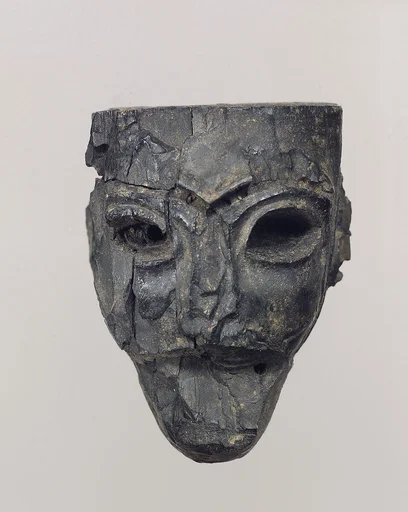
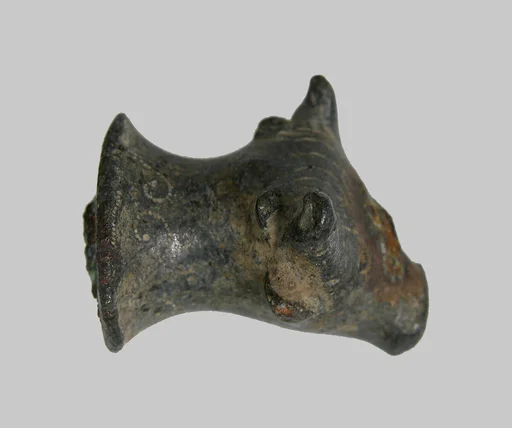
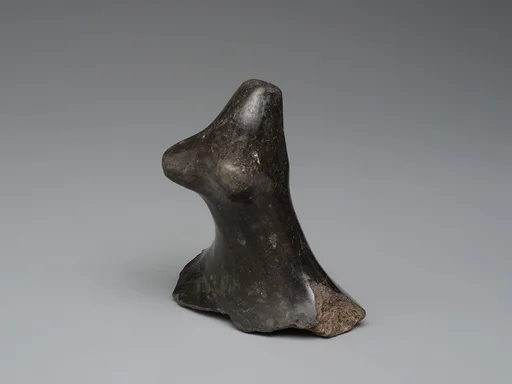
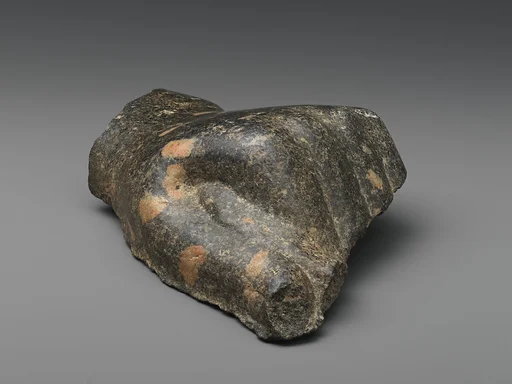
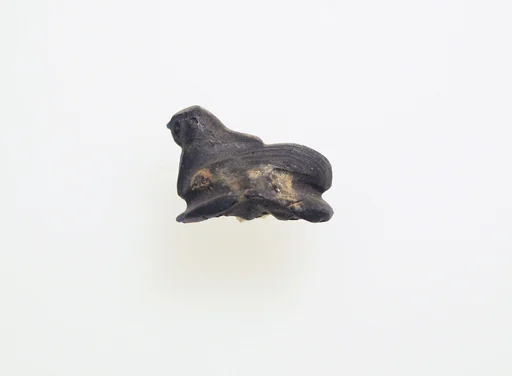
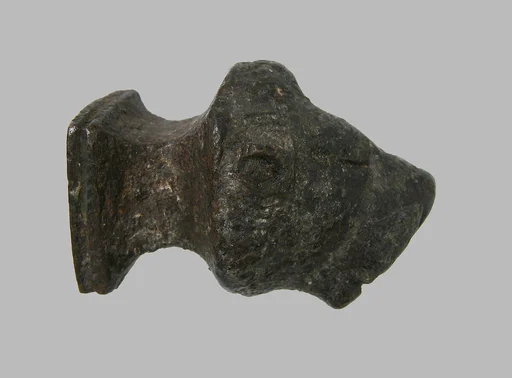
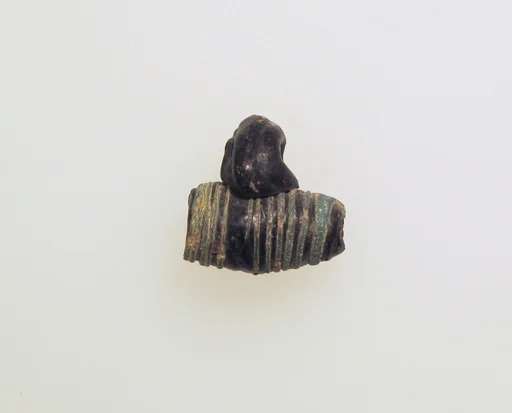
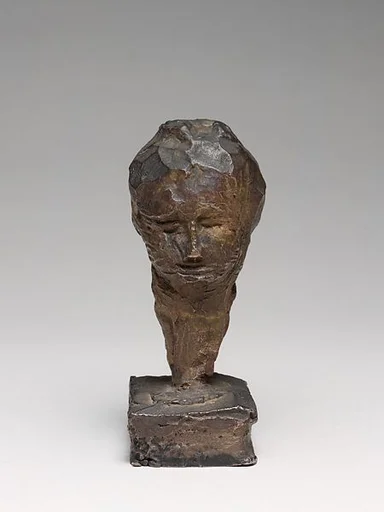
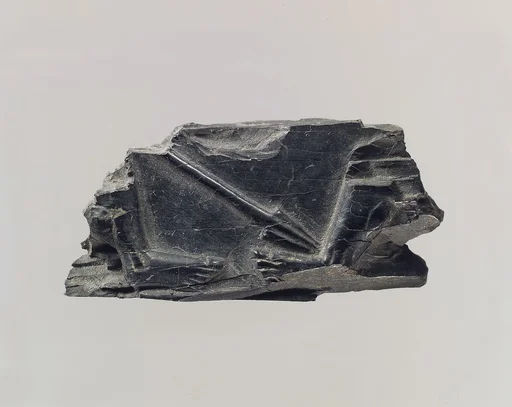
Lower half of a human head in the round
Unknown
ca. 9th century BCE · Ivory · Ancient Near Eastern Art
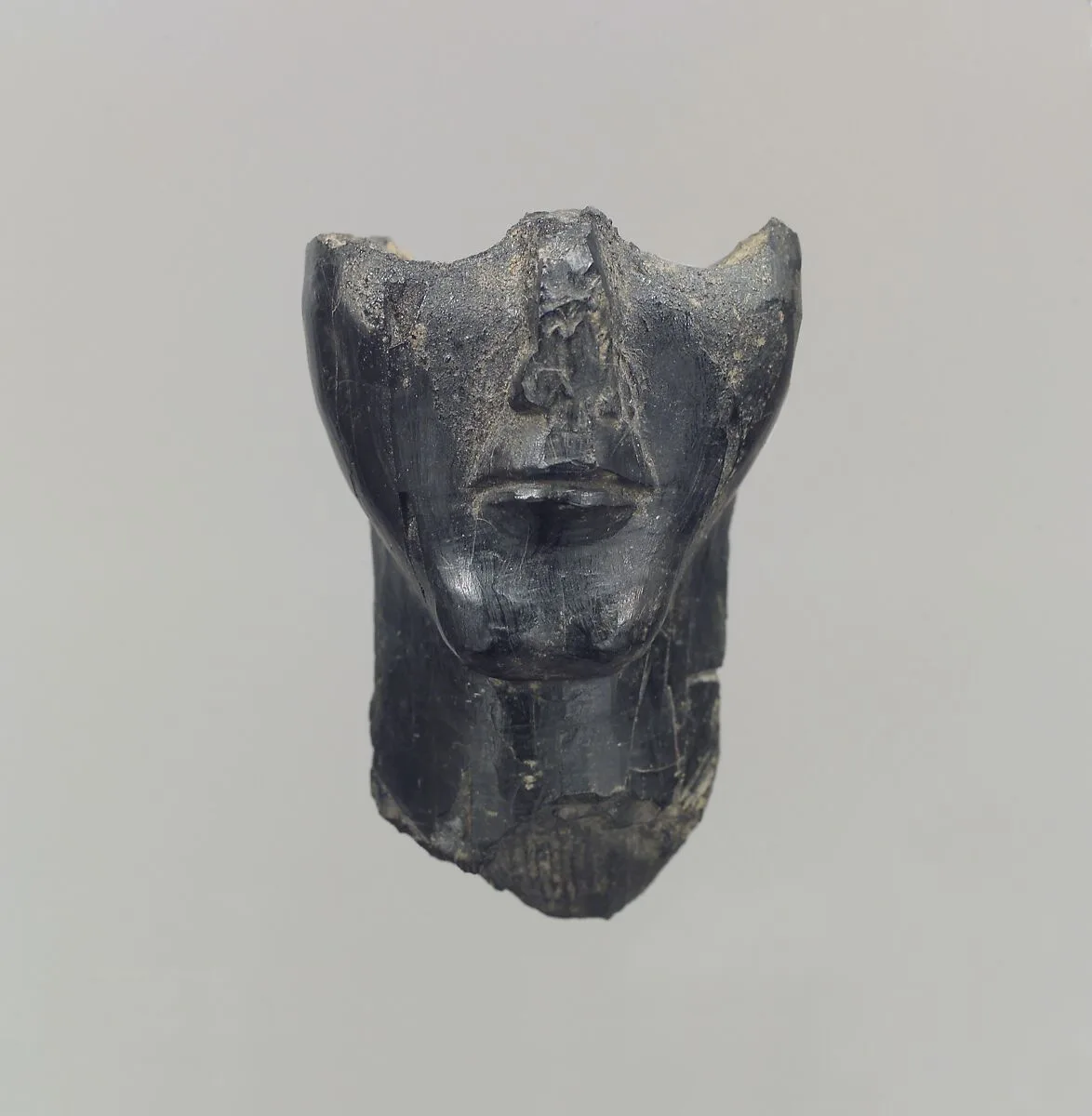
Excavations at Hasanlu in Iran yielded a large number of carved ivory fragments which probably decorated wooden furniture or were used as small precious objects such as boxes. The citadel at Hasanlu was attacked and destroyed around 800 B.C., most likely by military forces of the powerful state of Urartu, centered in present-day Armenia, eastern Turkey, and northwestern Iran. In the fire that destroyed the citadel, many objects were crushed and shattered. The blackened appearance of most of the Hasanlu ivories is due to their exposure to high temperatures at the time of the citadel’s destruction. This head carved in the round is broken just below the eyes and missing its nose, but the sculptor’s skill is evident in the sensitive modeling of the high cheekbones, prominent cleft chin, and the full mouth with its slightly projecting upper lip. The eye sockets were hollowed out to receive inlays, now missing. The back is also broken away, leaving no clear trace of how the head was attached to another element. Its smooth, beardless face and slender neck suggest it depicts a female figure.
- Artist
- Unknown
- Date
- ca. 9th century BCE
- Medium
- Ivory
- Culture
- Iran
- Department
- Ancient Near Eastern Art
- Credit line
- Rogers Fund, 1965