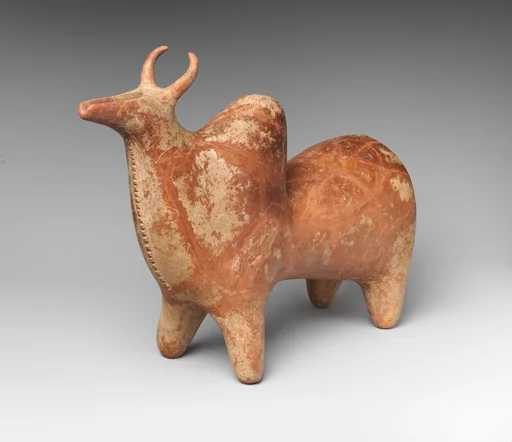
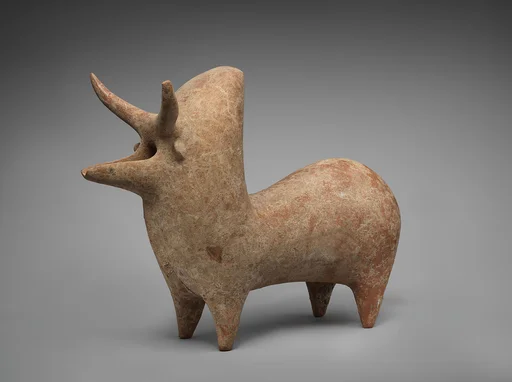
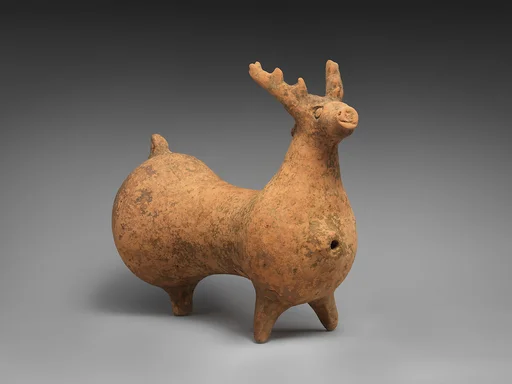
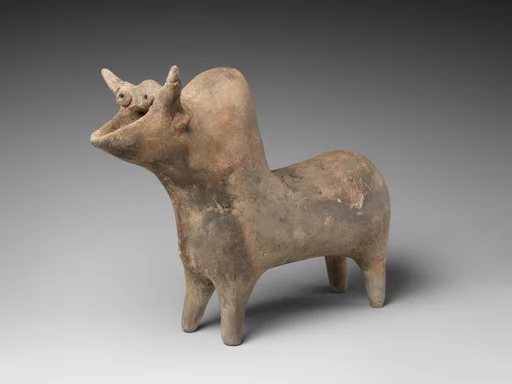
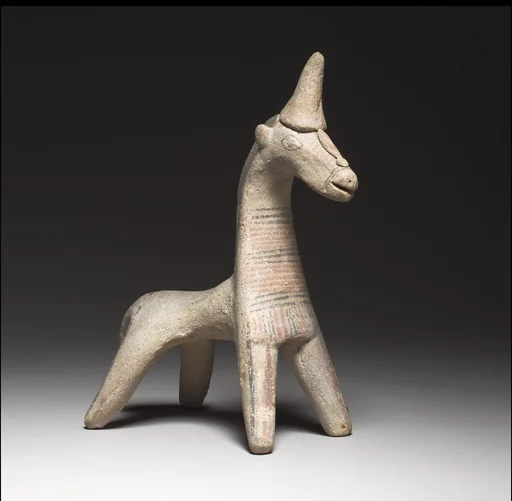
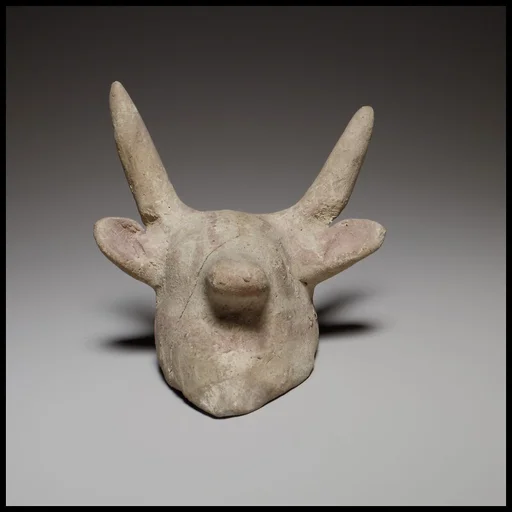
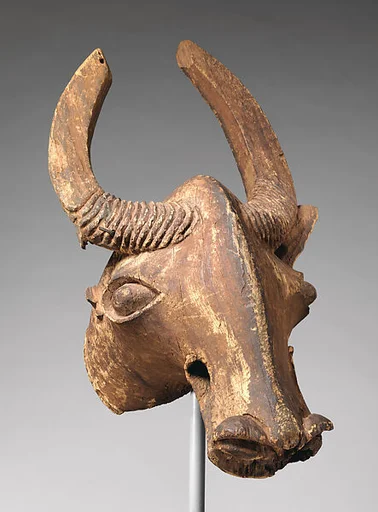
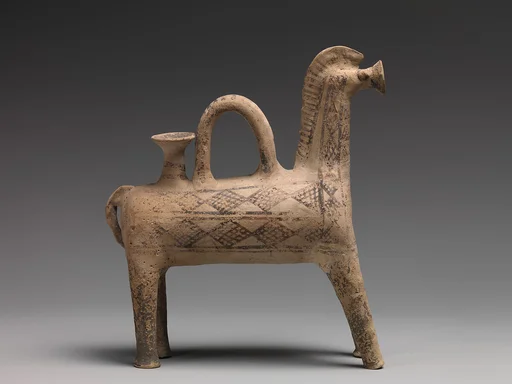
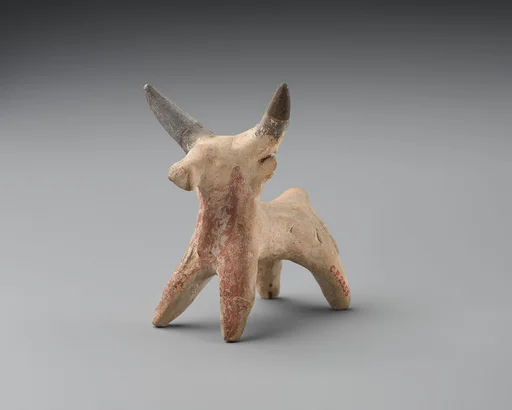
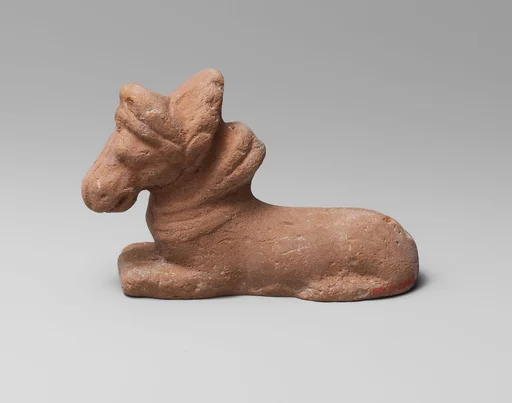
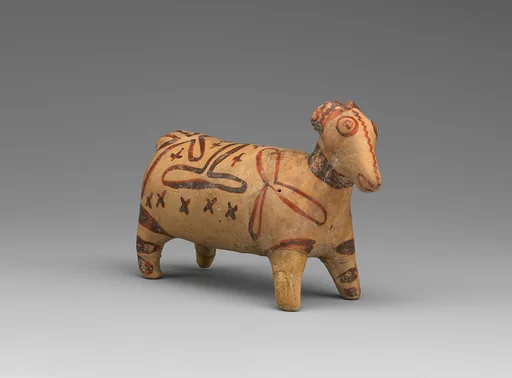
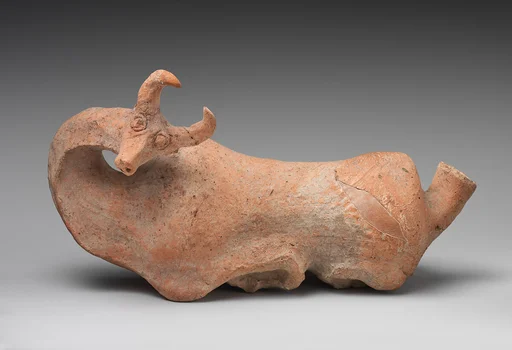
Rhyton in the shape of an ibex
Unknown
ca. 500 BCE · Ceramic · Ancient Near Eastern Art
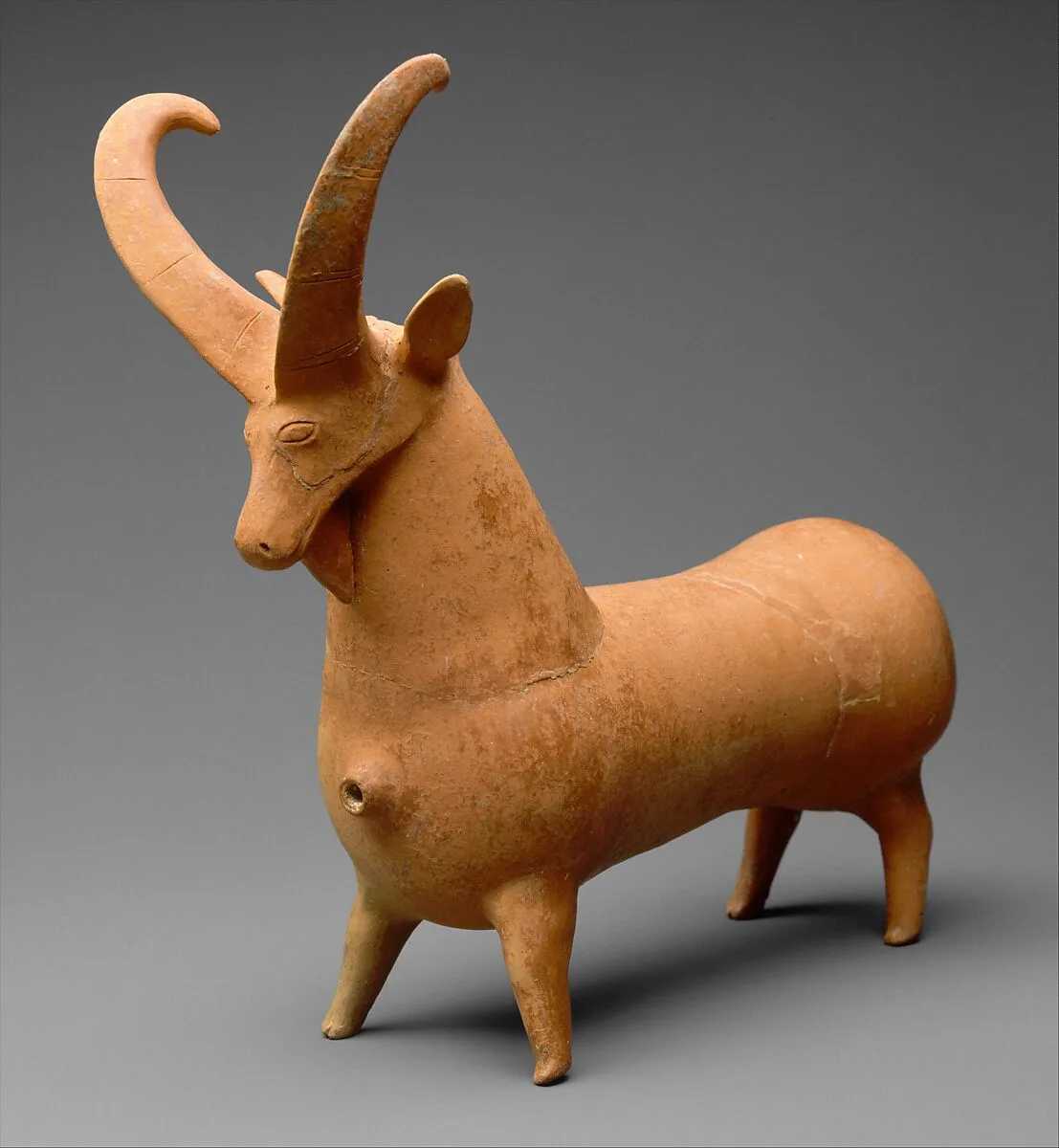
This ceramic rhyton in the form of an ibex comes from northwestern Iran where theriomorphic vessels were popular, especially during the later Bronze and Iron ages. This particular vessel is somewhat crude in its workmanship; it is composed of basic geometric forms, cylinders and cones, with a pouring hole fashioned in the center of the breast. The head projects in pyramid form and is more sensitively modeled than the rest of the body, with incised eyes and a triangular beard. In a manner characteristic of the work of Near Eastern artisans, the animal's horns are elongated and emphasized. The legs are unnaturally short—this may have been to insure the stability of the piece or to suit the convenience of the potter.
- Artist
- Unknown
- Date
- ca. 500 BCE
- Medium
- Ceramic
- Culture
- Iran
- Department
- Ancient Near Eastern Art
- Credit line
- Gift of Edward and Fay Safani, 1964