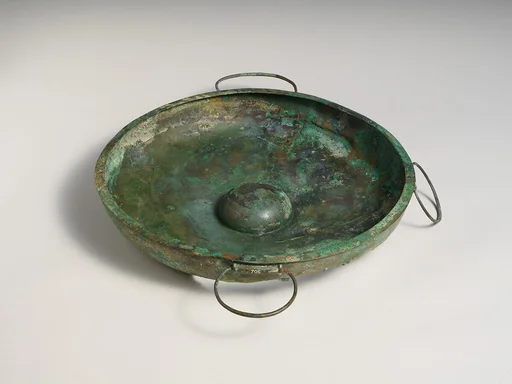
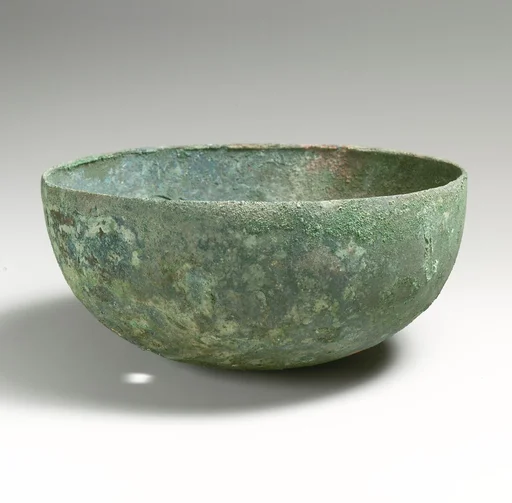
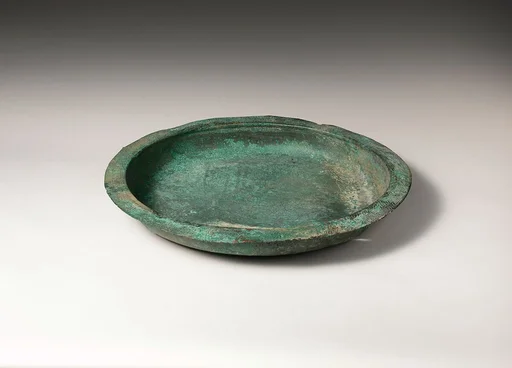
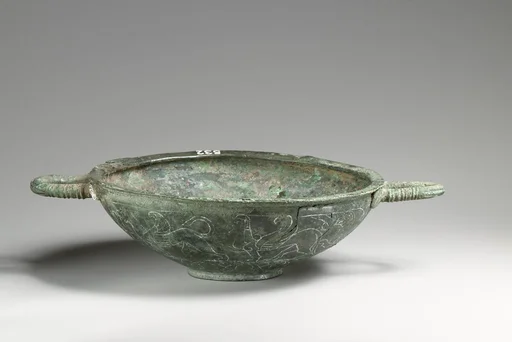
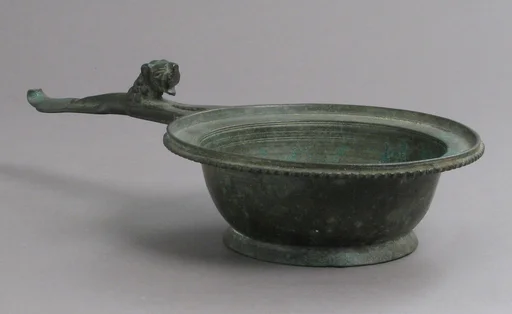
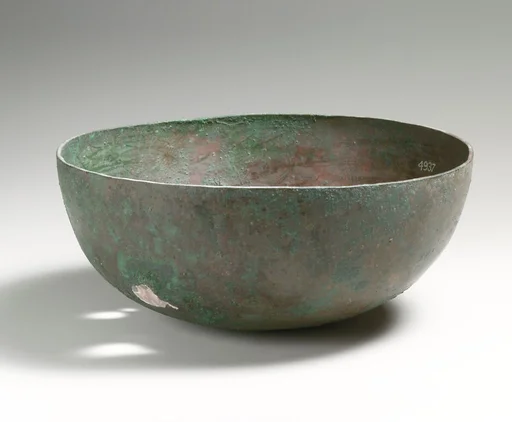
Lobed omphalos bowl
Unknown
ca. 6th–5th century BCE · Bronze · Ancient Near Eastern Art
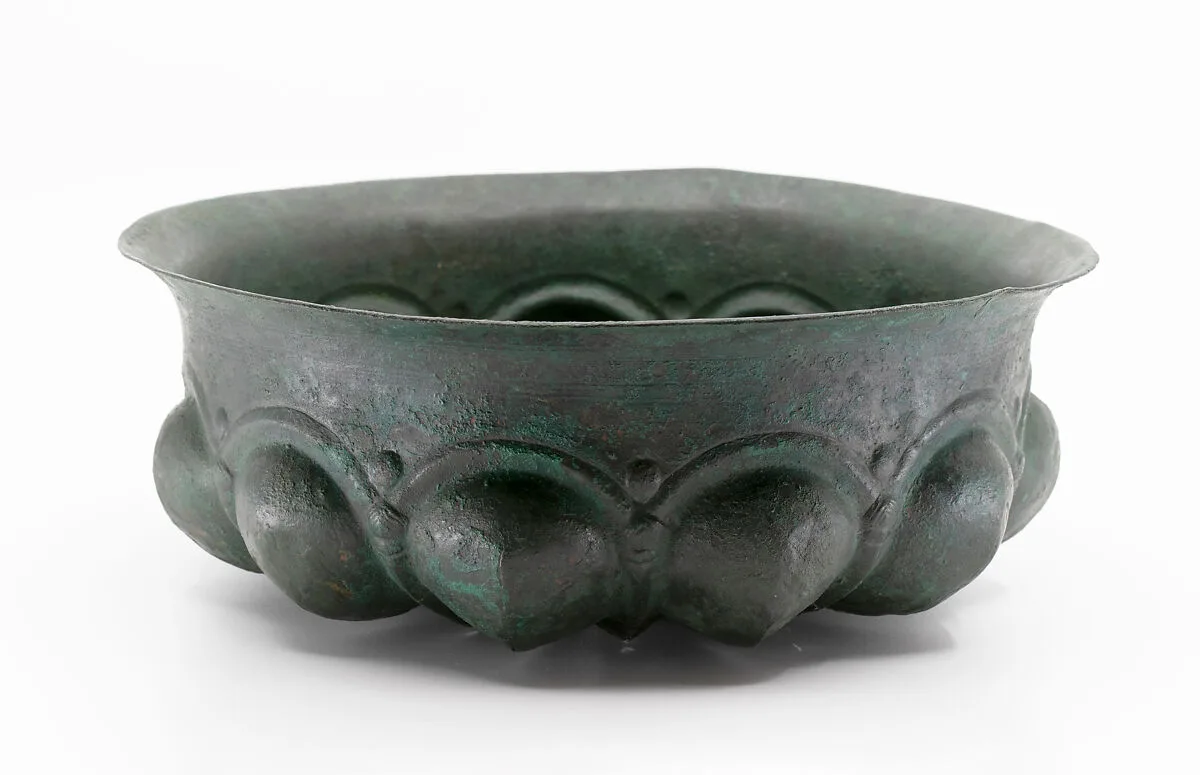
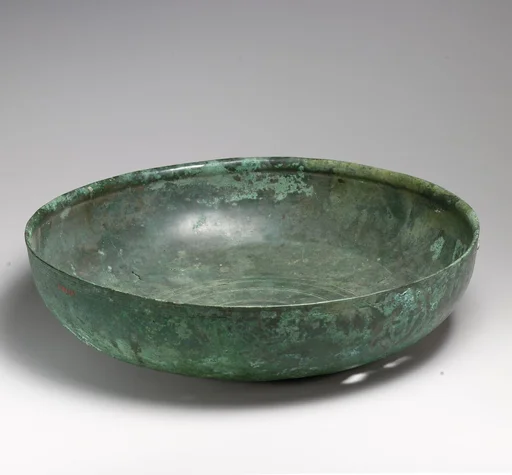
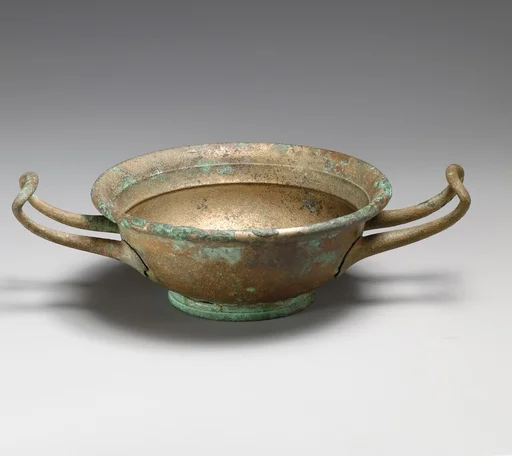
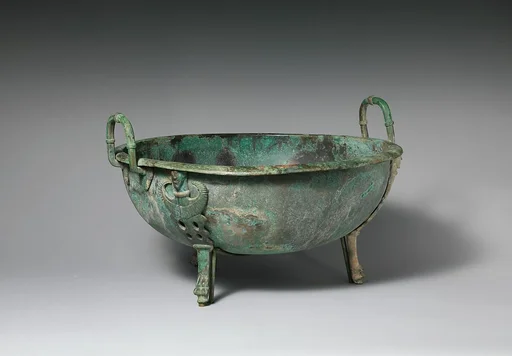
This bronze bowl has a carinated, or ridged, shoulder and a turned-out rim. In the center of the bowl is a raised boss, usually referred to by the Greek term omphalos, surrounded by eleven lobes. The vessel was made by raising and sinking a single sheet of metal, and then adding chased details, a method that was employed for most Achaemenid metalware. The form is this bowl is known as the ‘Achaemenid bowl’ because it is depicted in the reliefs on the Apadana at Persepolis, the capital of the Achaemenid Persian Empire. In those reliefs the bowl is carried by delegations from across the empire. This has led scholars to suggest that the Achaemenid bowl was a marker of imperial unity, rather than being associated with any one region of the empire. Indeed, Achaemenid bowls have been found across the empire – in Persian itself, Lydia, Syria, Palestine, Egypt and even in Gandhara in the east – made of a variety of materials, including gold, silver, bronze, glass and ceramic. They were used as drinking vessels, though the size of this bowl would have made it challenging to drink from.
- Artist
- Unknown
- Date
- ca. 6th–5th century BCE
- Medium
- Bronze
- Culture
- Achaemenid
- Department
- Ancient Near Eastern Art
- Credit line
- Harris Brisbane Dick Fund, 1964