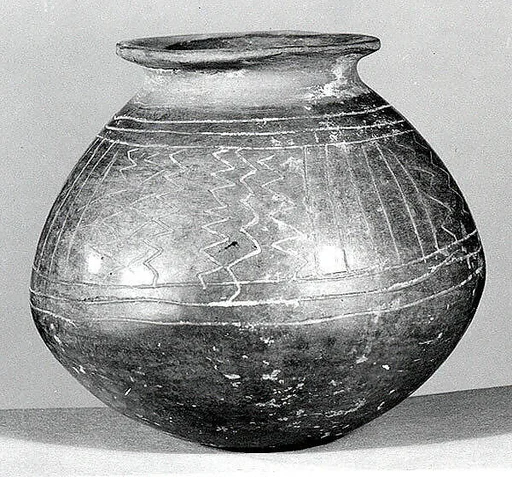
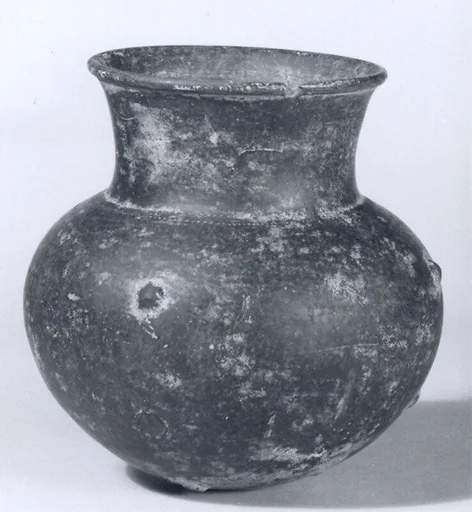
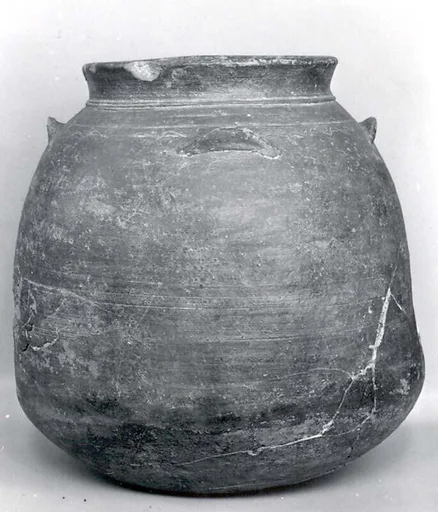
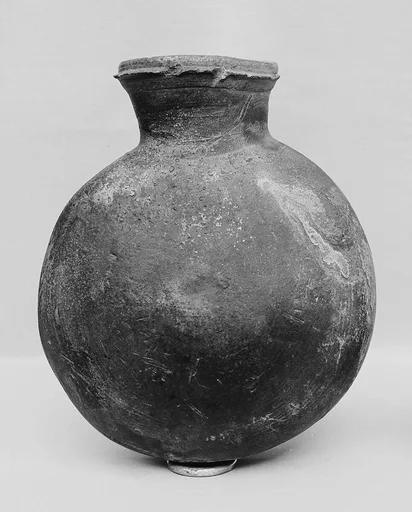
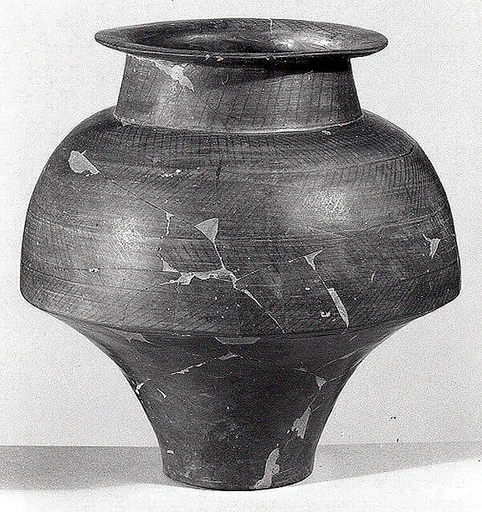
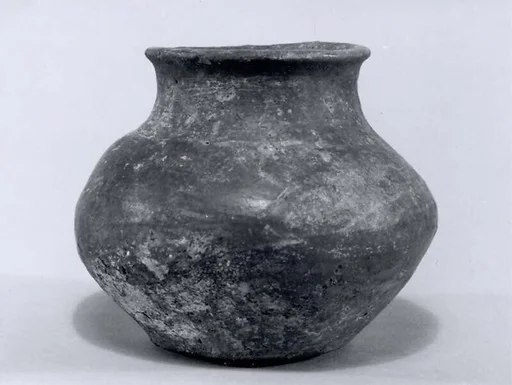
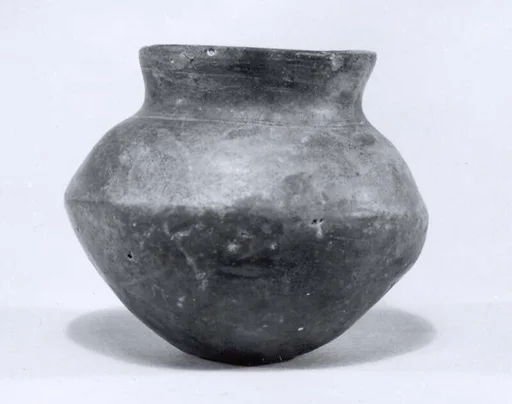
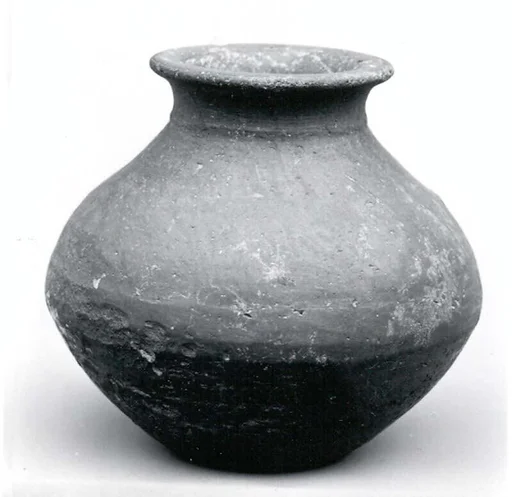
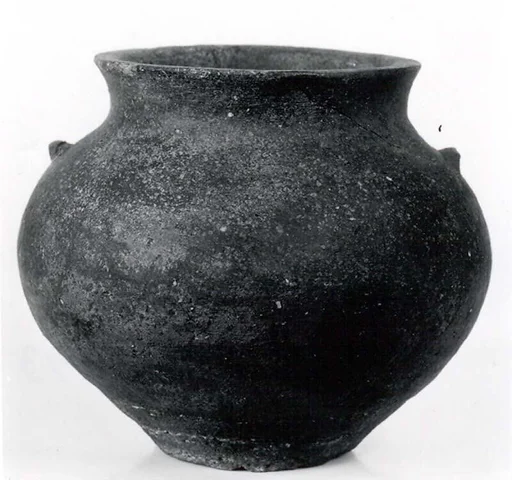
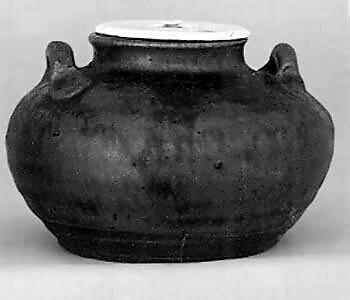
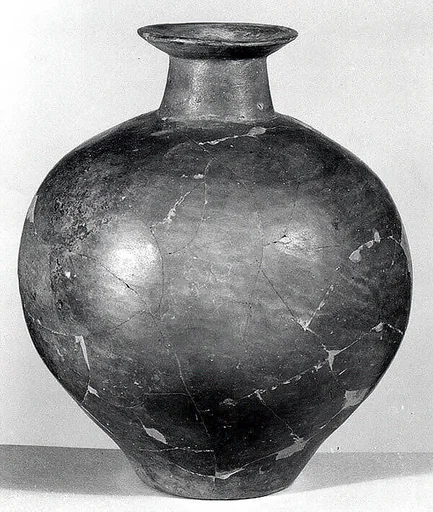
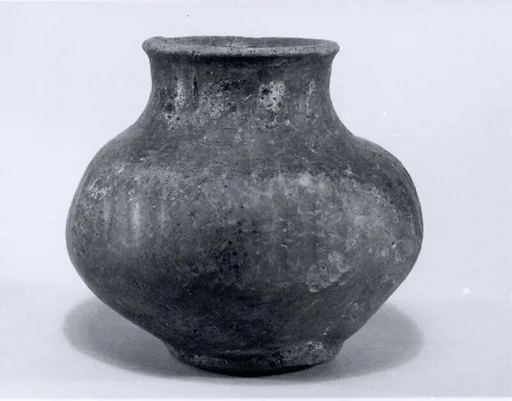
Jar with ribbed decoration
Unknown
ca. 2800 BCE · Ceramic · Ancient Near Eastern Art
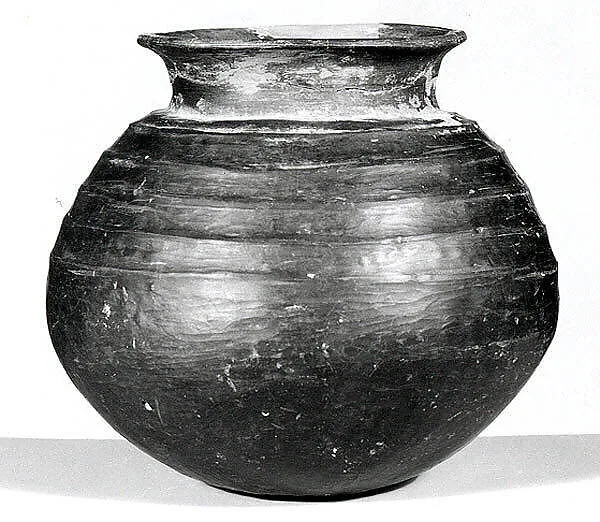
This ceramic jar has a globular body, a flat base, a short neck and an everted rim. Its shoulder is decorated with five horizontal ridges running in parallel. It is made of gray clay and has been burnished. It was excavated at Yarim Tepe in northeastern Iran, six miles south of the modern town of Gonbad-e Kavus. Yarim Tepe was a small settlement, inhabited from the Neolithic to the Parthian period, with many interruptions. This jar probably dates to the Early Bronze Age, when this region served as an important link between the emerging cities of Mesopotamia and Afghanistan, one of the few sources of both tin and lapis lazuli in the ancient Near East.
- Artist
- Unknown
- Date
- ca. 2800 BCE
- Medium
- Ceramic
- Culture
- Iran
- Department
- Ancient Near Eastern Art
- Credit line
- Purchase, H. Dunscombe Colt Gift, 1963