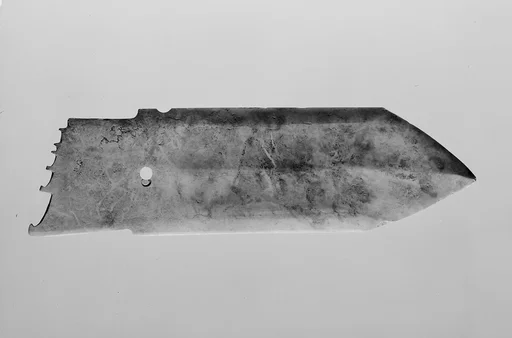
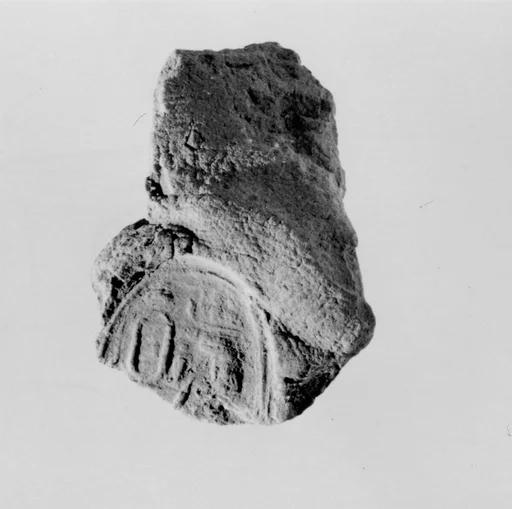
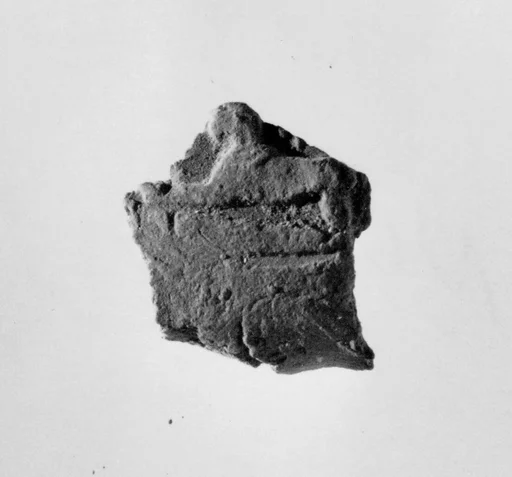
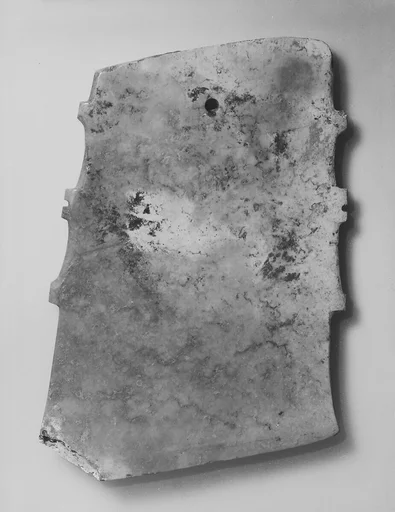
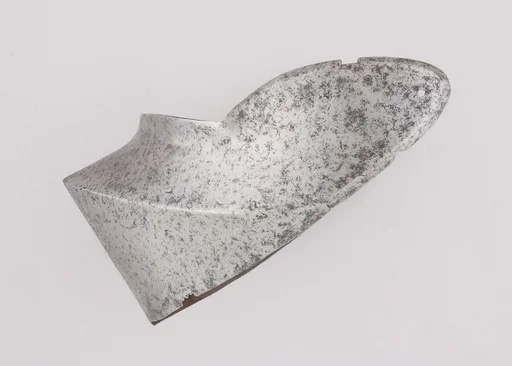
Six Armor Scales
Unknown
possibly 16th to 18th century · Iron, textile fibers (wool) · Arms and Armor
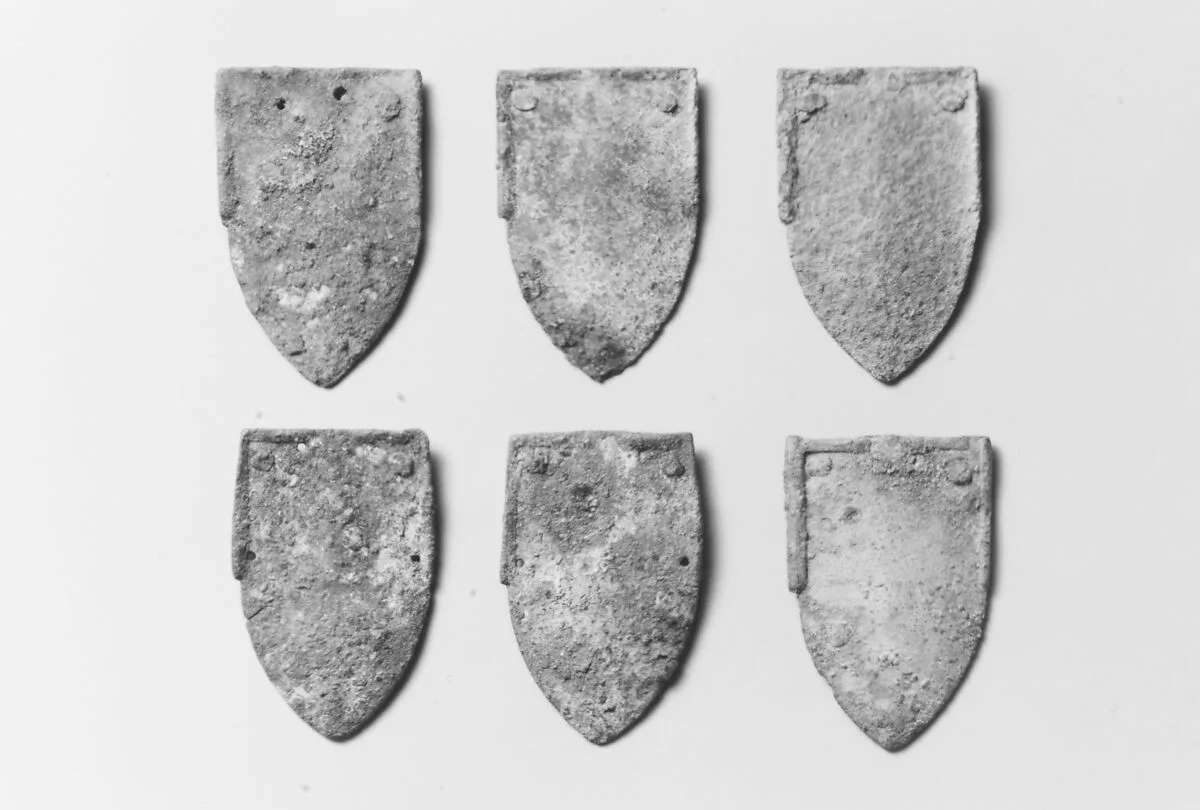
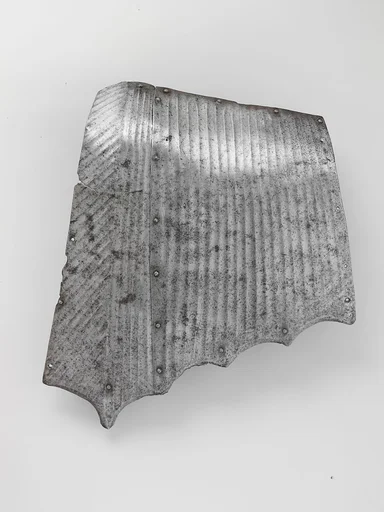
These six scales come from a group of approximately three to four hundred recovered from a region of New Mexico that the Spanish explored and later colonized during the sixteenth and seventeenth centuries. Originally the scales would have been riveted in an overlapping pattern, like shingles, to the outside of a leather or textile jacket (traces of fiber, apparently wool, remain under some of the rivet heads). They are important because there is otherwise very little evidence for the use of scale armor in the New World. Scale armor was largely obsolete in Europe by the time of the colonization of the American Southwest. Scale armor is an extremely ancient form of defense, with surviving fragments from the Middle East dating as early as about 1700 B.C. In Europe variations of scale armor were used from the Roman period through the end of the Middle Ages. Full-torso armor of scale went out of fashion after the mid-fourteenth century A.D., but some scale armor continued to be made and worn in certain circumstances as late as the seventeenth century. The coat of scales from which this example may have come was probably outdated by several generations when it was brought to New Mexico, possibly on a Spanish expedition of the late sixteenth or early seventeenth century, or perhaps as trade goods as late as the eighteenth century.
- Artist
- Unknown
- Date
- possibly 16th to 18th century
- Medium
- Iron, textile fibers (wool)
- Culture
- probably Spanish
- Department
- Arms and Armor
- Credit line
- Gift of Mr. and Mrs. Raymond E. Willerford, 1998