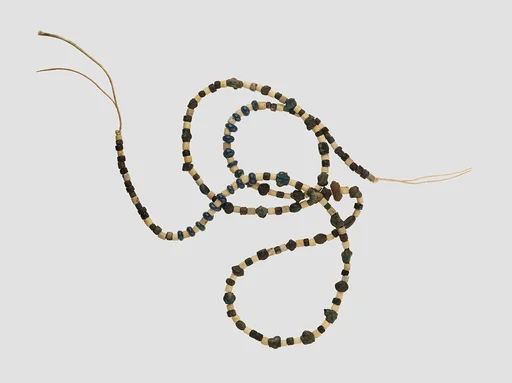
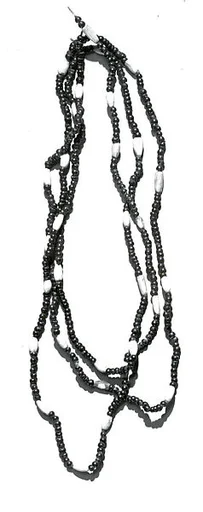
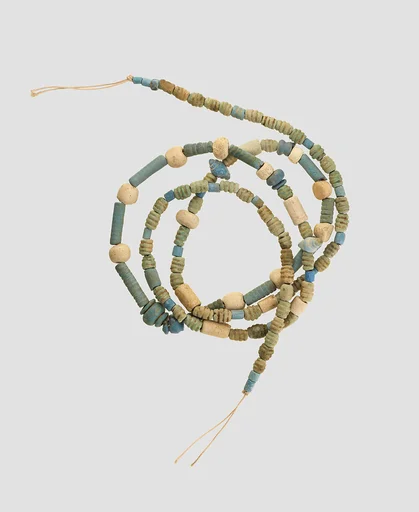
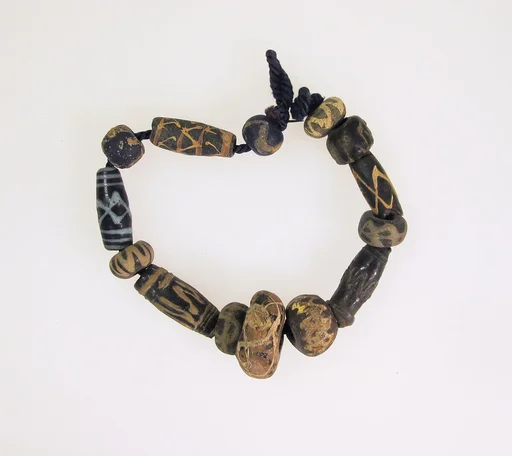
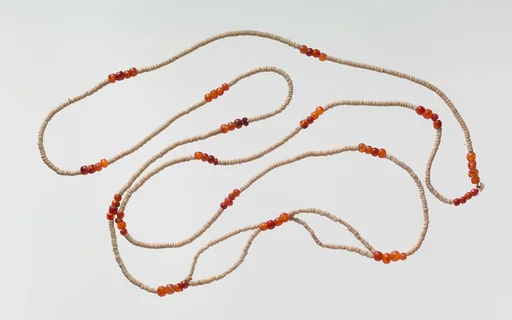
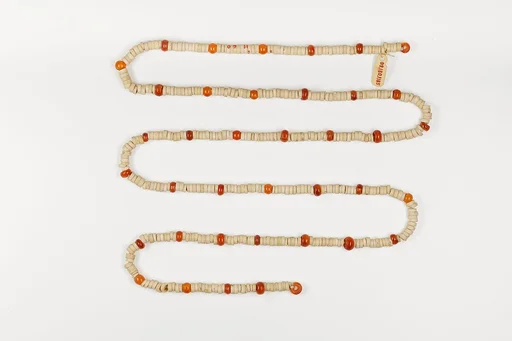
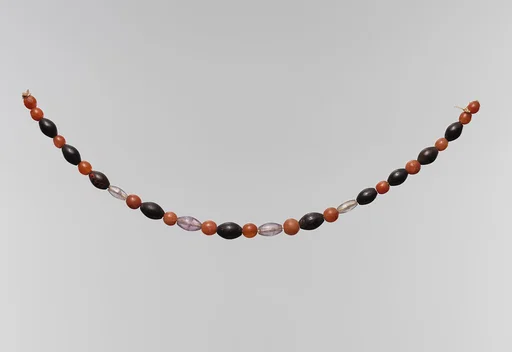
Necklace
Unknown
ca. 3980–3865 BCE · Gypsum alabaster, carnelian, shell, bitumen · Ancient Near Eastern Art
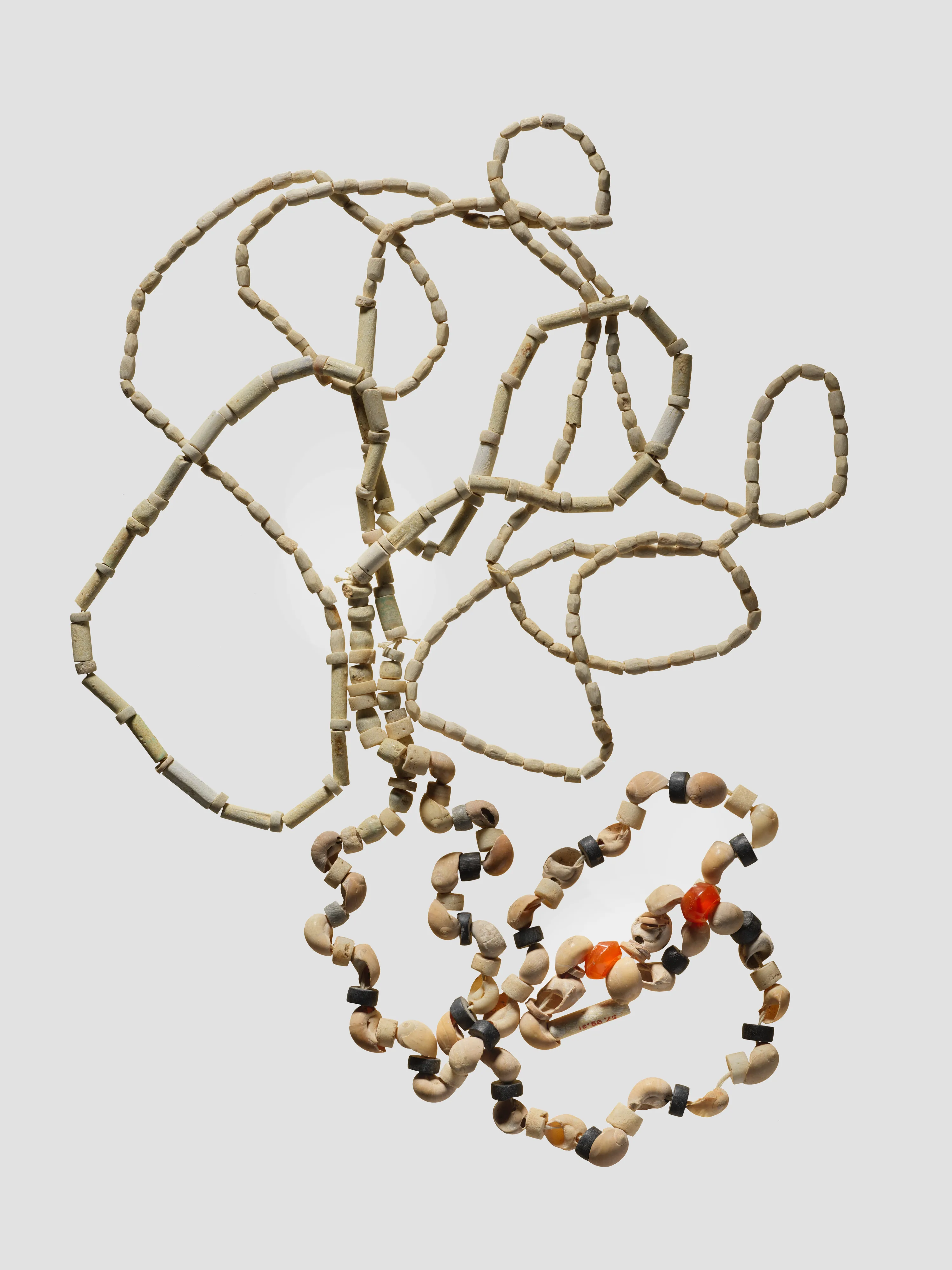
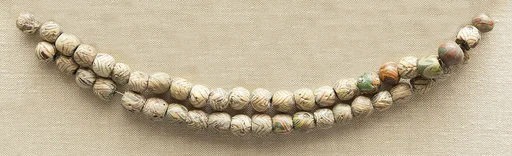
Although they are now strung together, these beads, made of limestone, frit, bitumen, alabaster and carnelian, were not necessarily part of a single necklace in antiquity. They were certainly objects of personal adornment, however, and they were found together in a man’s grave at Tepe Hissar, near the modern city of Damghan in northern Iran. Tepe Hissar was primarily an agricultural settlement, though much of the evidence for plant cultivation dates to later periods, with buildings made of mudbrick or simply mud walls. The grave dates to the early 4th millennium B.C., which gives us the date for the beads.
- Artist
- Unknown
- Date
- ca. 3980–3865 BCE
- Medium
- Gypsum alabaster, carnelian, shell, bitumen
- Culture
- Iran
- Department
- Ancient Near Eastern Art
- Credit line
- Rogers Fund and Purchase, Joseph Pulitzer Bequest, by exchange, 1957