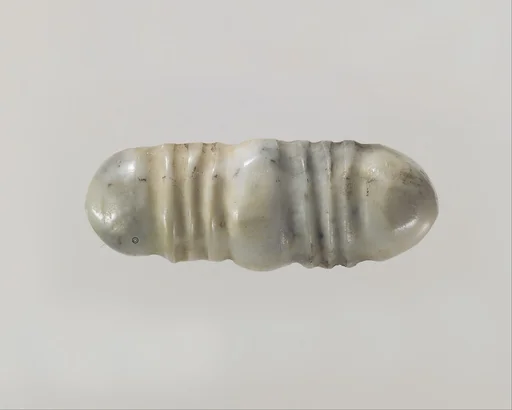
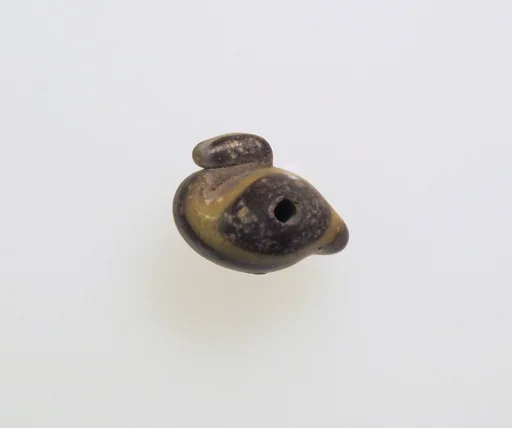
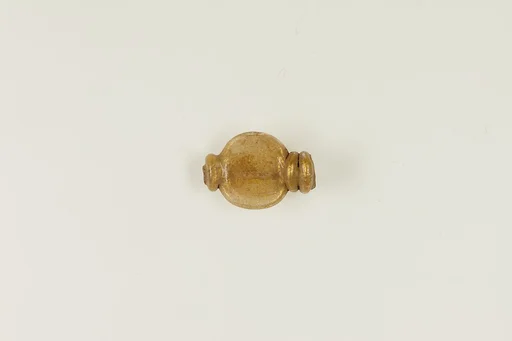
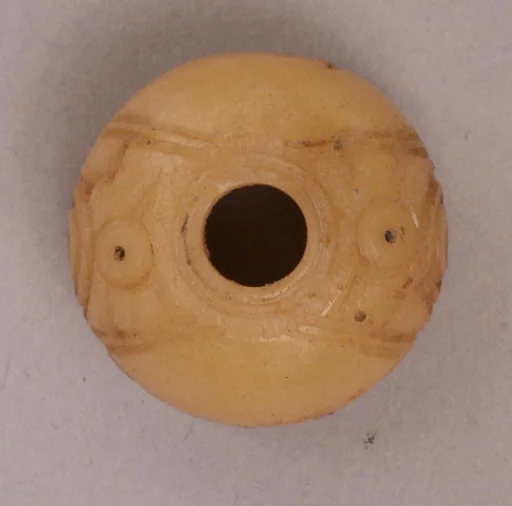
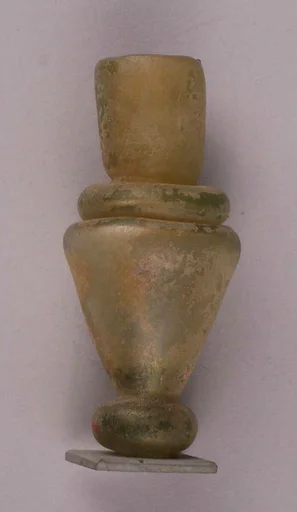
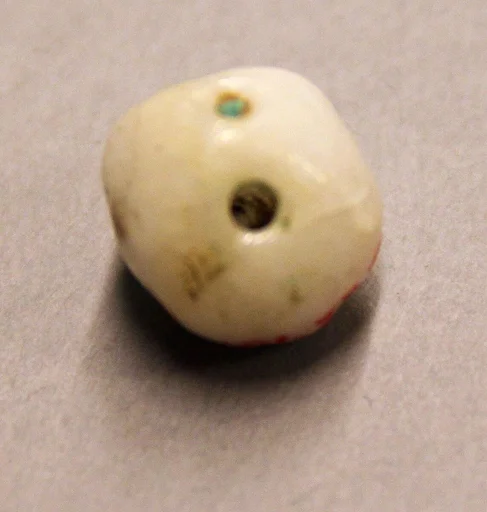
Ornament or button for harness
Unknown
ca. 9th–7th century BCE · Shell · Ancient Near Eastern Art
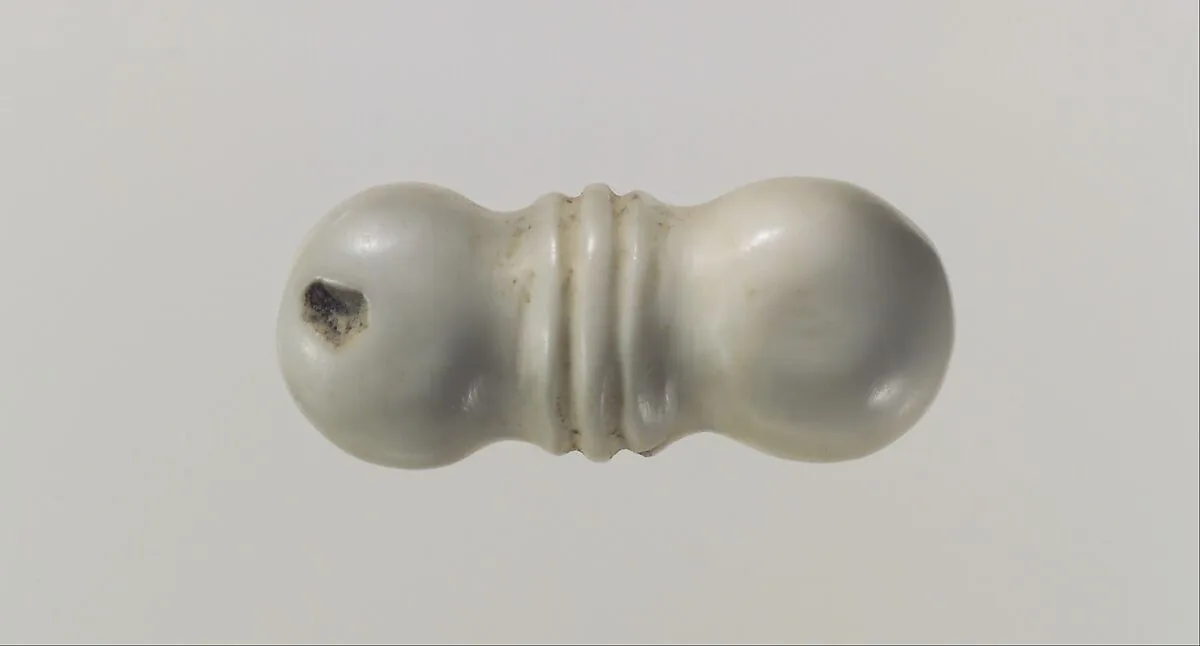
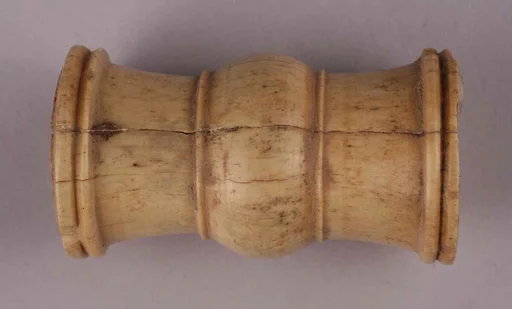
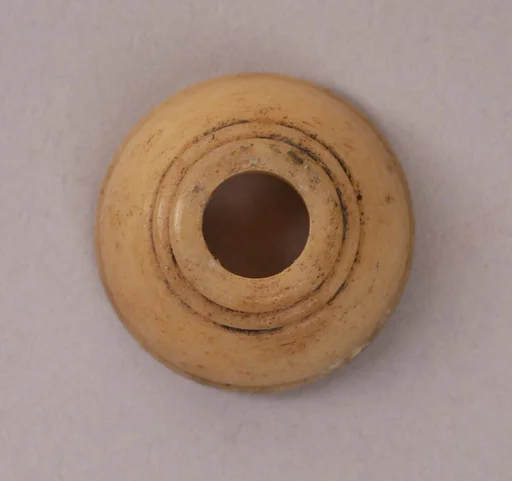
This small shell piece was found in a well in the Northwest Palace of Ashurnasirpal II at Nimrud, together with other similar shell ornaments, several of which are also in the Metropolitan Museum’s collection (54.117.16-.19). They were probably thrown into the well when the palace was sacked, in 614 B.C. and then again two years later. They can be identified as horse trappings, and were probably part of a leather harness which disintegrated in the well sludge. Horses in the reliefs of the palace of Sargon II at Dur Sharrukin (modern Khorsabad) are represented with double-fan shaped ornaments on their bridles, as in a relief in the Metropolitan Museum (33.16.1) showing a groom with two horses. Because of the close parallel with the reliefs from the palace at Dur Sharrukin, the equestrian harness elements from this well probably date to the time of Sargon in the late eighth century B.C. At this time, the Northwest Palace was primarily used for storage rather than as a royal residence.
- Artist
- Unknown
- Date
- ca. 9th–7th century BCE
- Medium
- Shell
- Culture
- Assyrian
- Department
- Ancient Near Eastern Art
- Credit line
- Rogers Fund, 1954