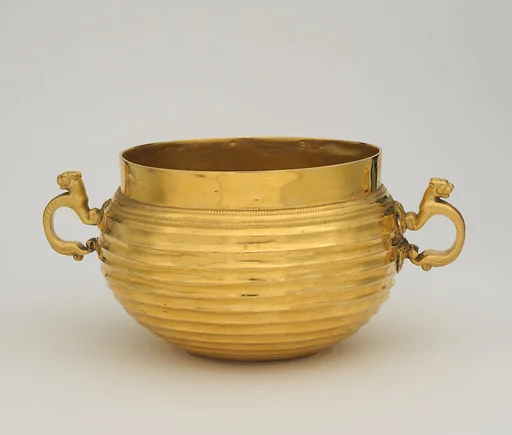
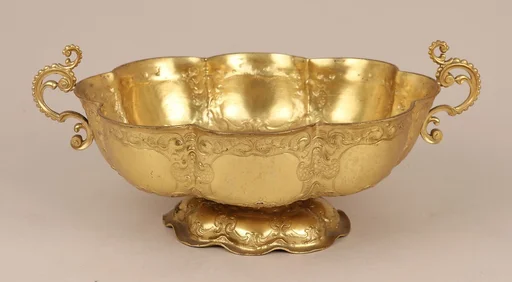
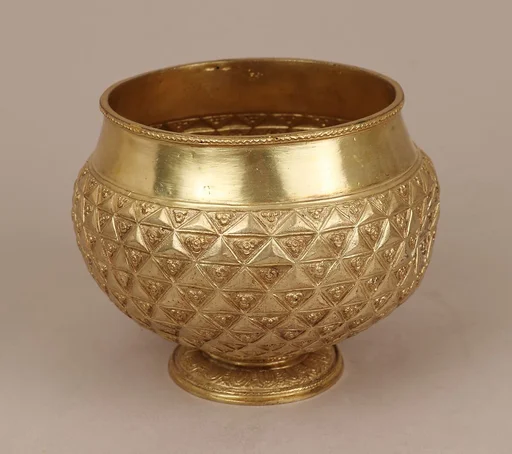
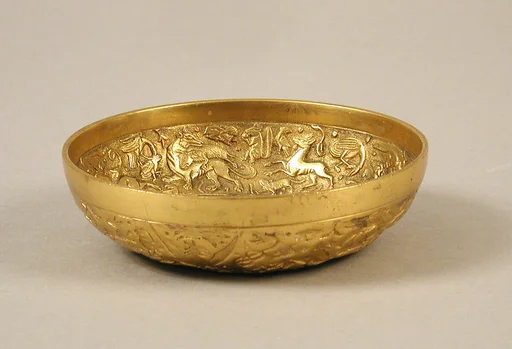
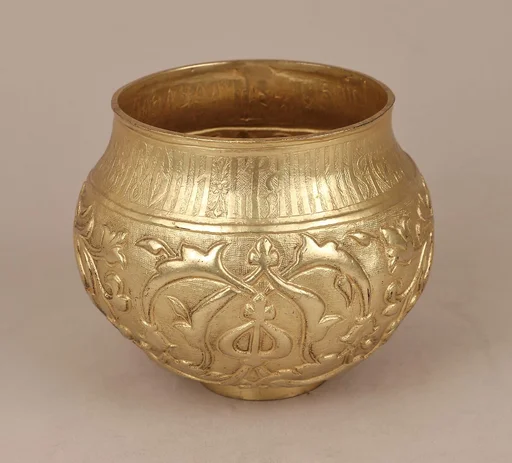
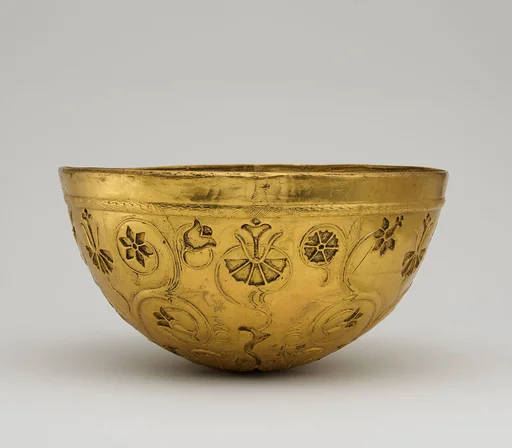
Fluted bowl
Unknown
ca. 6th–5th century BCE · Gold · Ancient Near Eastern Art
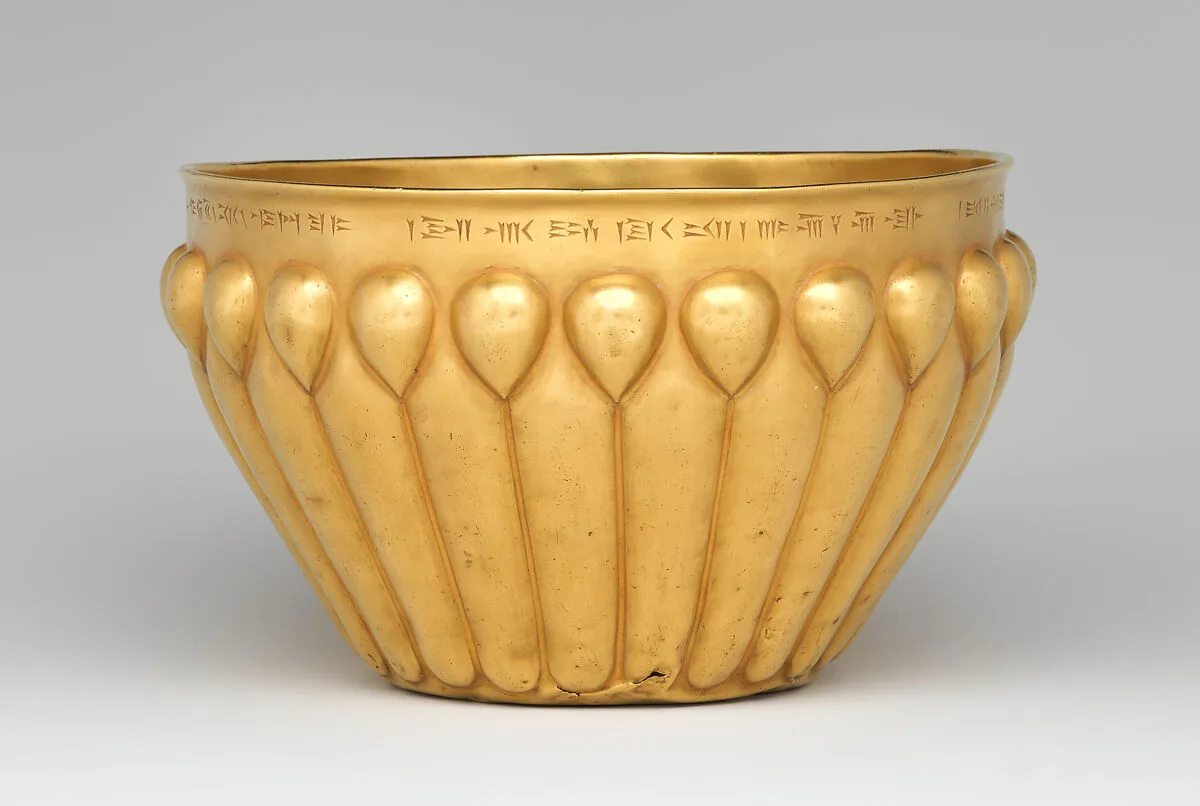
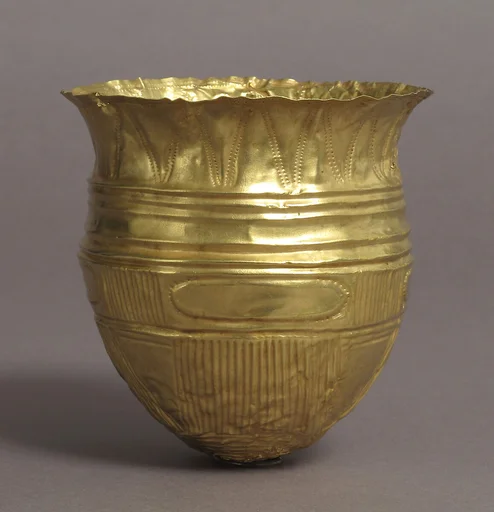
In the sixth century B.C., under the leadership of Cyrus the Great (r. 538–530 B.C.), the Achaemenid Persian dynasty overthrew Median kings and established an empire that would eventually extend from eastern Europe and Egypt to India. Achaemenid rulers included such famed kings as Cyrus, Darius I (r. 521–486 B.C.), and Xerxes I (r. 485–465 B.C.). They built palaces and ceremonial centers at Pasargadae, Persepolis, Susa, and Babylon. The Achaemenid Dynasty lasted for two centuries and was ended by the sweeping conquests of Alexander the Great, who destroyed Persepolis in 331 B.C. The Achaemenid period is well documented by the descriptions of Greek and Old Testament writers as well as by abundant archaeological remains. Fluted bowls and plates of the Achaemenid period continue a tradition begun in the Assyrian Empire. While they were given as royal gifts, it seems that they were also valued and exchanged simply for the weight of the precious metals from which they were made.
- Artist
- Unknown
- Date
- ca. 6th–5th century BCE
- Medium
- Gold
- Culture
- Achaemenid
- Department
- Ancient Near Eastern Art
- Credit line
- Harris Brisbane Dick Fund, 1954