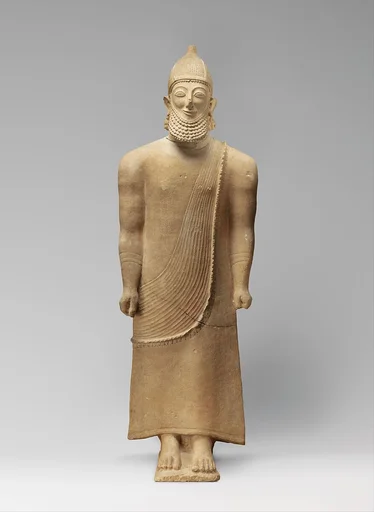
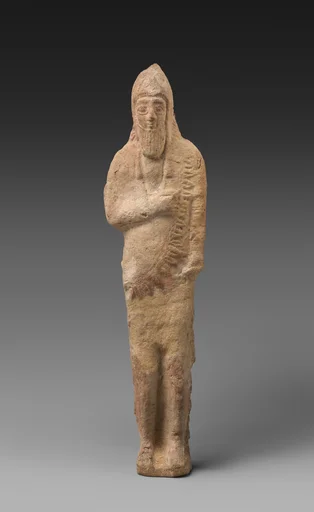
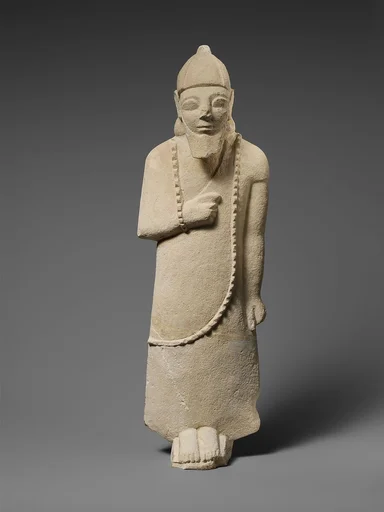
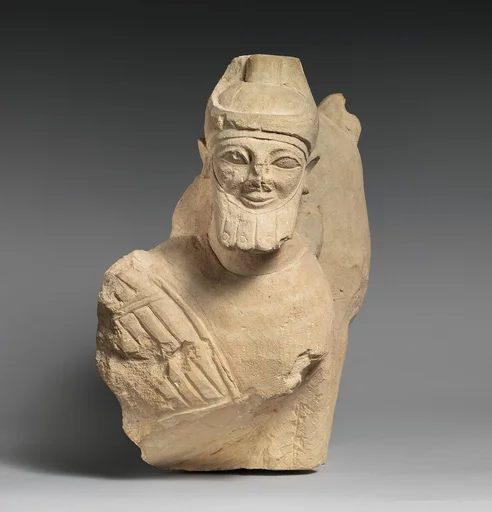
Standing man
Unknown
ca. 2nd century CE · Calcareous sandstone · Ancient Near Eastern Art
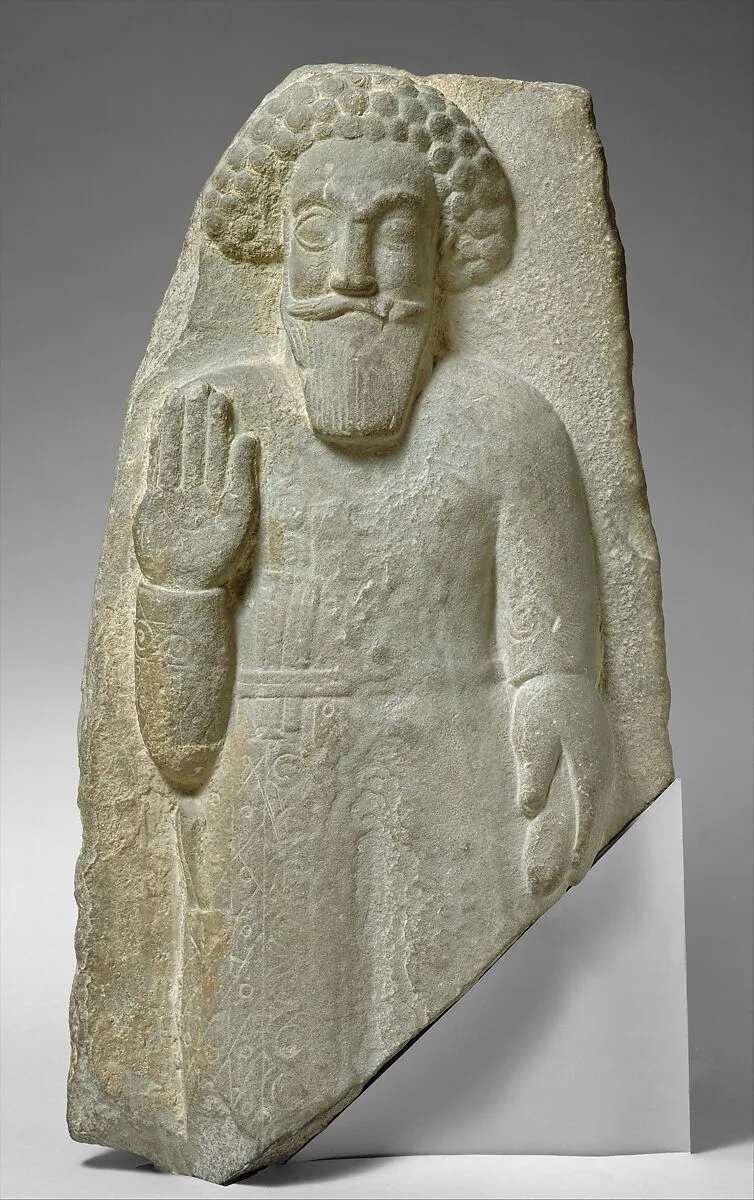
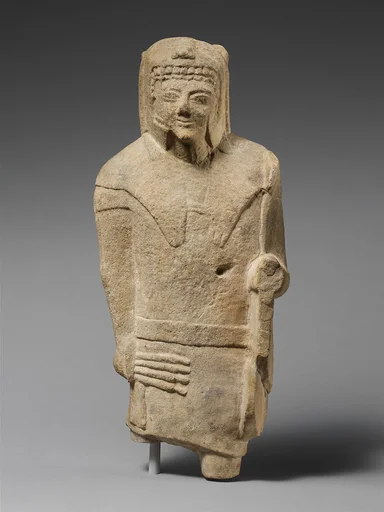
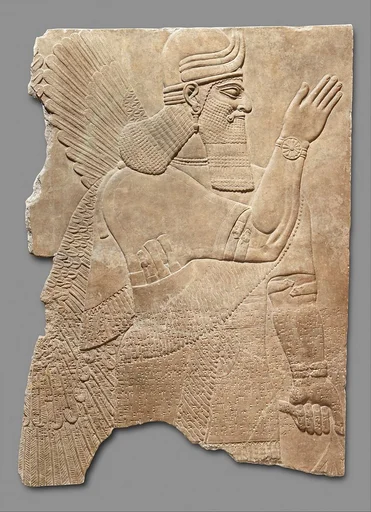
This fragmentary stone relief of a standing man is a product of the resurgence of an Eastern aesthetic in Parthian art. The style it exemplifies is characterized by strict frontality and a concentration on linear details, in particular the careful rendition of textiles. The figure shown here, carved in extremely low relief, may be identified as a worshipper by the right hand raised palm forward in a gesture of reverence. Lines incised on the surface, rather than volumetric modeling, convey the quality of his clothes, mustache, and broad, square-cut beard. His prominent eyes are flat and outlined with ridges; the nose is also flat. His hair is executed in tiers of thick spirals. The worshiper wears a belted tunic decorated with a row of lozenges, each containing a circle; a braid of spirals runs down the front of his garment and others trim the cuffs. Two items are tucked under his belt, and in his left hand he holds an object. At his right hip another object is depicted, perhaps meant as a sword. Votive images of worshipers similar to this one adorned the terraces of sanctuary complexes such as those at Bard-e Neshandeh and Masjid-i Sulaiman, both in the Iranian province of Khuzestan.
- Artist
- Unknown
- Date
- ca. 2nd century CE
- Medium
- Calcareous sandstone
- Culture
- Parthian
- Department
- Ancient Near Eastern Art
- Credit line
- Rogers Fund, 1951