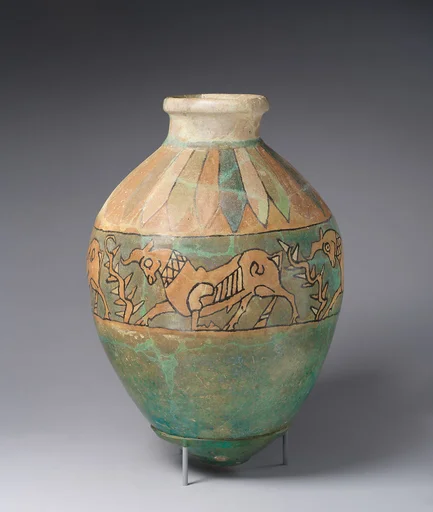
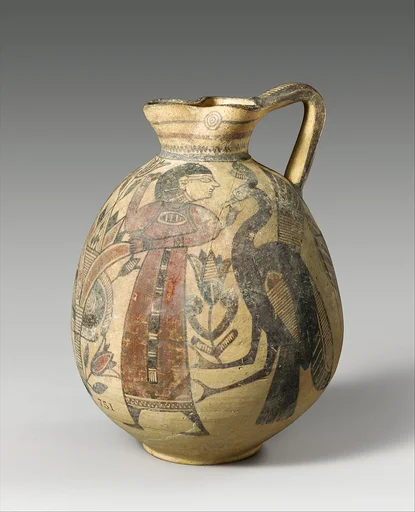
Jar with winged bulls flanking palmettes
Unknown
ca. 8th–7th century BCE · Glazed ceramic · Ancient Near Eastern Art
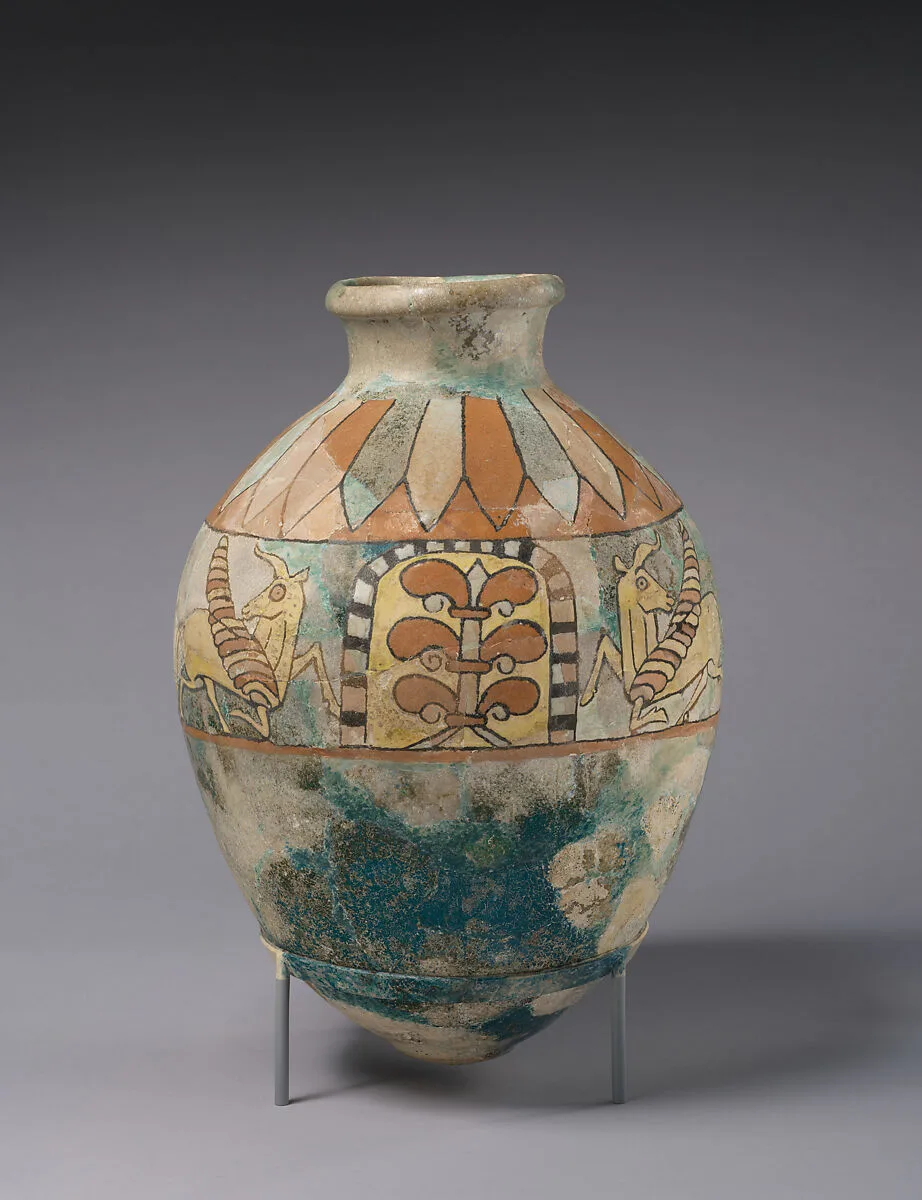
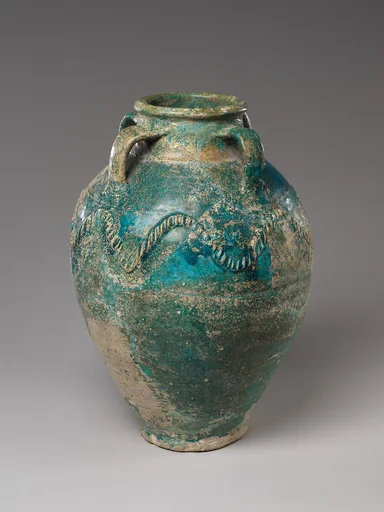
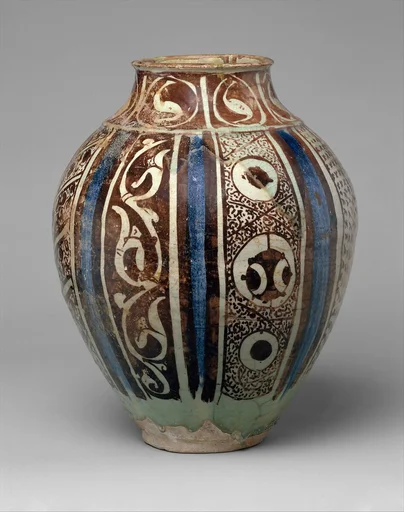
Glazing and glassmaking have a long history in the ancient Near East. A glaze is a layer of glass over a ceramic body. The first objects with a glazed surface were small beads and amulets made of faience, dating to the Ubaid period of the mid-sixth millennium B.C. While isolated examples of true glass beads have been found in contexts of the third millennium B.C., glass was produced on a large scale for the first time around 1600 B.C., perhaps in the Mitanni state of northern Mesopotamia. This large jar—glazed in blue, brown, yellow, white, and black—represents an advanced glazing technique that was in widespread use during the first millennium B.C. Its shoulder is decorated with a wreath of petals, and its body by winged bulls flanking palmettes. It is one of two jars in the Museum's collection that reportedly were found at the early first millennium B.C. site of Ziwiye in northwestern Iran, but it is also similar in shape and decoration to examples excavated at the Assyrian city of Ashur on the Tigris River in northern Iraq.
- Artist
- Unknown
- Date
- ca. 8th–7th century BCE
- Medium
- Glazed ceramic
- Culture
- Iran
- Department
- Ancient Near Eastern Art
- Credit line
- Harris Brisbane Dick Fund, 1951