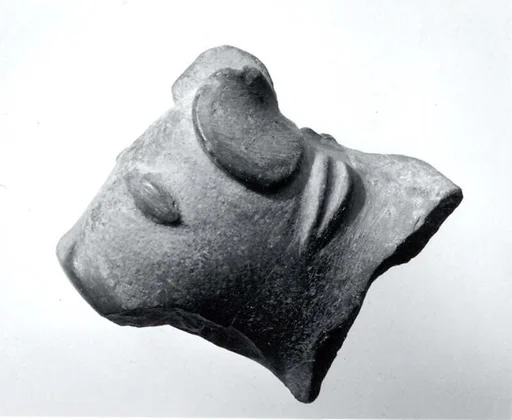
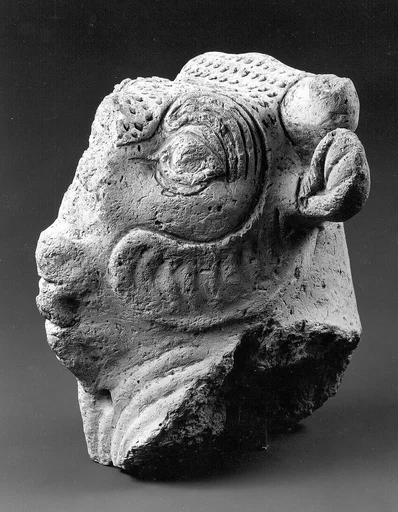
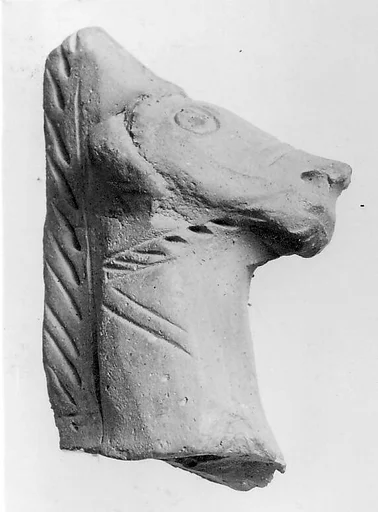
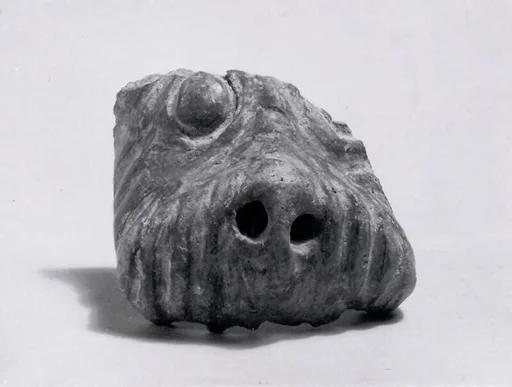
Bull head-shaped spout of vessel
Unknown
ca. early 2nd millennium BCE · Bitumen compound, shell · Ancient Near Eastern Art
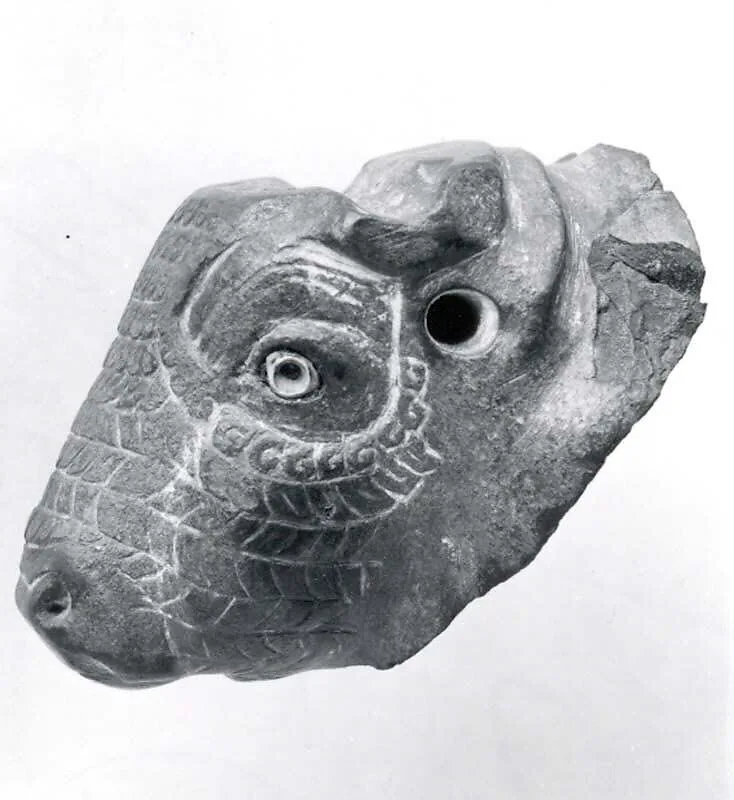
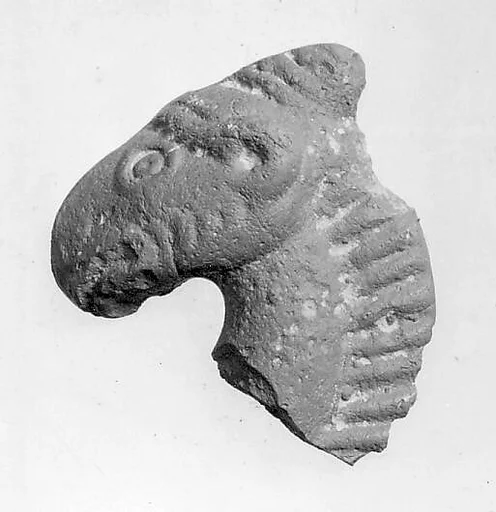
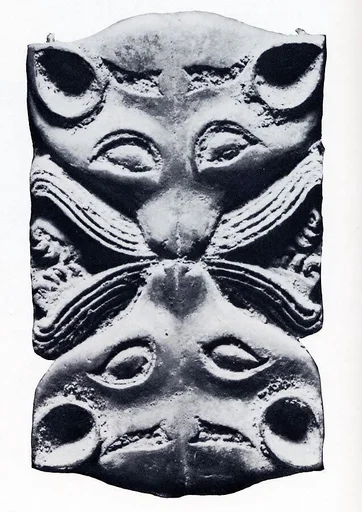
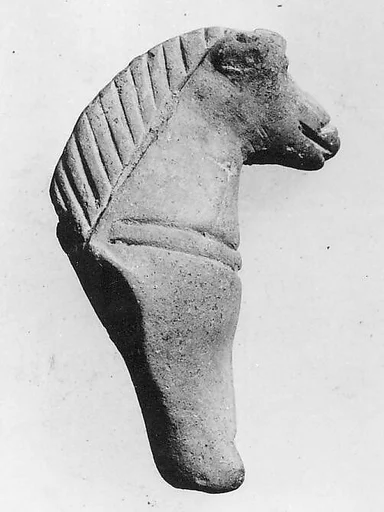
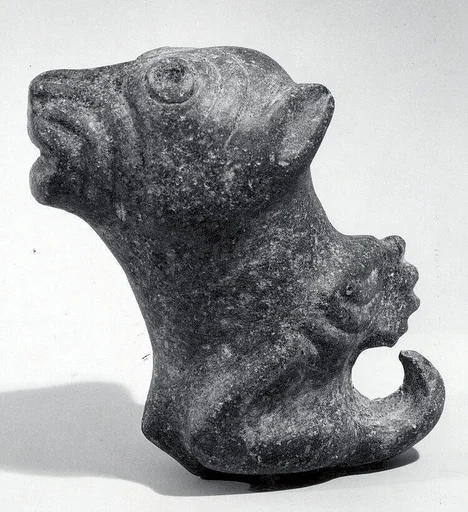
This object is a spout, probably from a vessel, in the shape of a bull’s head. The musculature and nostrils on the bull’s face are carefully modeled, while the hair on the forehead and snout are rendered with incised crosshatching and curlicues. The eyes, originally inlaid, are now missing, as are the horns. The spout is made of bitumen, an asphalt-like substance that occurs naturally in the Near East. Mixed with ground calcite and quartz it forms a hard, gray substance which can be shaped like clay. Bitumen vessels were made in many places in the ancient Near East, especially in Susa in southwestern Iran, the capital of the ancient Elamite kingdom. Beginning in the third millennium BCE the Elamites developed an especially sophisticated recipe for bitumen compound, which they used to make a range of vessels, most decorated with animal foreparts, as well as other objects, a practice which continued into the first millennium BCE. There is some question as to whether the animal depicted is a domesticated bull or a wild bison. The former is more likely, as bison were never native to the Near East, though it is possible the maker of this object wished to depict something exotic.
- Artist
- Unknown
- Date
- ca. early 2nd millennium BCE
- Medium
- Bitumen compound, shell
- Culture
- Elamite
- Department
- Ancient Near Eastern Art
- Credit line
- Rogers Fund, 1949