Orthostat relief: winged human-headed lion
Unknown
ca. 10th−9th century BCE · Basalt · Ancient Near Eastern Art
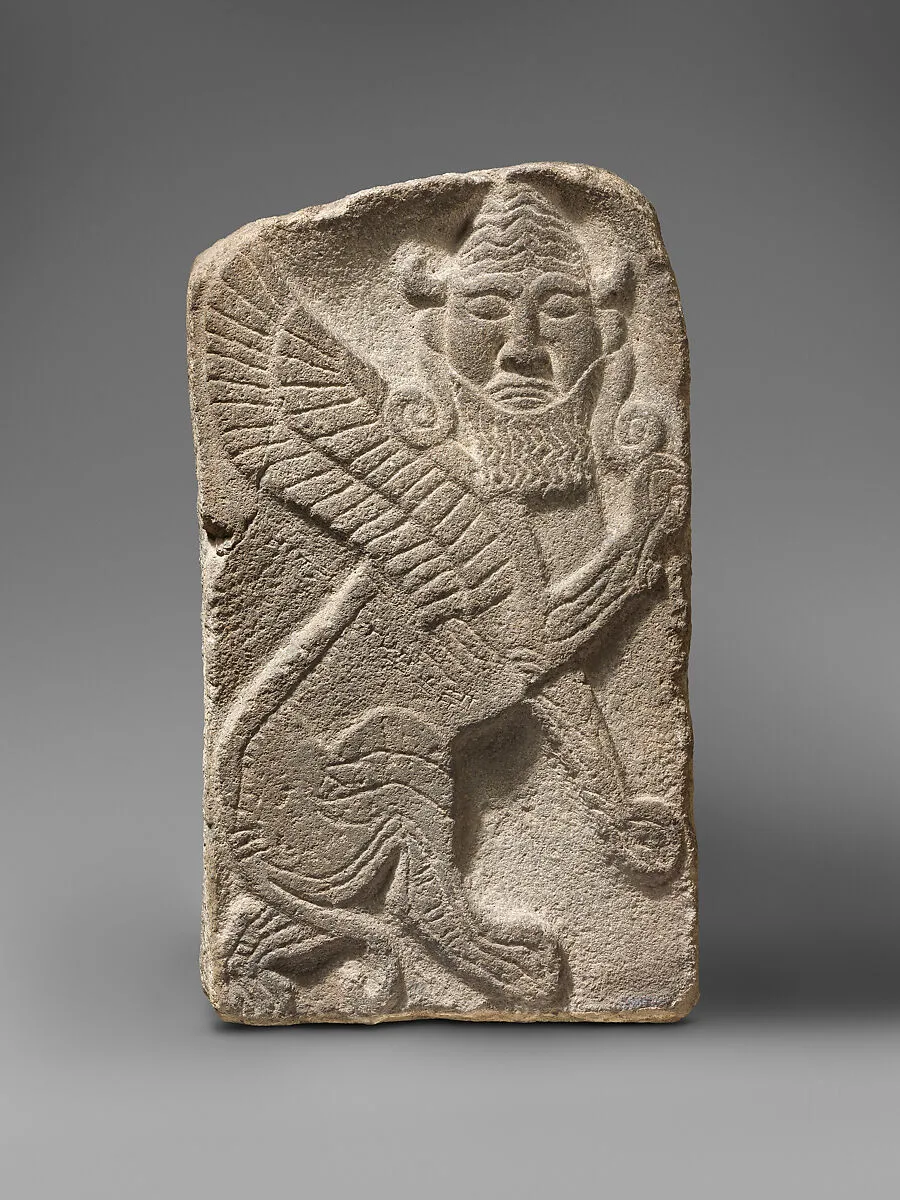
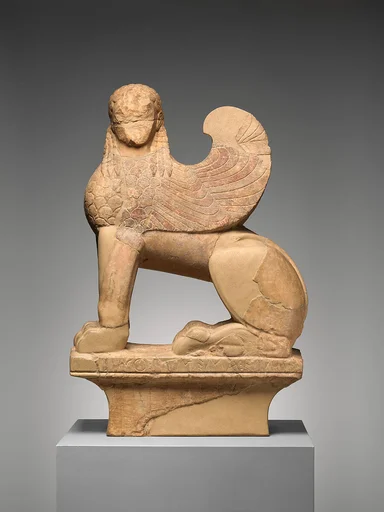
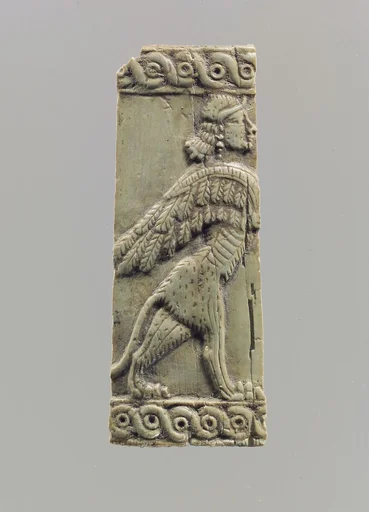
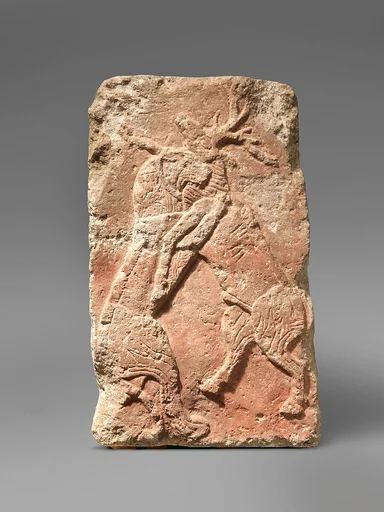
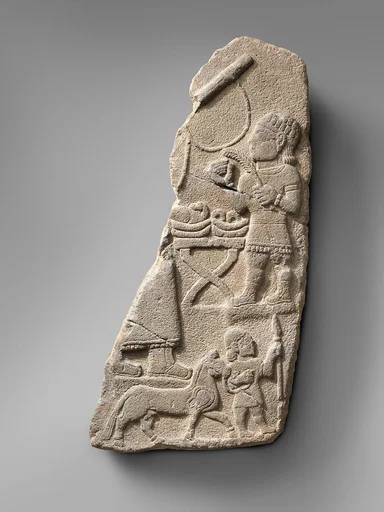
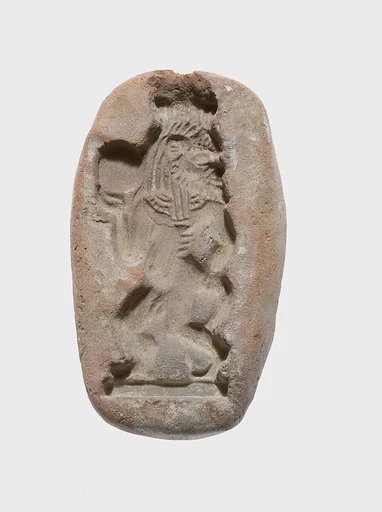
The powerful Neo-Assyrian Empire influenced the surrounding region culturally as well as politically. In the west a number of small but powerful Aramaean city-states acted as a barrier between Assyria and the Mediterranean coast. These have been called Neo-Hittite city-states because of their dynastic continuity and relation to the preceding Hittites of Anatolia. These rival states were gradually brought under the control of the Neo-Assyrian Empire by military conquest. Stone slabs carved in low relief had traditionally decorated the walls of the Neo-Hittite palaces and temples. This slab depicts a winged human-headed lion. It is one of many excavated at Tell Halaf, the ancient Aramaean site of Guzana, bearing images of fantastic creatures, hunting scenes, and ceremonial banquets. Carved in the late tenth or ninth century B.C., before the Assyrian conquests of the region, the reliefs appear to have embellished an earlier building and then been reused on the walls of the palace of King Kapara. This building was a special local form known as a bit hilani, composed of two parallel long rooms, one of which had a pillared entrance.
- Artist
- Unknown
- Date
- ca. 10th−9th century BCE
- Medium
- Basalt
- Culture
- Hittite
- Department
- Ancient Near Eastern Art
- Credit line
- Rogers Fund, 1943