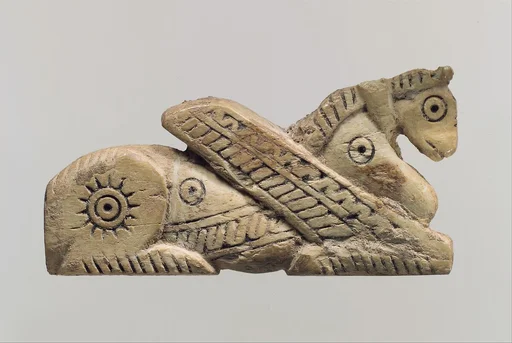
Figure of crouching lion
Unknown
ca. 8th–7th century BCE · Ivory · Ancient Near Eastern Art
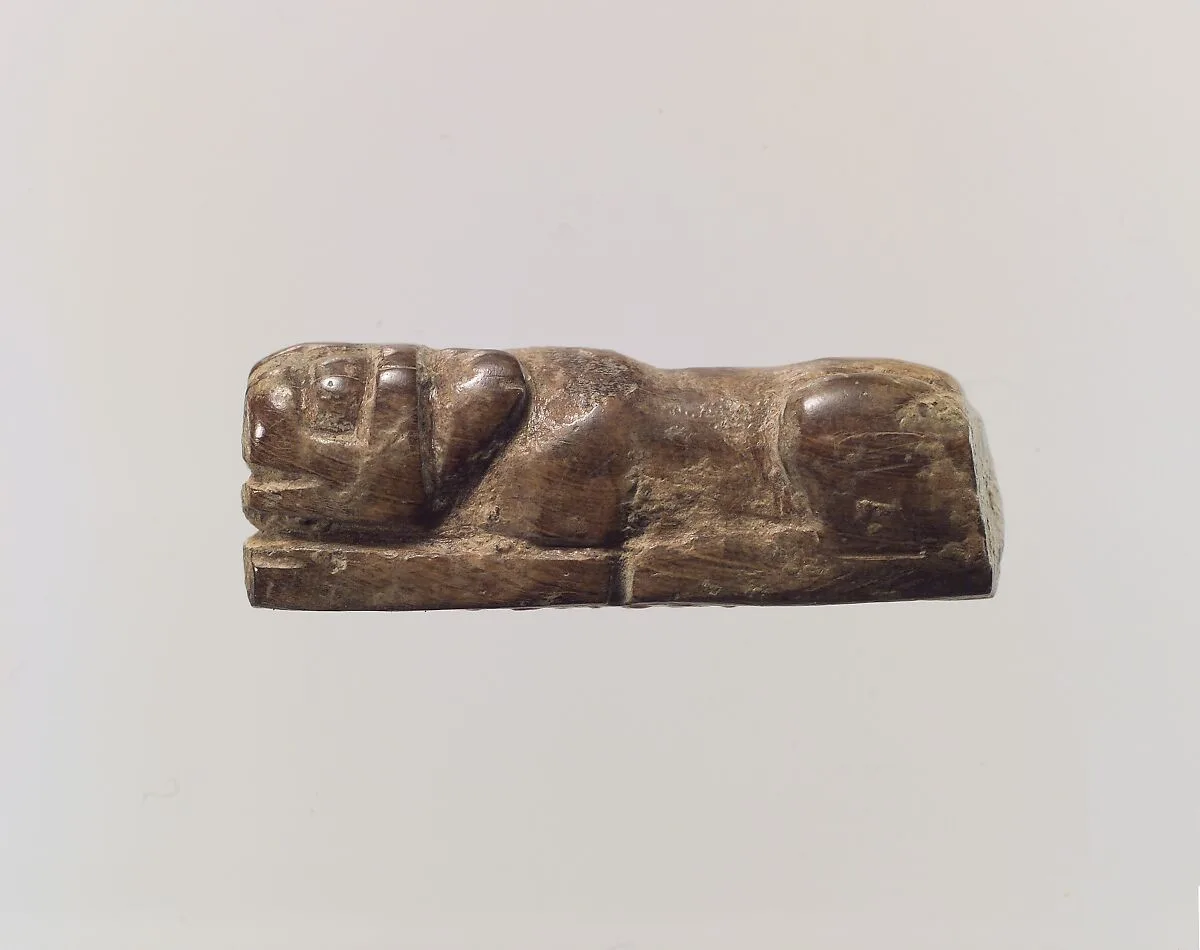
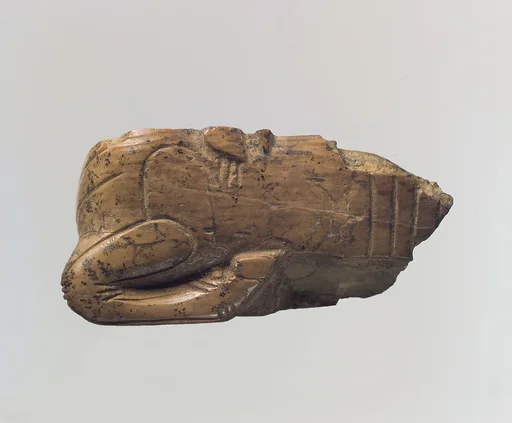
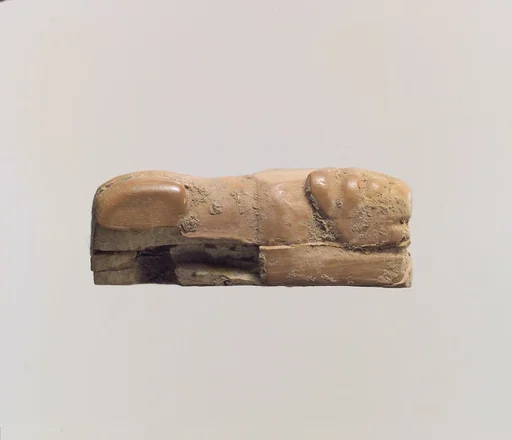
This is a small crouching ivory lion. The lion has large round eyes, triangular ears and an open mouth. Its shoulders and hindquarters are rounded. It rests on a flat base with two holes. Presumably it was originally attached to something, but it is impossible to say what at this point. Possibly it was the handle for an ivory container of some kind. This lion was excavated at Surkh Dum, a settlement site in Luristan in the Zagros Mountains of western Iran. It was part of a large hoard of objects buried beneath a doorjamb in a structure interpreted as a sanctuary; thus the objects were probably offerings made for a god. Lions were native to Iran until the 20th century A.D. As a result they appear frequently in ancient Iranian art, as symbols of strength, kingship or the raw power of the natural world. Given how little is known of the Iron Age inhabitants of Luristan it is difficult to say what significance this lion had for them.
- Artist
- Unknown
- Date
- ca. 8th–7th century BCE
- Medium
- Ivory
- Culture
- Iran
- Department
- Ancient Near Eastern Art
- Credit line
- Rogers Fund, 1943