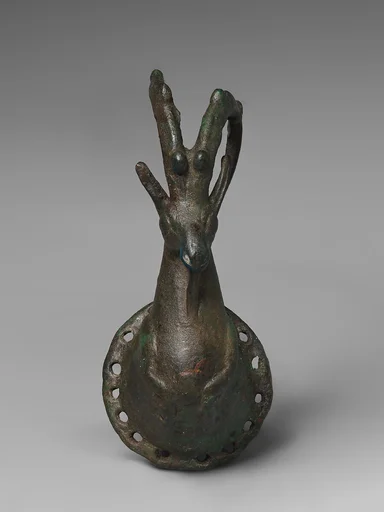
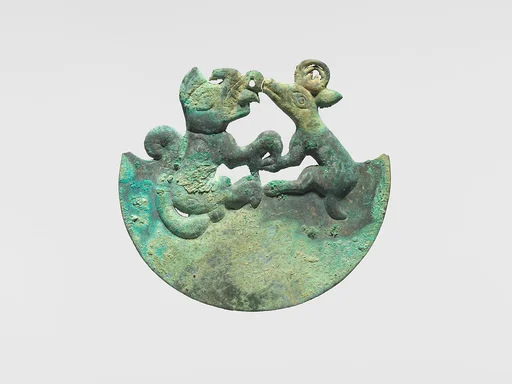
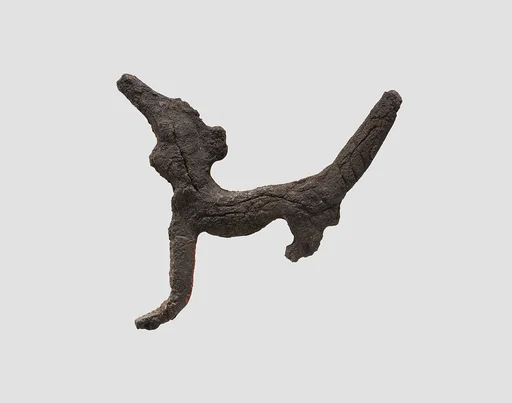
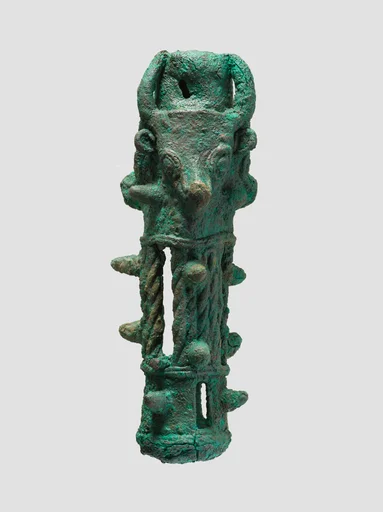
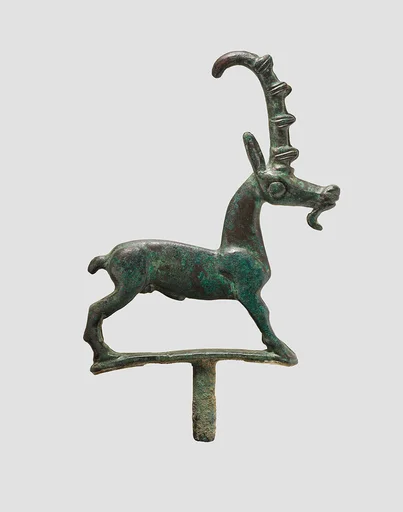
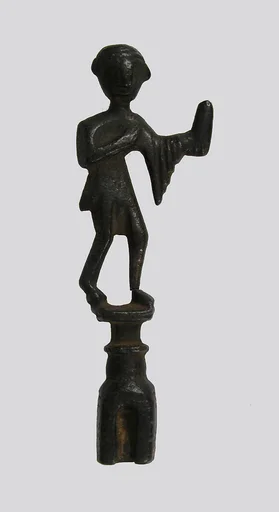
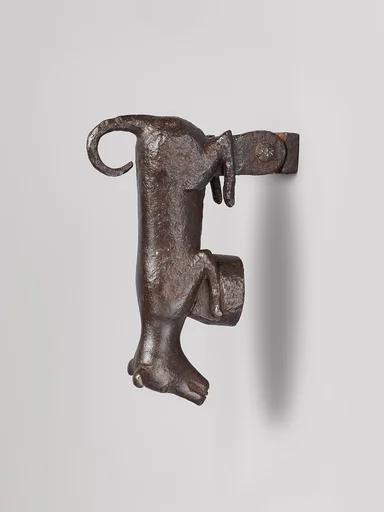
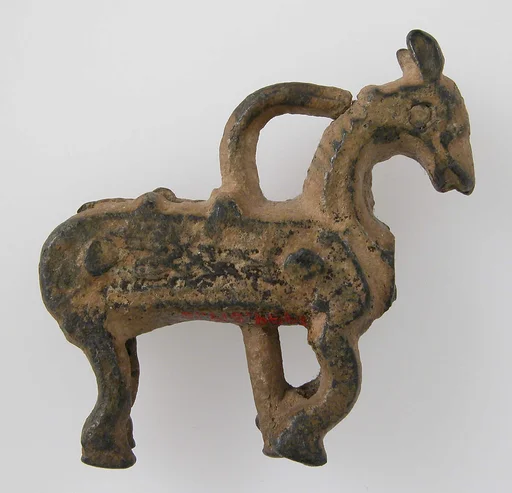
Head of pin
Unknown
ca. 8th–7th century BCE · Bronze · Ancient Near Eastern Art
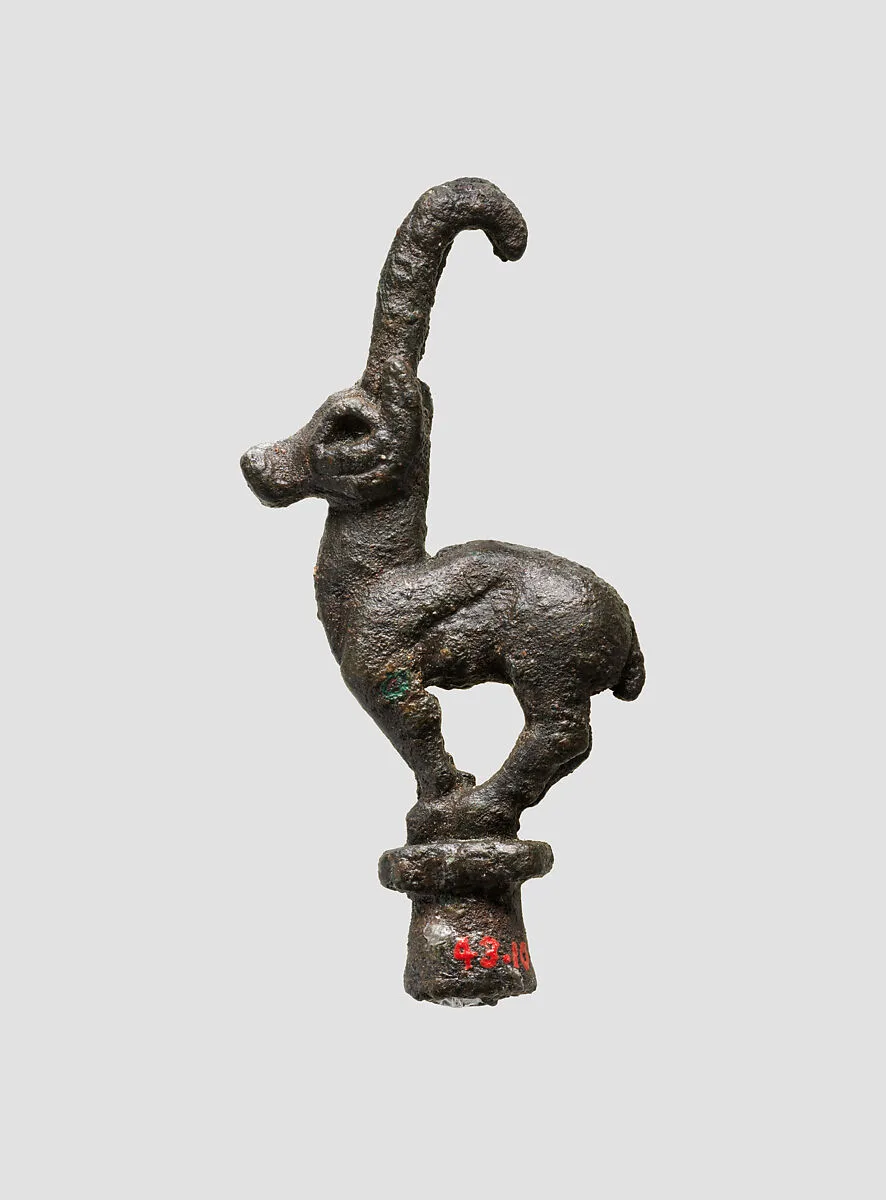
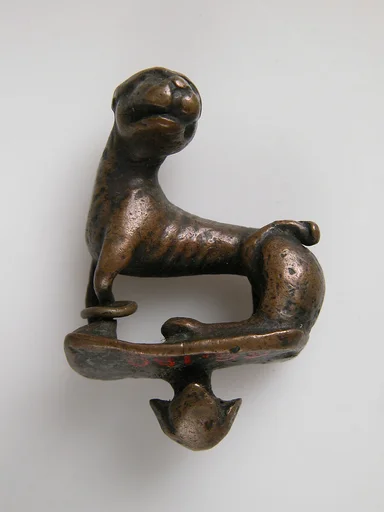
This is the head of a bronze pin in the form of an ibex in the round. The ibex stands with its feet together on a small plinth, perhaps in imitation of a mountain peak. It has tall, curved horns emerging from the top of its head. This pinhead was excavated at Surkh Dum, a settlement site in Luristan in the Zagros Mountains of western Iran. It was found in a structure interpreted as a sanctuary and was thus probably an offering to a god. Such pins were probably used to fasten clothing and as objects of adornment in their own right. The ibex is a distinctly Iranian motif, as they are native to the Zagros Mountains of western Iran, but did not live, for example, on the plains of Mesopotamia. Thus they are a marker of the unique, mountain identity of the people living in western Iran during the Iron Age.
- Artist
- Unknown
- Date
- ca. 8th–7th century BCE
- Medium
- Bronze
- Culture
- Iran
- Department
- Ancient Near Eastern Art
- Credit line
- Rogers Fund, 1943