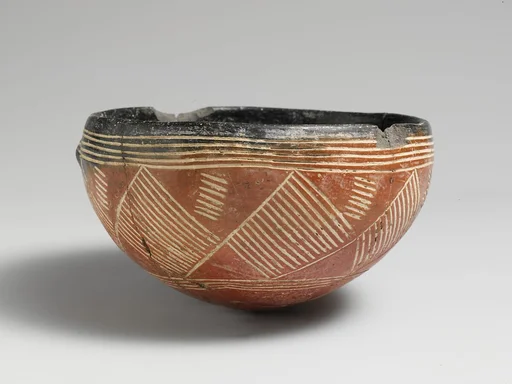
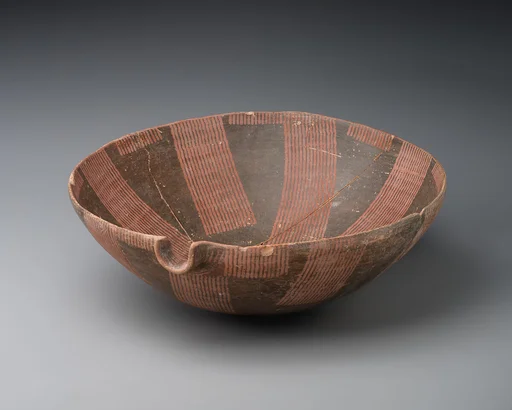
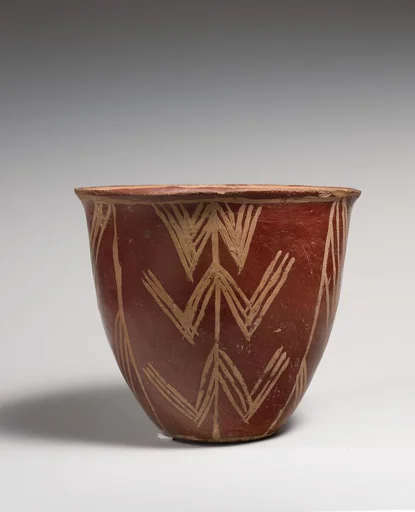
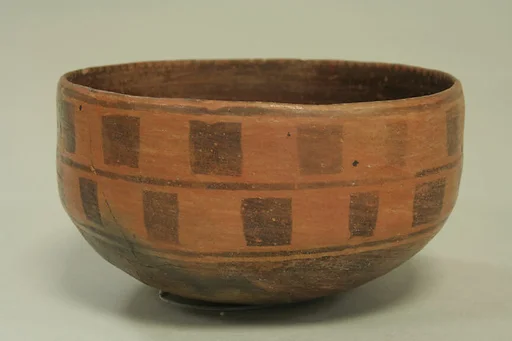
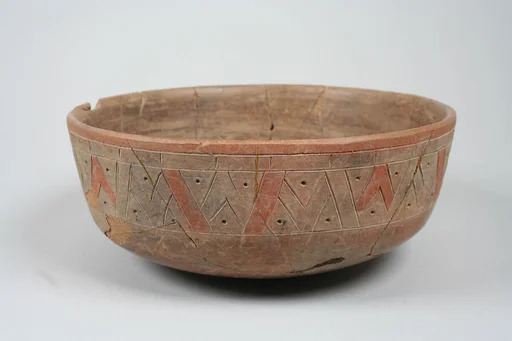
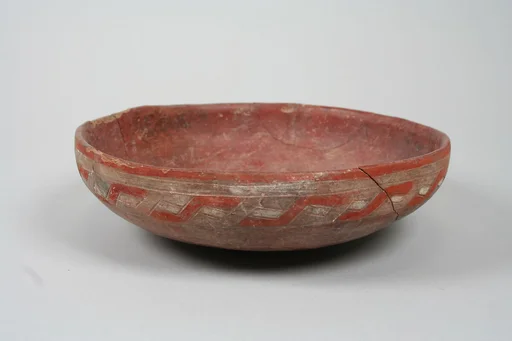
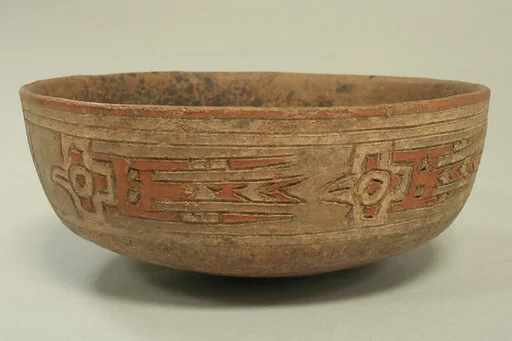
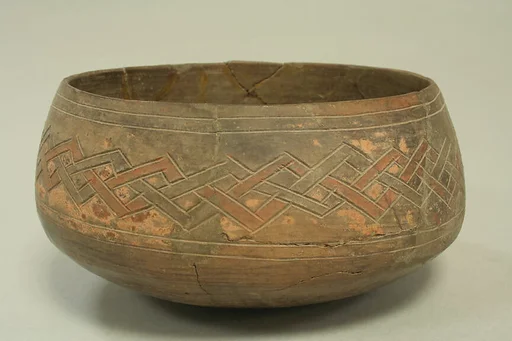
Bowl with cross-hatched decoration
Unknown
ca. 5300–4300 BC · Ceramic, paint · Ancient Near Eastern Art
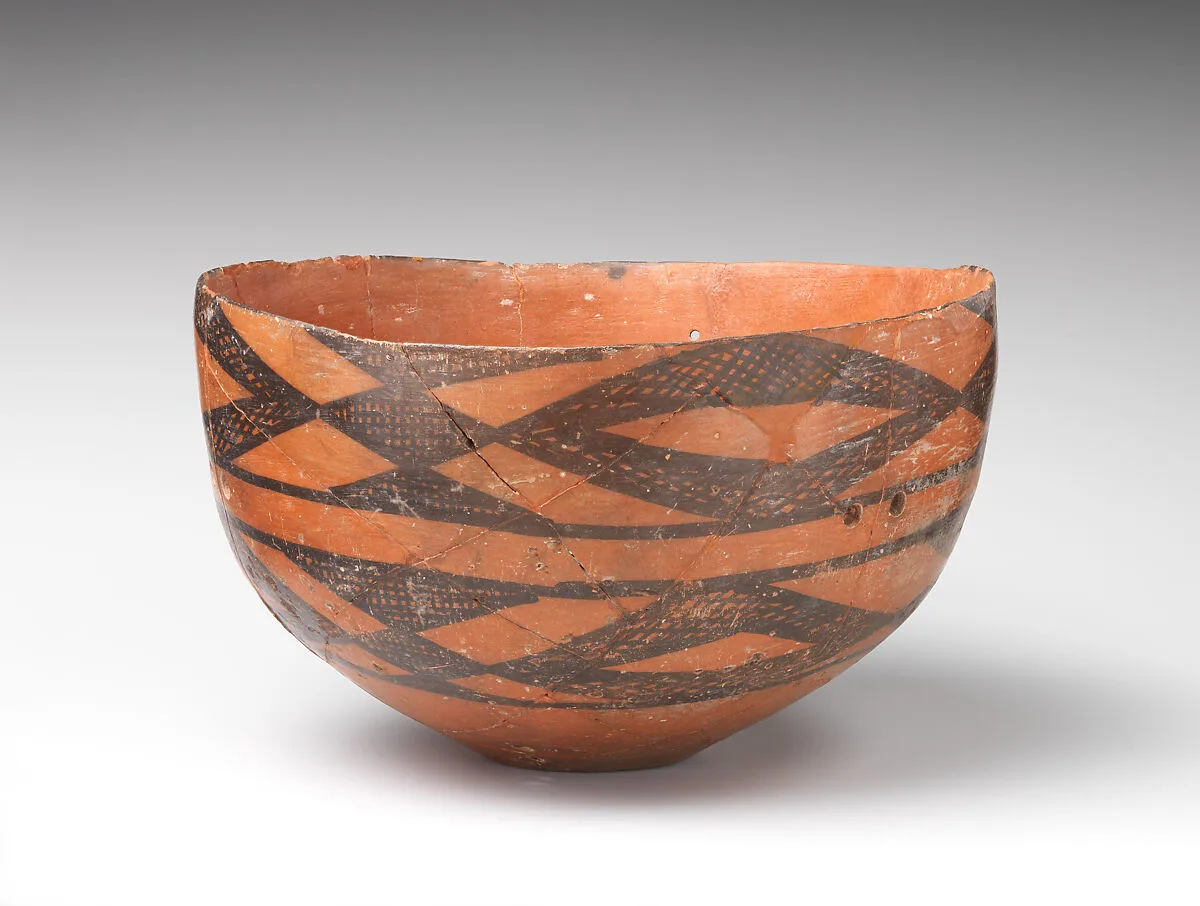
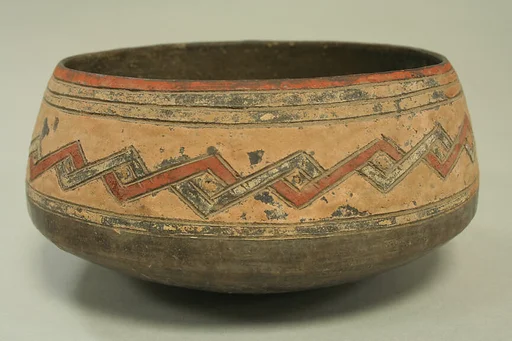
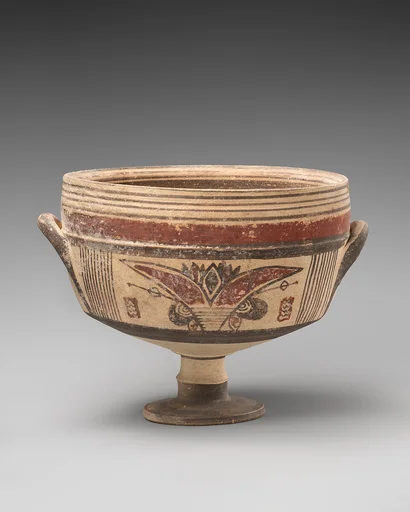
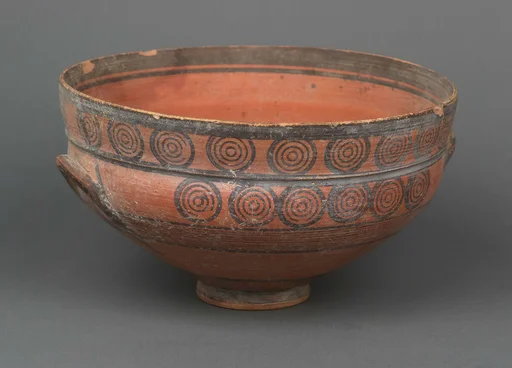
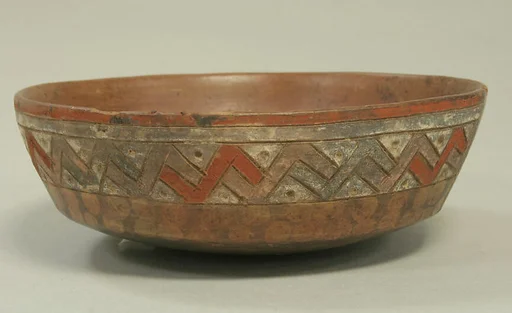
This bowl comes from a site in the area of Tehran called Cheshmeh Ali, near a freshwater spring, where the earliest permanent settlement dates to 6000-5000 B.C. Excavations conducted at the site in 1934-1936 uncovered distinctive orange-reddish pottery from this early period painted with designs in dark brown or black. This example is decorated with a finely painted geometric pattern of hatched diamond shapes in two bands encircling the outside of the bowl. Like much of the pottery from Iran in the Chalcolithic Period (ca. 5500-3000 B.C.), this piece is very skillfully made. It was formed by hand from a slab of clay, before the invention of the potter’s wheel, and the extremely thin, even walls demonstrate the great skill of the artisans who made it. Delicate pottery is fragile and breaks easily, and it appears that this bowl broke and was subsequently repaired in the ancient past. At several points on the bowl, a pair of holes have been drilled on either side of a break, and were likely strung together by some sort of textile or leather strips to hold the broken pieces together. The people who used this bowl must have placed a high value on it, as demonstrated by their efforts to repair rather than simply discard it, the typical fate of most broken ancient pottery.
- Artist
- Unknown
- Date
- ca. 5300–4300 BC
- Medium
- Ceramic, paint
- Culture
- Iran
- Department
- Ancient Near Eastern Art
- Credit line
- Rogers Fund, 1948