Jug
Unknown
ca. 900–700 BCE · Ceramic, paint · Ancient Near Eastern Art
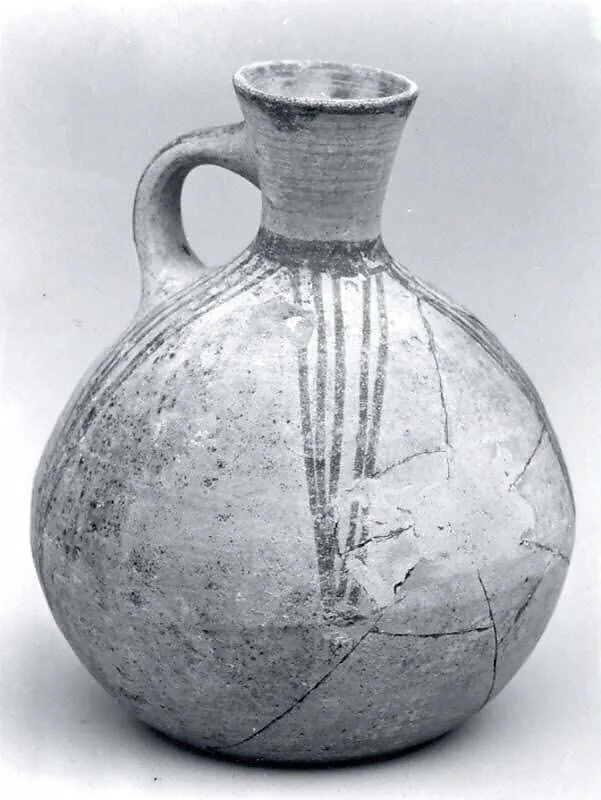
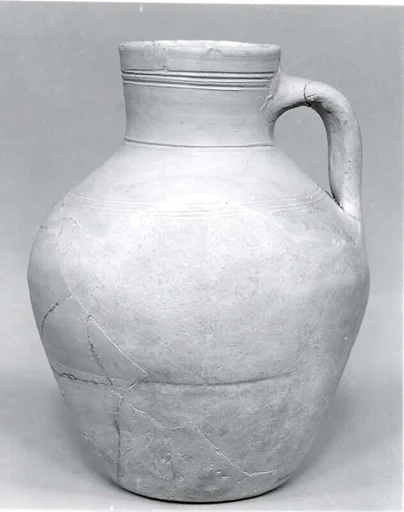
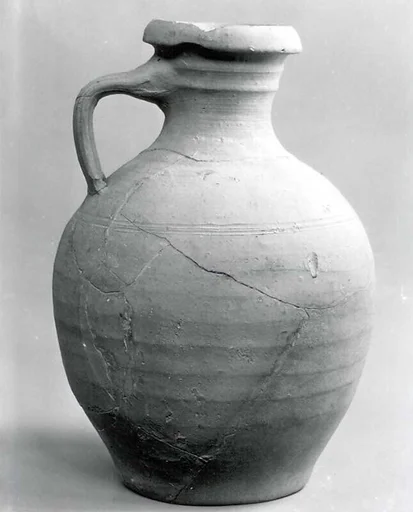
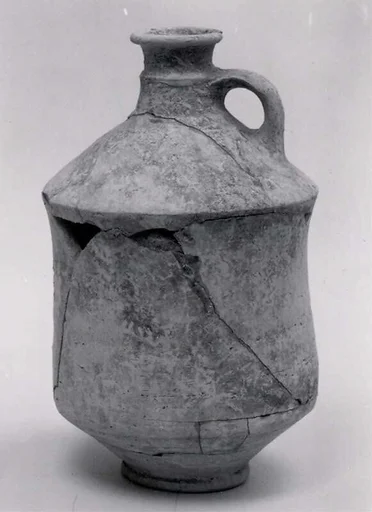
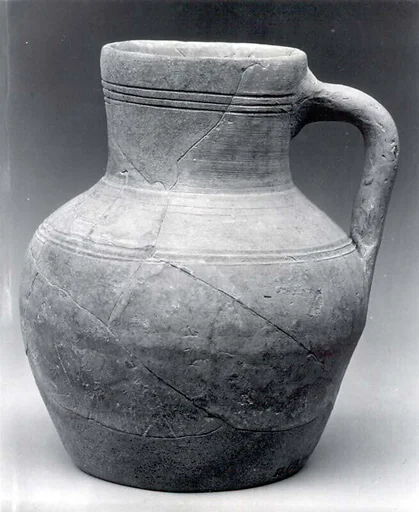
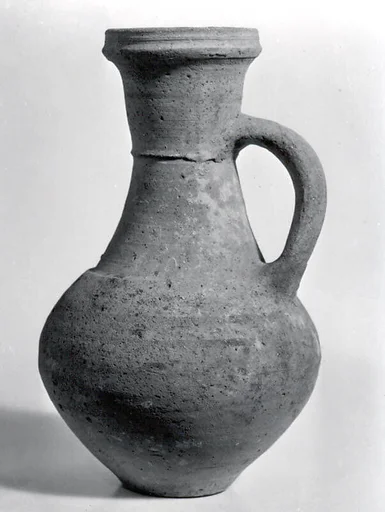
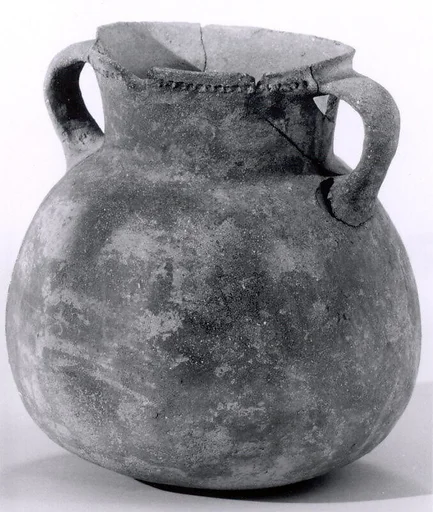
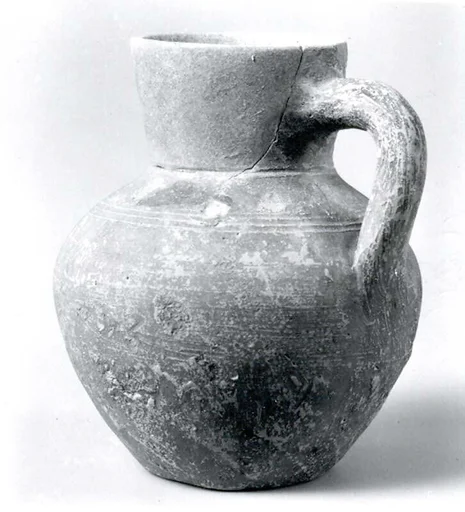
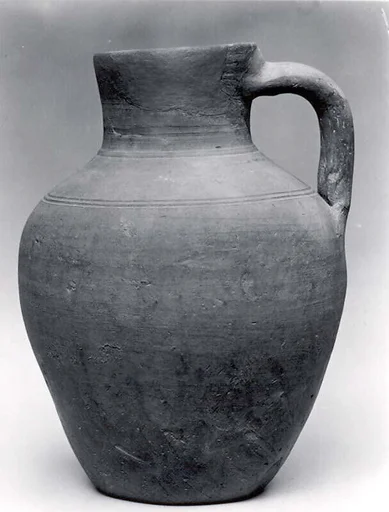
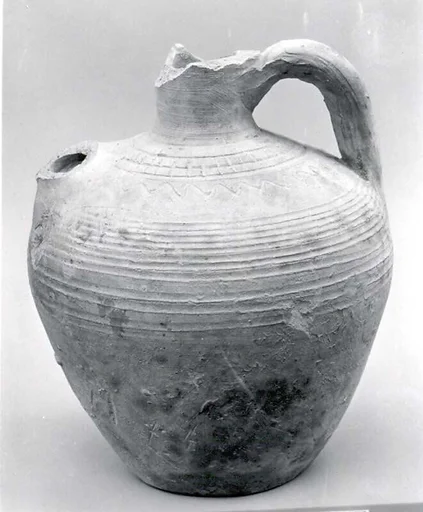
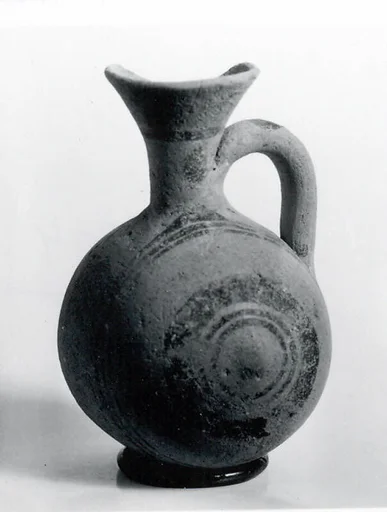
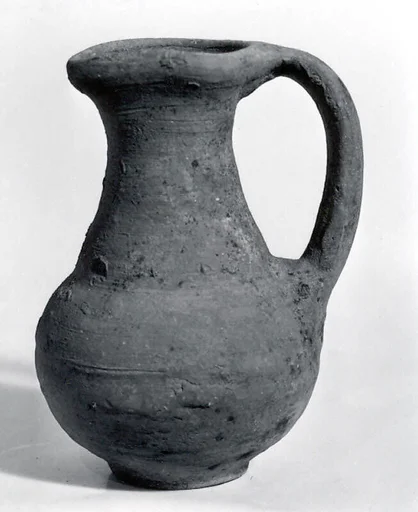
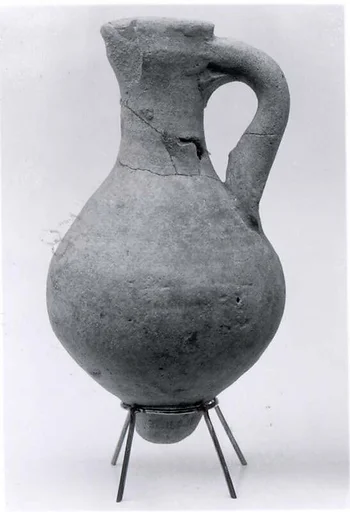
This jug has a globular body, a flat base, and a narrow mouth. A loop handle, large enough for a single finger, connects the neck to the body. The jug is made of a buff clay with red painted decorations, including stripes around the rim and neck and on the handle, and rays descending from the neck to the body. Wheel lines on the interior indicate that it was made on a potter’s wheel. This jug was excavated at Tepe Sialk, near Kashan in central Iran. Sialk was the site of a fortified town, constructed in the early first millennium B.C. Several hundred yards from the town there was a large cemetery, called Necropolis B by the archaeologists who explored it between 1933 and 1937. The graves were pits covered with pitched roofs made of stone or clay, and in addition to the bodies of the dead they contained jewelry, weapons, leather armor, horse trappings and ceramic vessels, including many similar jugs. Possibly it was used in a funerary banquet or ritual before it was placed in the grave; regardless, its burial in the cemetery shows that drinking was an important part of life and death in Iron Age Sialk.
- Artist
- Unknown
- Date
- ca. 900–700 BCE
- Medium
- Ceramic, paint
- Culture
- Iran
- Department
- Ancient Near Eastern Art
- Credit line
- Gift of Museum of Tehran, 1939