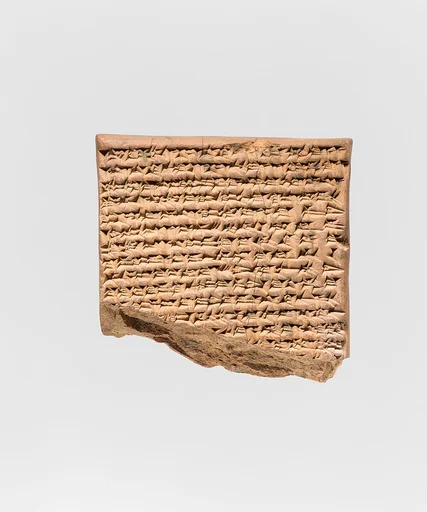
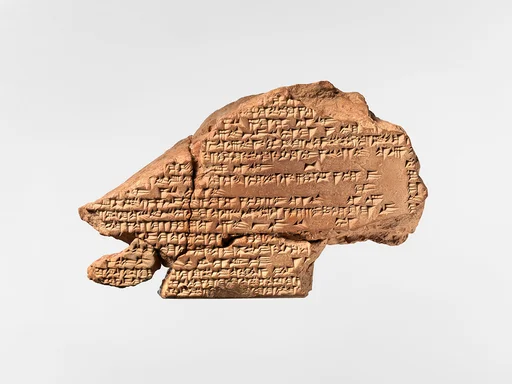
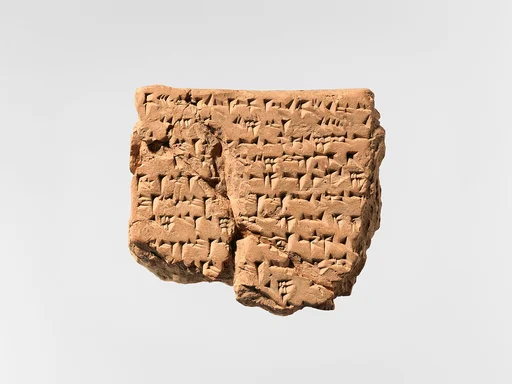
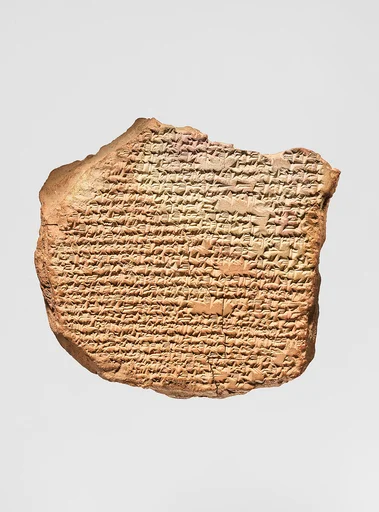
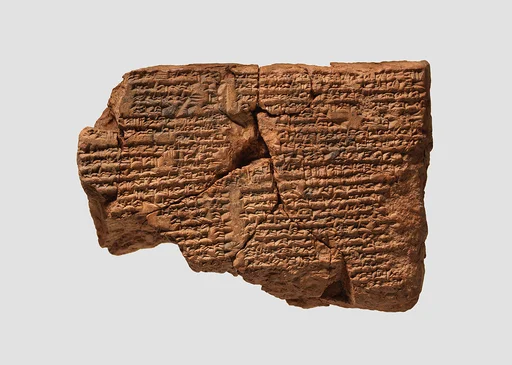
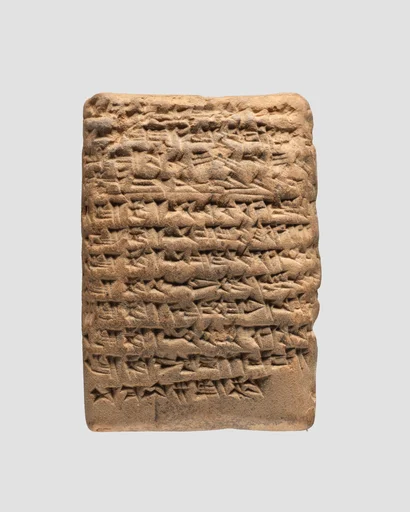
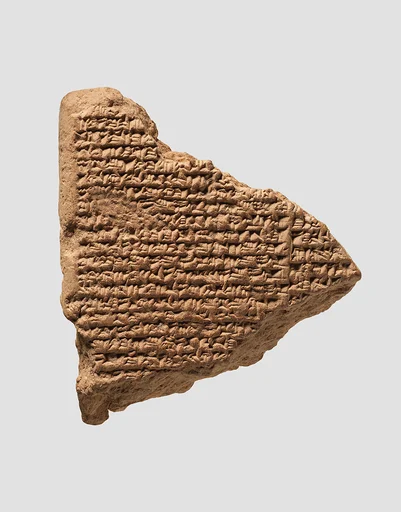
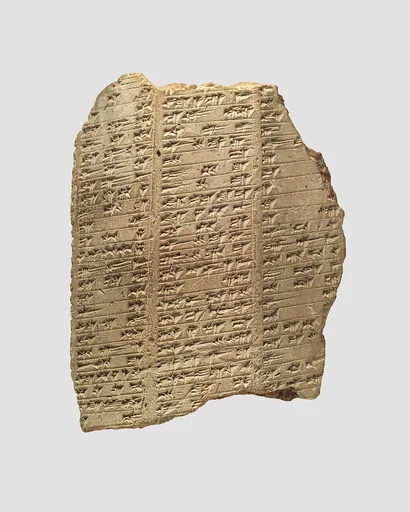
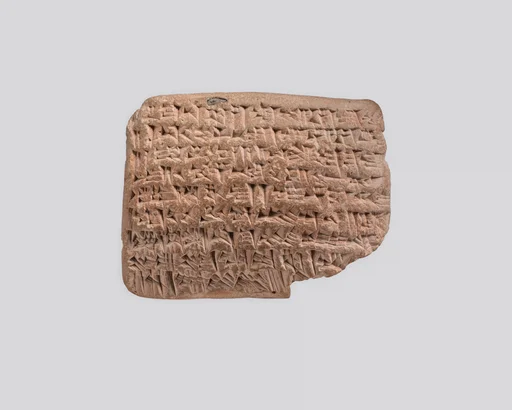
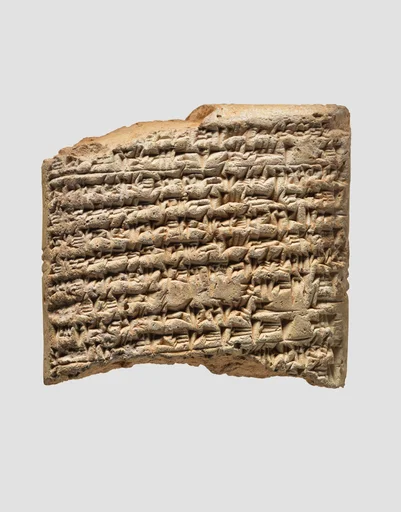
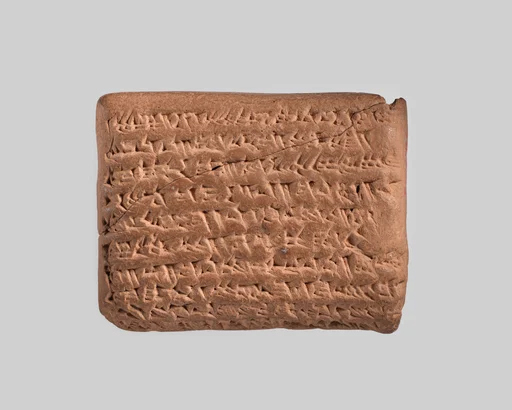
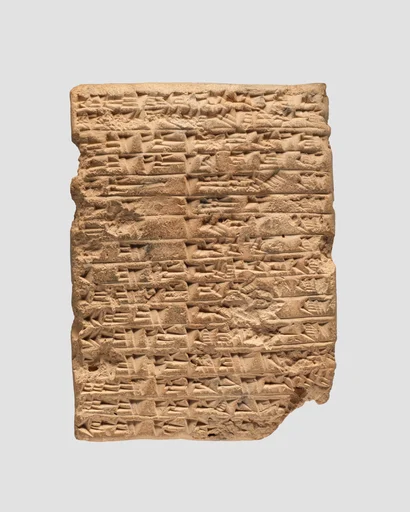
Cuneiform tablet: a-she-er gi-ta, balag to Innin/Ishtar
Unknown
ca. 2nd–1st century BCE · Clay · Ancient Near Eastern Art
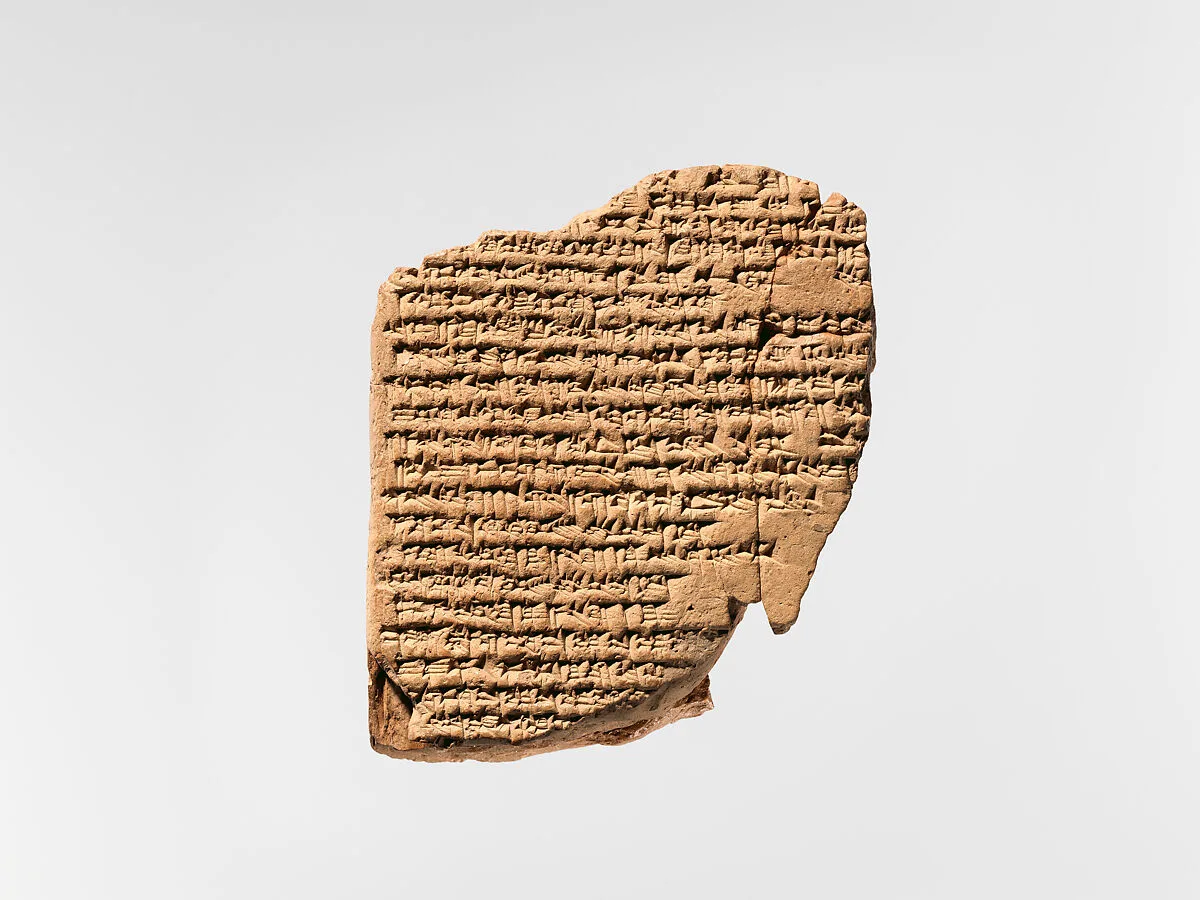
This cuneiform tablet records part of a balag, a song of lament that accompanied a stringed instrument. The text is typical of the Seleucid period, where the words are written in Sumerian but with a large number of lines accompanied by an Akkadian translation. Sumerian was the language spoken in southern Mesopotamia until around 2000 B.C., while Akkadian had probably ceased to be a spoken language by the time this tablet was written, having been replaced by Aramaic and Greek throughout much of the Near East. However, both Sumerian and Akkadian continued to be written in cuneiform until the early centuries A.D. by learned scribes. This tablet contains a lament by Inanna, the Sumerian goddess of fertility, over the destruction of her cities and shrines, and contrasts her present humiliation with her previous power. There are parallels with well-known myths dating from the late third and second millennia B.C.—such as the Sumerian version of the myth of Inanna's descent to the netherworld—demonstrating the very longlived literary tradition maintained by the temple scribes of Mesopotamia.
- Artist
- Unknown
- Date
- ca. 2nd–1st century BCE
- Medium
- Clay
- Culture
- Seleucid or Parthian
- Department
- Ancient Near Eastern Art
- Credit line
- Purchase, 1886