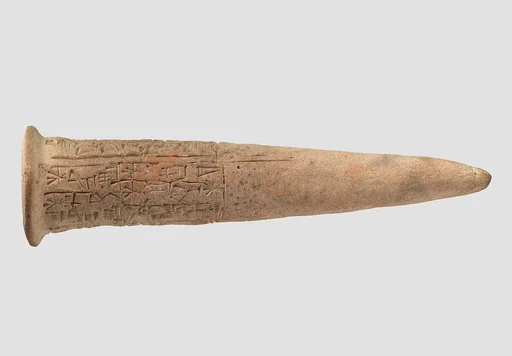
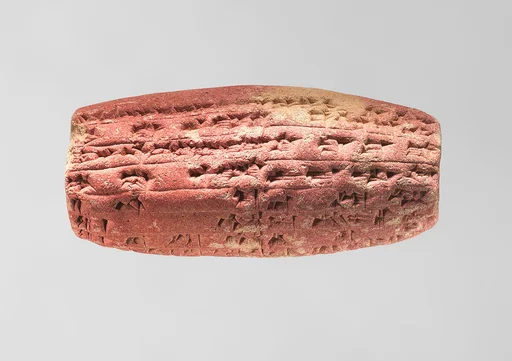
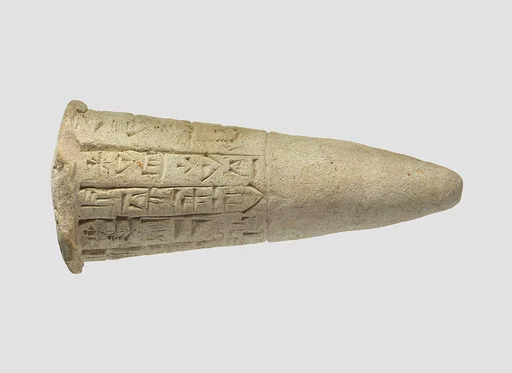
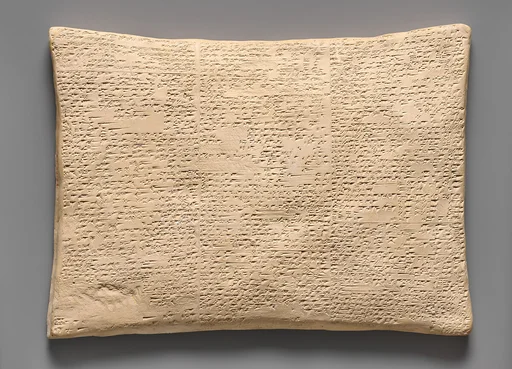
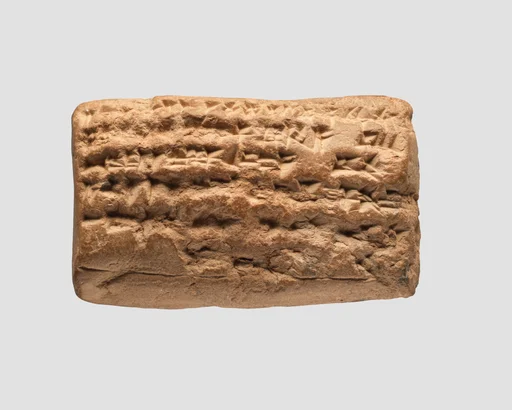
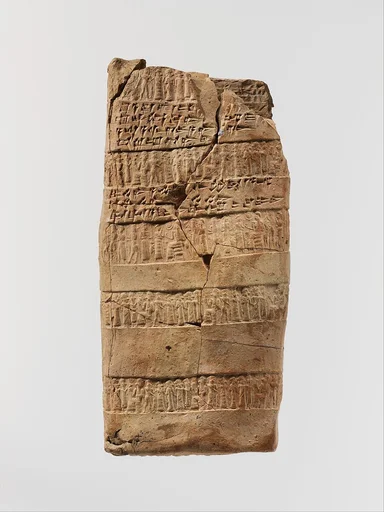
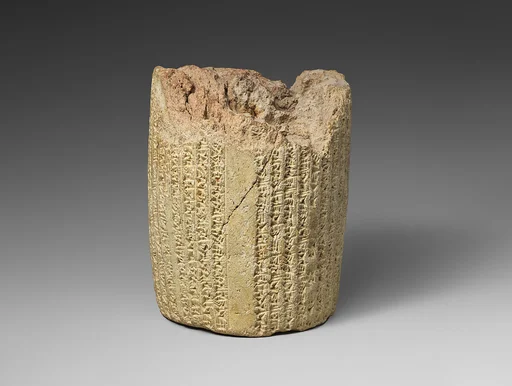
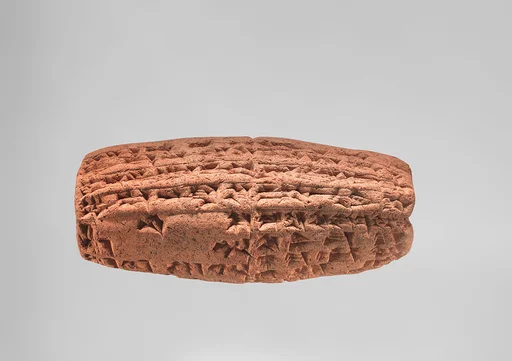
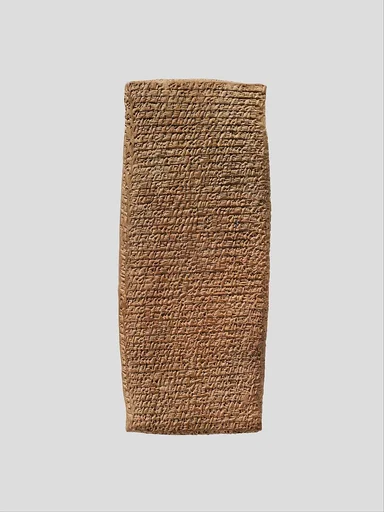
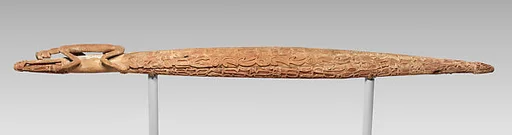
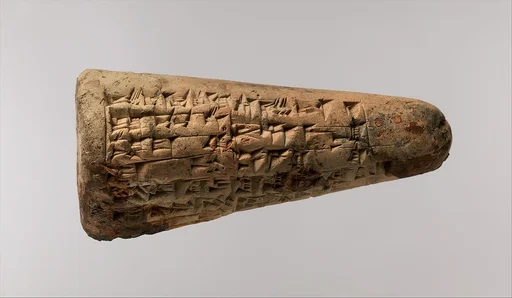
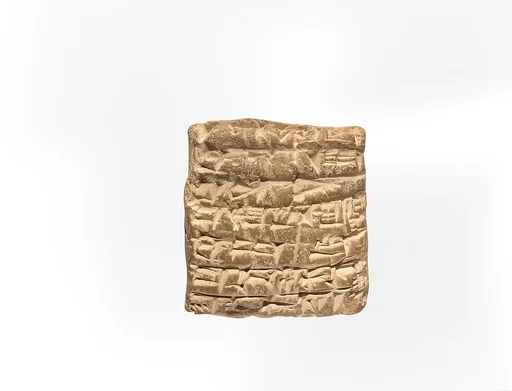
Cuneiform cylinder with inscription of Nebuchadnezzar II, describing the rebuilding of Ebabbar, the temple of the sun-god Shamash at Sippar
Unknown
ca. 604–562 BCE · Clay · Ancient Near Eastern Art
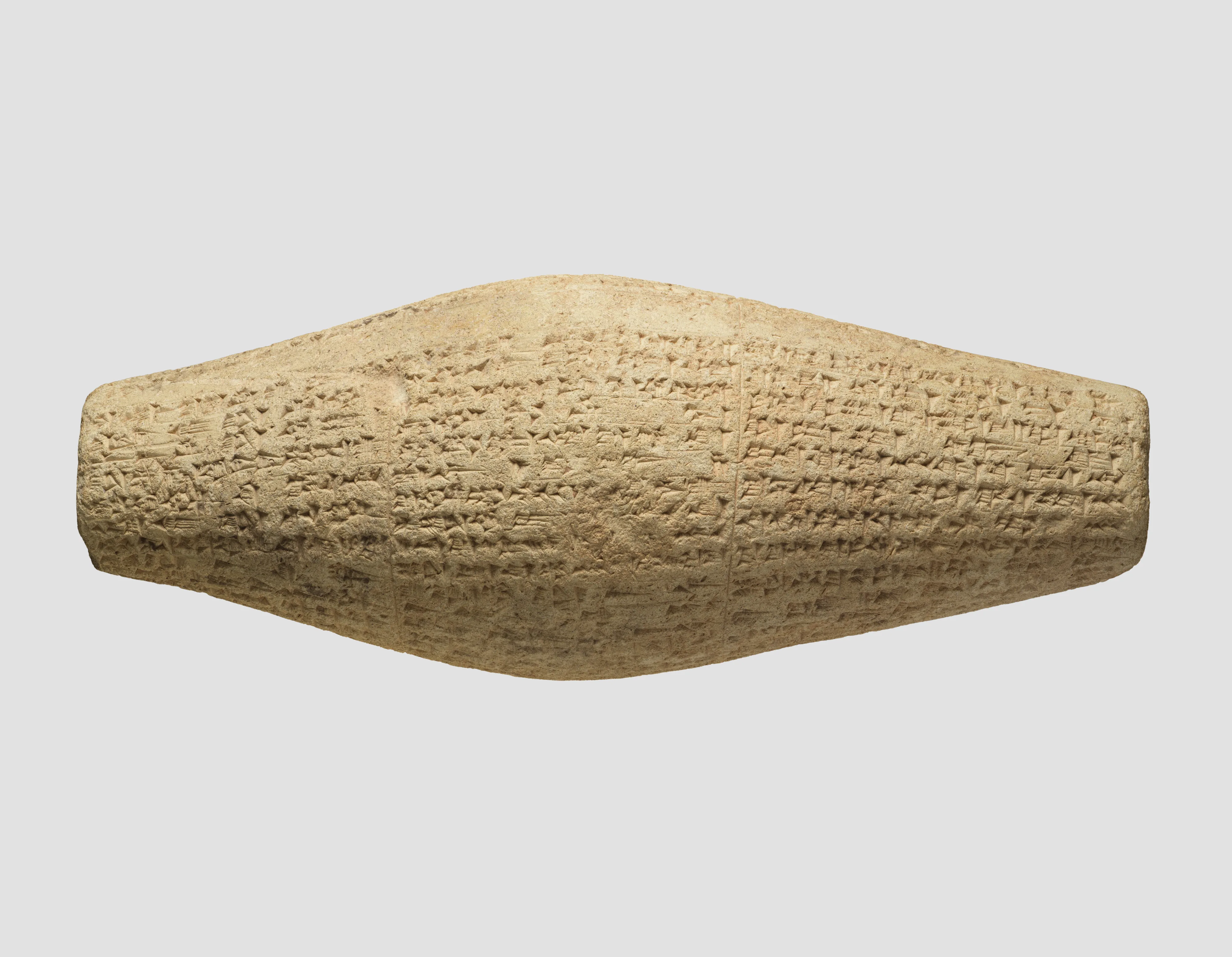
The invention of writing in approximately 3300 B.C. was one of many developments in administrative technology--including the use of geometric tokens for counting and cylinder seals to guarantee transactions--that accompanied the growth of the first cities and states in southern Mesopotamia. Proto-cuneiform is the name given to the earliest form of writing--pictograms that were drawn on clay tablets. Gradually, the pictograms became abstracted into cuneiform (Latin, "wedge-shaped") signs that were impressed rather than drawn. At its greatest extent, cuneiform writing was used from the Mediterranean coast of Syria to western Iran and from Hittite Anatolia to southern Mesopotamia. It was adapted to write at least fifteen different languages. The last dated cuneiform text has a date corresponding to A.D. 75, although the script probably continued in use over the next two centuries. This hollow clay cylinder is inscribed with cuneiform and records the achievements of Nebuchadnezzar II, the king of Babylon. The text describes the rebuilding of Ebabbar, the temple of the sun-god Shamash at Sippar and probably served as a foundation deposit.
- Artist
- Unknown
- Date
- ca. 604–562 BCE
- Medium
- Clay
- Culture
- Babylonian
- Department
- Ancient Near Eastern Art
- Credit line
- Purchase, 1884