印籠刻昆虫図螺鈿据文象嵌鞘打刀拵 Blade and Mounting for a Sword (<i>Katana</i>)
Unknown
blade 17th century; mounting 19th century · Steel, wood, lacquer, mother-of-pearl, rayskin (<i>same</i>), thread, copper-gold alloy (<i>shakudō</i>), copper-silver alloy (<i>shibuichi</i>), gold, iron · Arms and Armor
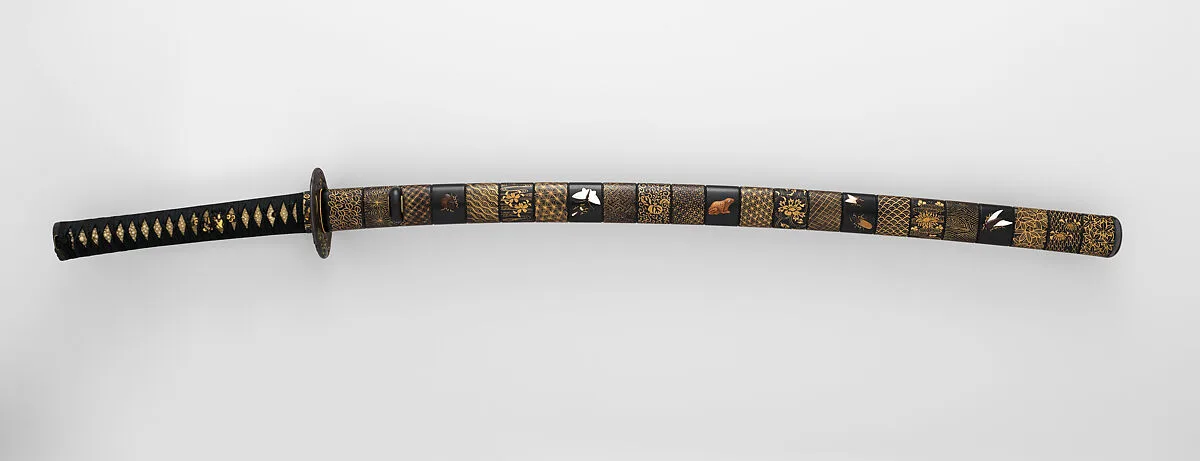
This mounting features a scabbard with twenty-three striated sections. Eighteen of these are each finished in a different gold lacquer design, including geometric patterns, running water, chrysanthemums, and cherry blossoms, while the remaining five are adorned with various insects and a toad. Mother-of-pearl was used for the wings of certain insects and the eye of the toad. Made in the early Meiji period (1868–1912), the mounting displays the highest level of lacquer workmanship of the time. This style of scabbard originated at the turn of the eighteenth century, when the affluent Genroku period (1688–1704) gave rise to luxurious sword mountings.
- Artist
- Unknown
- Date
- blade 17th century; mounting 19th century
- Medium
- Steel, wood, lacquer, mother-of-pearl, rayskin (<i>same</i>), thread, copper-gold alloy (<i>shakudō</i>), copper-silver alloy (<i>shibuichi</i>), gold, iron
- Culture
- Japanese
- Department
- Arms and Armor
- Credit line
- Rogers Fund, 1976