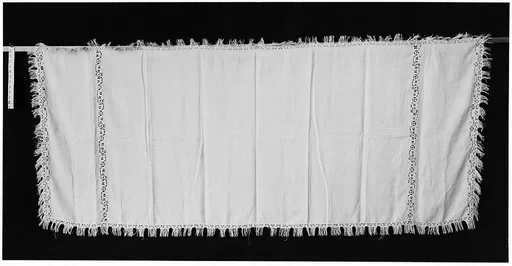
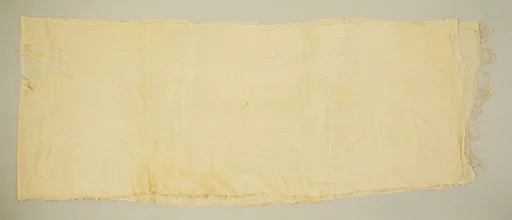
Woman's Shawl (Aso Oke)
Unknown
19th century · Cotton · Arts of Africa, Oceania, and the Americas
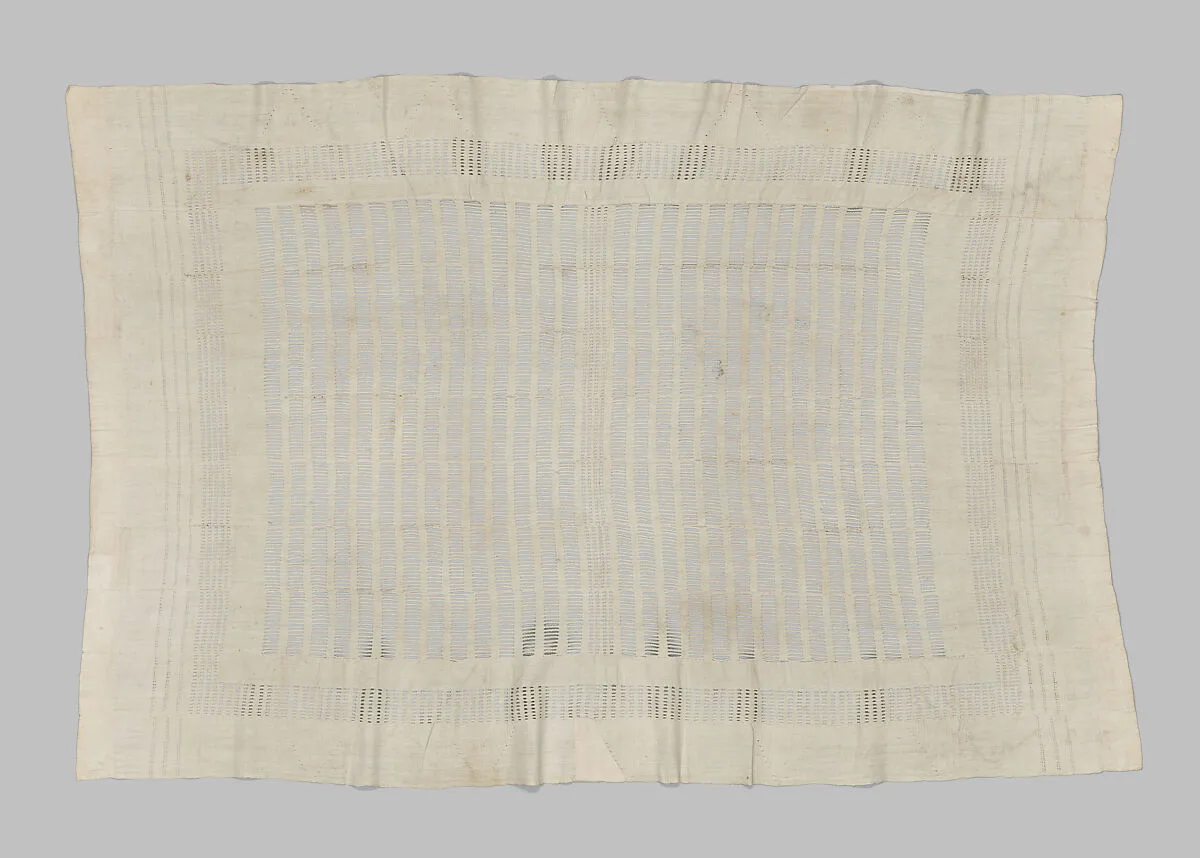
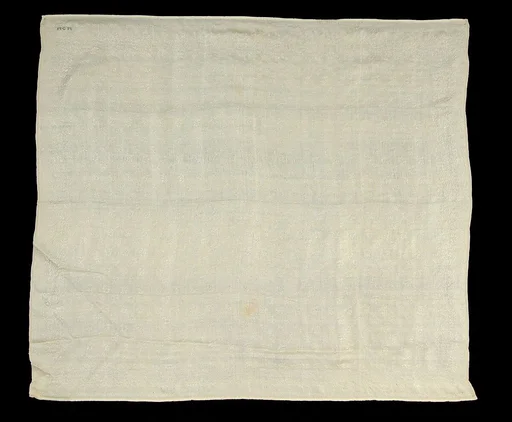
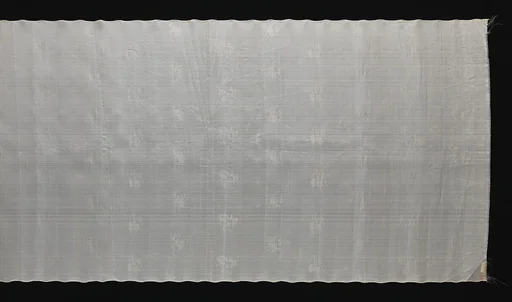
Five hand-picked variations of ẹlẹya (openwork) patterning enhance this delicately handwoven textile. Its light hue signifies the purity and sanctity of the ancestors, imparting the wearer with an aura of peace. When worn over the head during festivals of dance and oration known as Àdàmú Òriṣà, the perforated cloth creates a veil through which a performer may peer. Held primarily on Lagos Island, Àdàmú Òriṣà enact historical episodes relating to the city’s founding Àwórì-Yoruba lineages. With roots in nineteenth-century funerary rites that commemorated Àwórì royalty and elites, this tradition has become a potent symbol of Yoruba identity within the diverse metropolis of Lagos.
- Artist
- Unknown
- Date
- 19th century
- Medium
- Cotton
- Culture
- Yoruba peoples
- Department
- Arts of Africa, Oceania, and the Americas
- Credit line
- Purchase, Marie Sussek and Roxanne and Guy Lanquetot Gifts, 2013