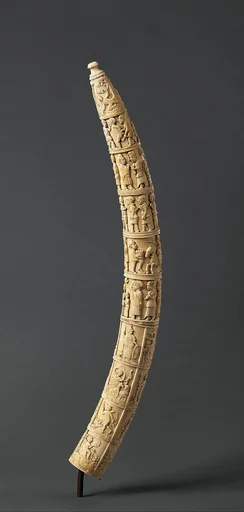
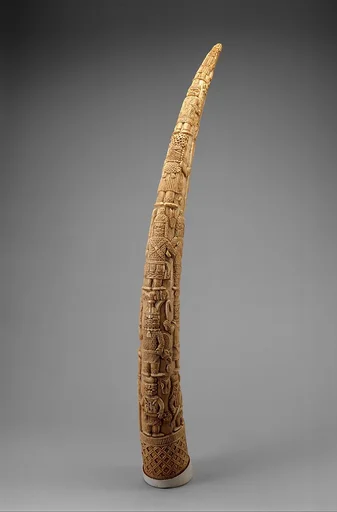
Tusk with figurative relief
Kongo artist
ca. 1880–1890 · Ivory · Arts of Africa, Oceania, and the Americas
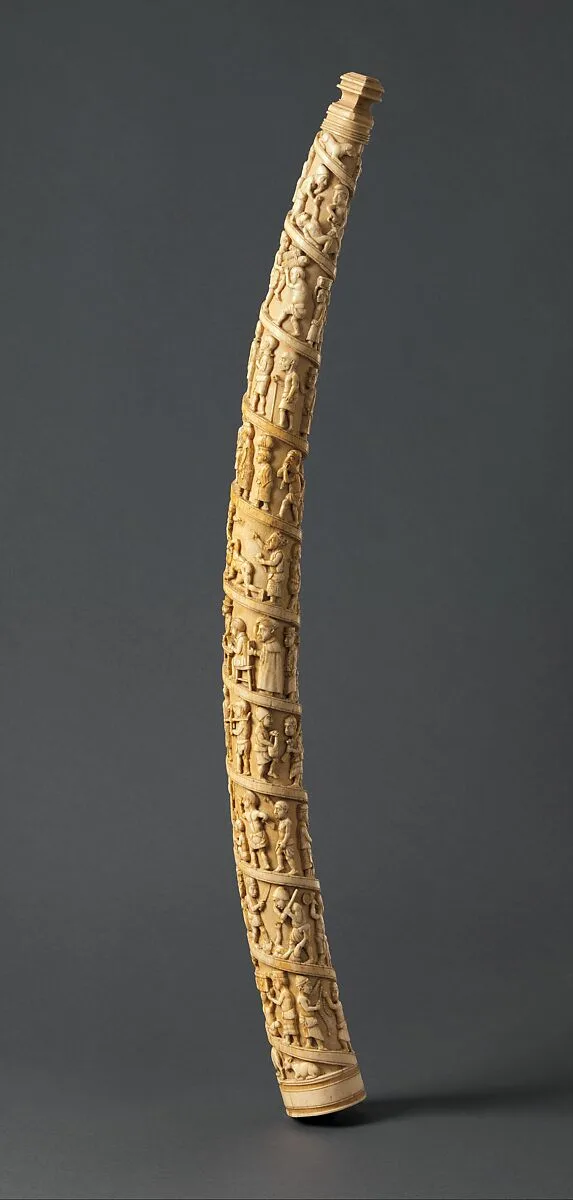
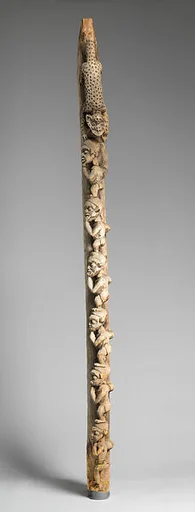
This tusk is one of numerous carved ivories produced by Kongo artists for foreign consumption in the second half of the nineteenth century. The scenes carved in relief portray the brutality of Belgian colonial activities in the Kongo. Chained figures are marched forward by men brandishing rifles. Elsewhere, scenes depict men beaten with knives and the butts of rifles, emphasizing the violent and dehumanizing practices employed by Belgian officials. The portrayal of both slave caravans and ivory porters, many of whom were also enslaved, on this tusk evokes the interdependence between these two commercial endeavors.Vividly illustrating these abuses, this ivory and others like it actively protest against the catastrophes of colonialism by capturing, recording, and circulating these scenes locally and abroad. This tusk can be specifically dated to the early 1880s. In the middle register, a suit worn by a European figure sitting at a table reflects fashion trends from that period. Notably, the trans-Atlantic slave trade was outlawed in 1850, but human trafficking continued for several decades. Moreover, the Belgian colonial period in the Kongo is remembered for its brutality and violence against indigenous, black populations. English missionary Alice Seeley Harris photographed the brutal conditions of forced labor, enslavement, and exploitation at least as late as 1905.
- Artist
- Kongo artist
- Date
- ca. 1880–1890
- Medium
- Ivory
- Culture
- Kongo, Vili group
- Department
- Arts of Africa, Oceania, and the Americas
- Credit line
- Gift of Marian Malcolm, in loving memory of her husband, Daniel Malcolm, 2022