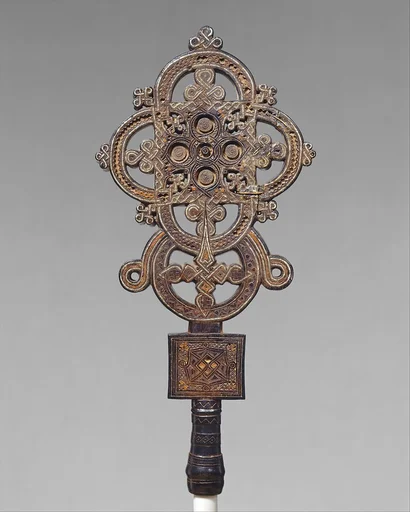
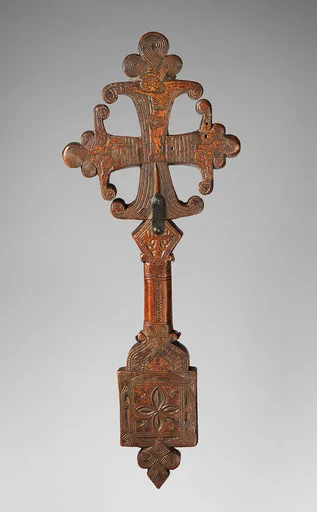
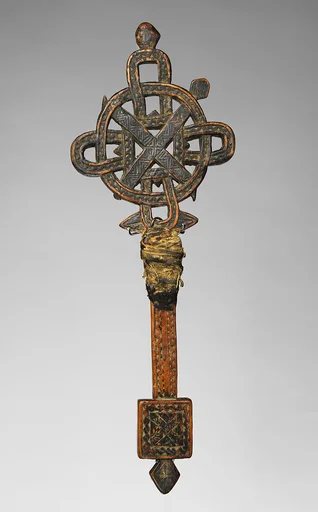
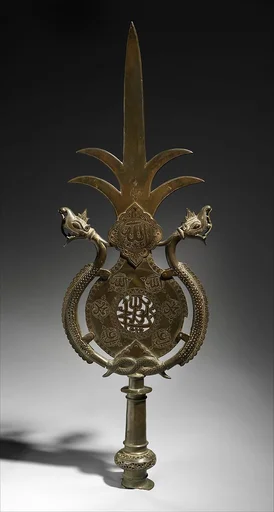
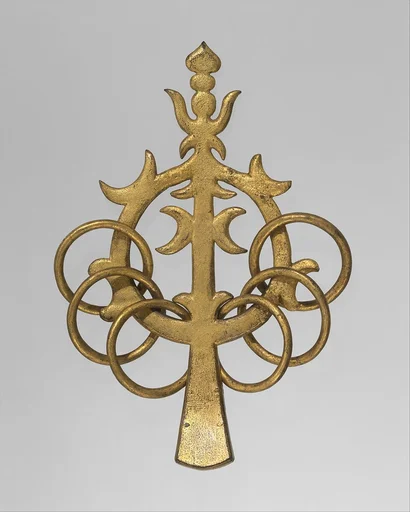
Processional Cross
Central or Northern Highlands region artist
15th century · Copper · Arts of Africa, Oceania, and the Americas
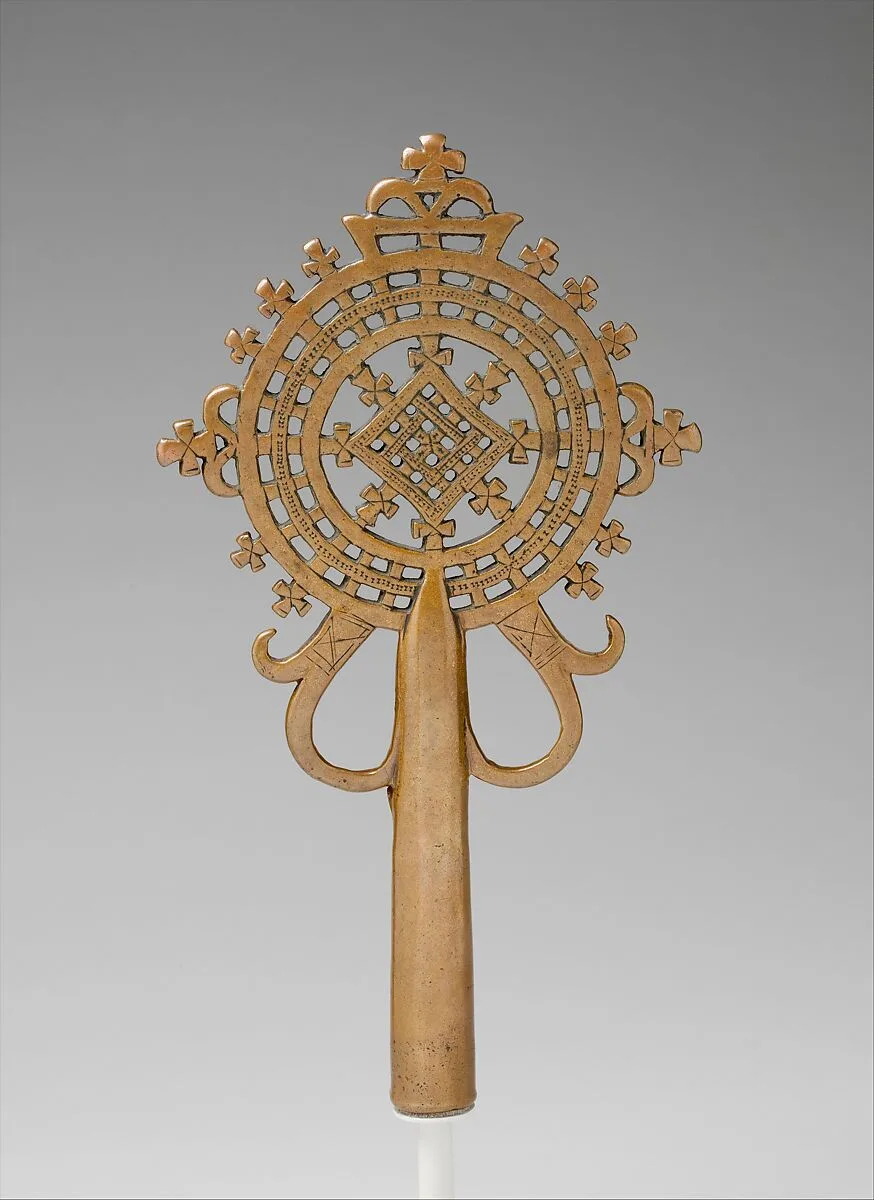
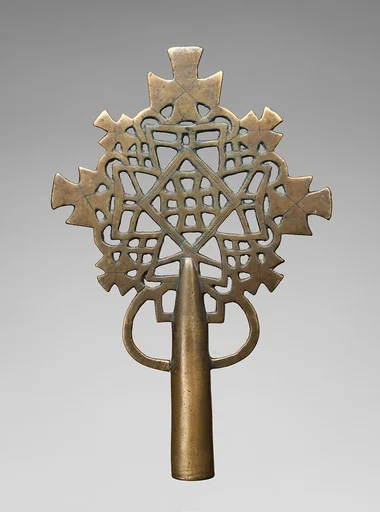
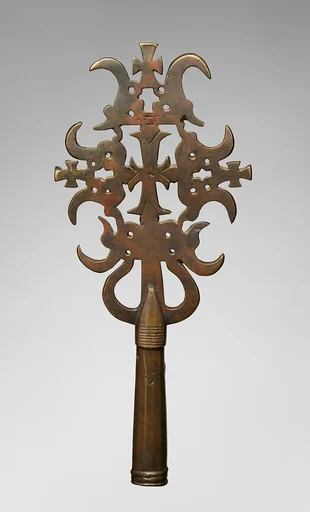
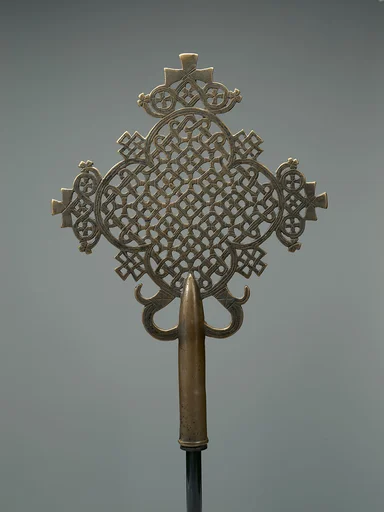
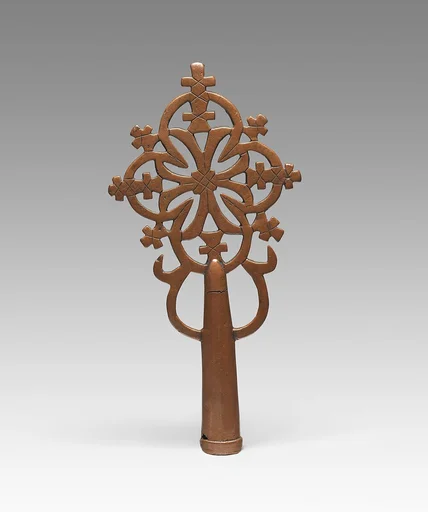
By the early Solomonic period (ca. 1270–1530 ce), Ethiopian elites demonstrated their devotion and piety by commissioning manuscripts, wall paintings, and crosses. When sanctified by Christ’s blood in sacramental rites, the cross conferred infinite power to heal and bless. Identified simultaneously with the triumph of resurrection and the Tree of Life, the cross has been translated into an infinite array of complex openwork designs carved in wood or cast in bronze or silver. The regenerative properties of the cross have been visually expressed through organic forms such as vegetation or birds radiating out from the center. While tendril-like smaller crosses convey a sense of vitality and growth, avian motifs herald the Ascension of Christ. When the cross is affixed to a wood staff and raised heavenward by the clergy in liturgical processions, its negative space would be silhouetted against a celestial backdrop.
- Artist
- Central or Northern Highlands region artist
- Date
- 15th century
- Medium
- Copper
- Culture
- Central or Northern Highlands region
- Department
- Arts of Africa, Oceania, and the Americas
- Credit line
- Purchase, Dr. and Mrs. Sidney G. Clyman Gift, 2008