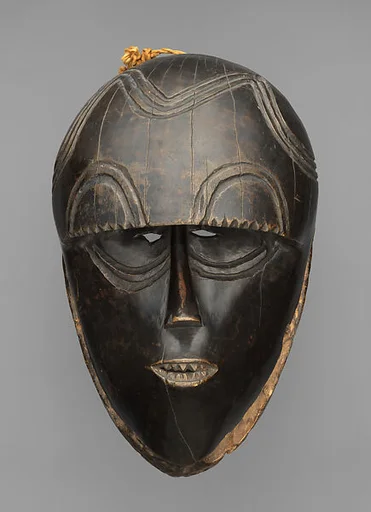
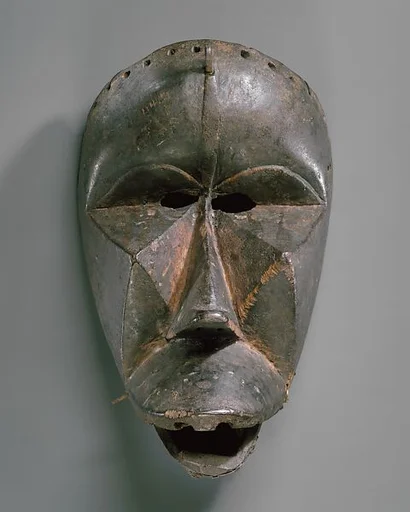
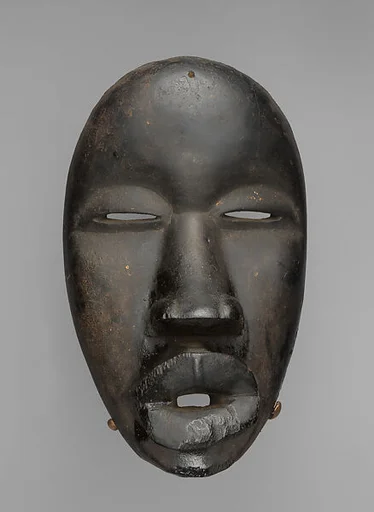
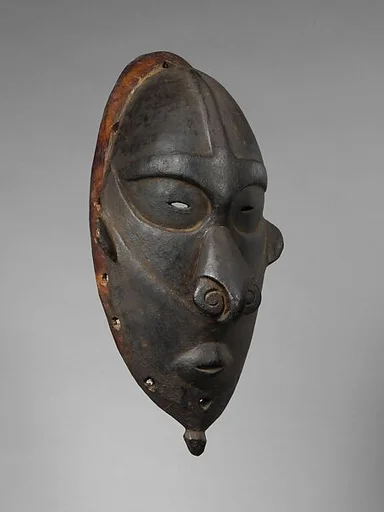
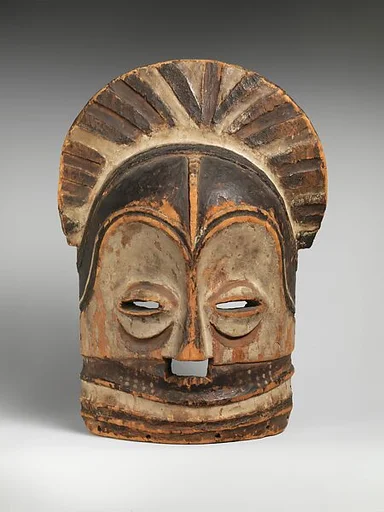
Female Mask (Gambanda)
Unknown
19th–20th century · Wood, fiber · Arts of Africa, Oceania, and the Americas
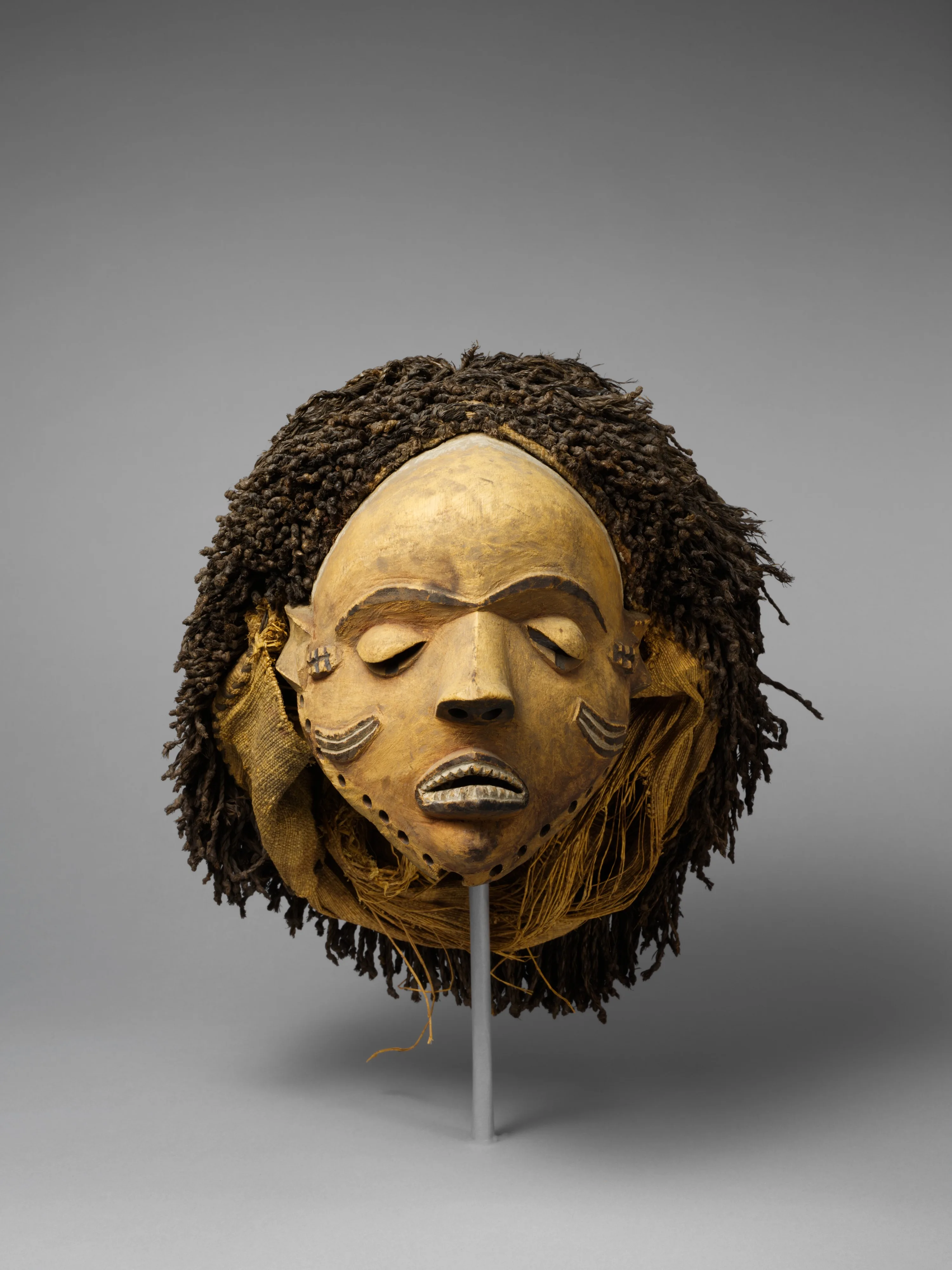
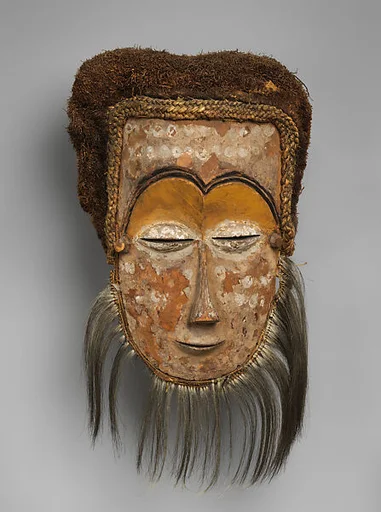
Gambanda’s smooth, wide forehead and plump cheeks represent a feminine ideal of refinement and modesty. Those delicate features were mirrored in the restrained and highly controlled movements of her choreography. Danced as part of a wider ensemble, to which new characters were regularly added, gambanda featured in masquerades whose performances addressed the competing interests between individual autonomy and social responsibility. Her demure gaze is known as zanze (bedroom eyes), intended to elicit love and generosity in men. Her fashionable guhota sanga hairstyle was favored by young women because the hundreds of two-stranded twists quivered with the slightest motion and enhanced the movements of one’s head. The carver was likely a professional blacksmith who delegated the labor-intensive tasks of grinding colors and processing the elaborate raffia fiber tresses.
- Artist
- Unknown
- Date
- 19th–20th century
- Medium
- Wood, fiber
- Culture
- Pende peoples
- Department
- Arts of Africa, Oceania, and the Americas
- Credit line
- Gift of James J. Ross, 2011