Kero
Unknown
late 15th–early 16th century · Ceramic · Arts of Africa, Oceania, and the Americas
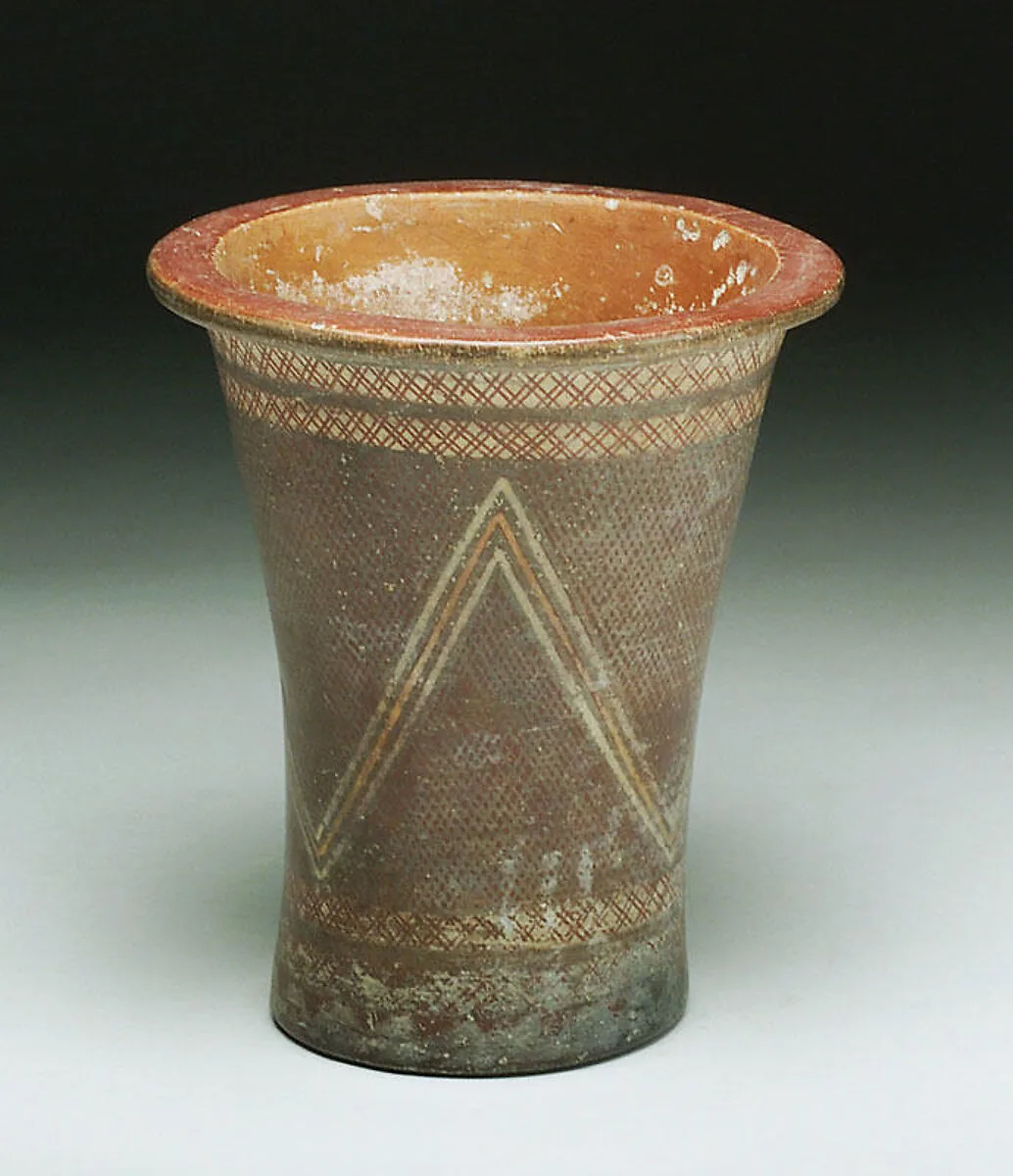
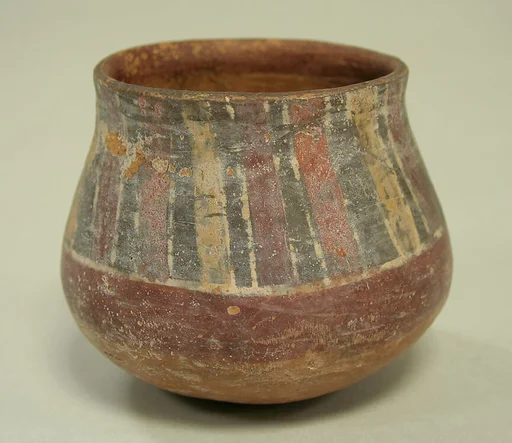
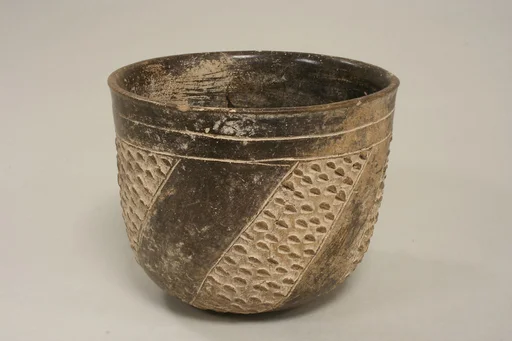
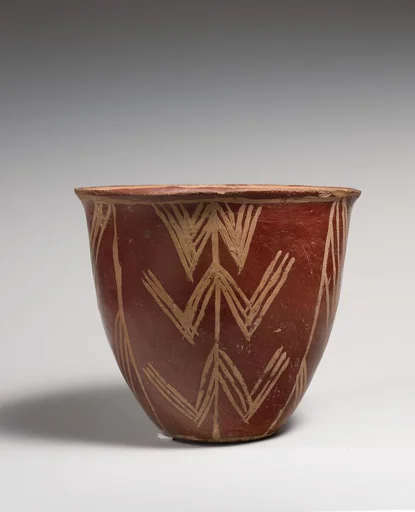
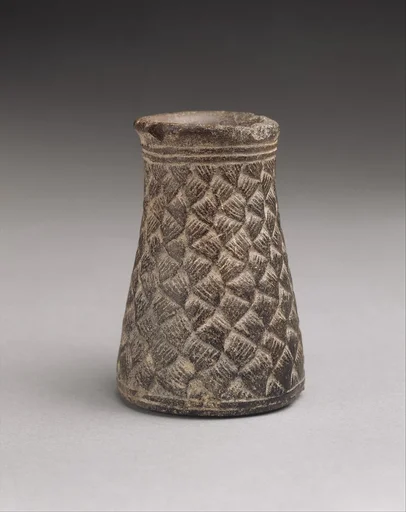
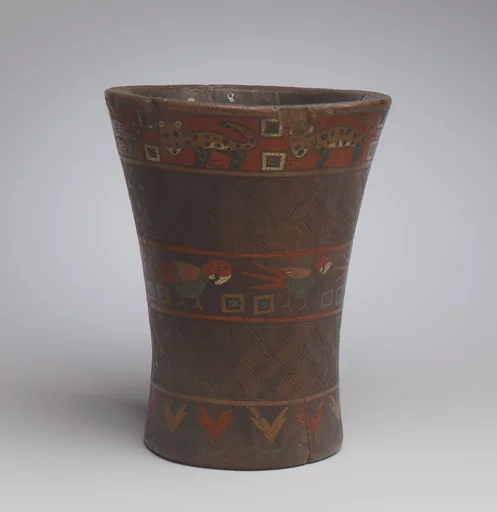
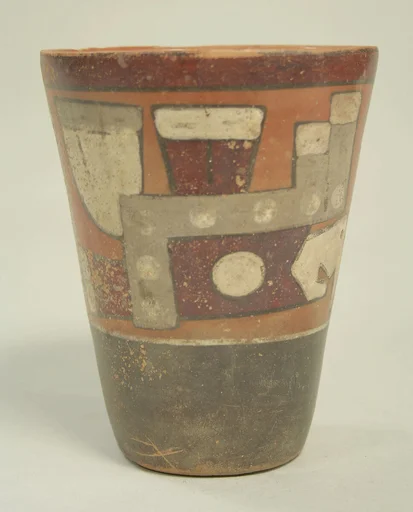
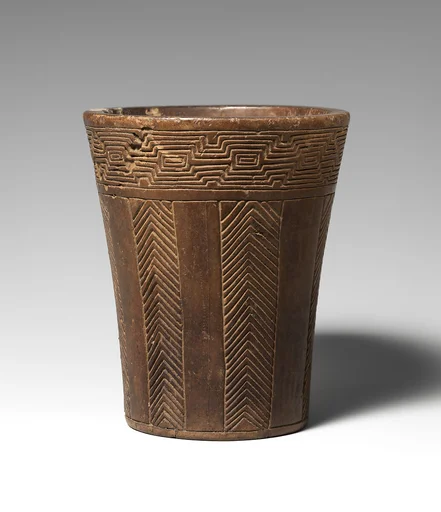
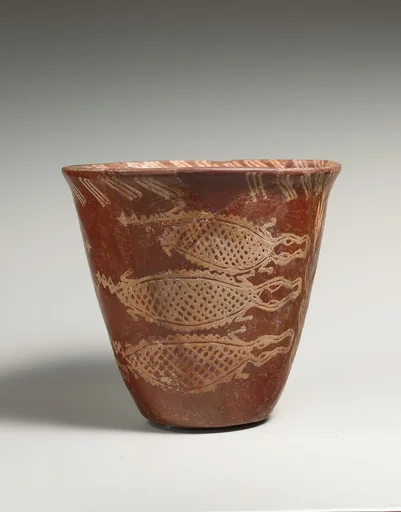
Cylindrical cups with flaring rims, called keros, were widely used in the central and southern Andes after the middle of the first millennium A.D. The beakers—made of ceramic, wood, gold, or silver—are thought to have been used for the consumption of chicha. A fermented corn beer, chicha was drunk during ceremonial as well as social gatherings. Ceramic keros were decorated for many centuries with images of felines, raptors, and snakes. Those made by the Cañari people in the southern highlands of Ecuador, where this beaker may have originated, often feature sculpted and stylized human faces on one side. When the Cañari region came under Inka control in the late fifteenth century, keros were painted with neatly drawn, small-scale geometric designs characteristic of Inka aesthetics. On this kero, the design is divided into several horizontal registers. At the top and bottom, two narrow bands with red crosshatching over white frame the wide central register.
- Artist
- Unknown
- Date
- late 15th–early 16th century
- Medium
- Ceramic
- Culture
- Inca
- Department
- Arts of Africa, Oceania, and the Americas
- Credit line
- Rogers Fund, 2003