Ancestor Pair
Unknown
1st century BCE–3rd century CE · Ceramic · Arts of Africa, Oceania, and the Americas
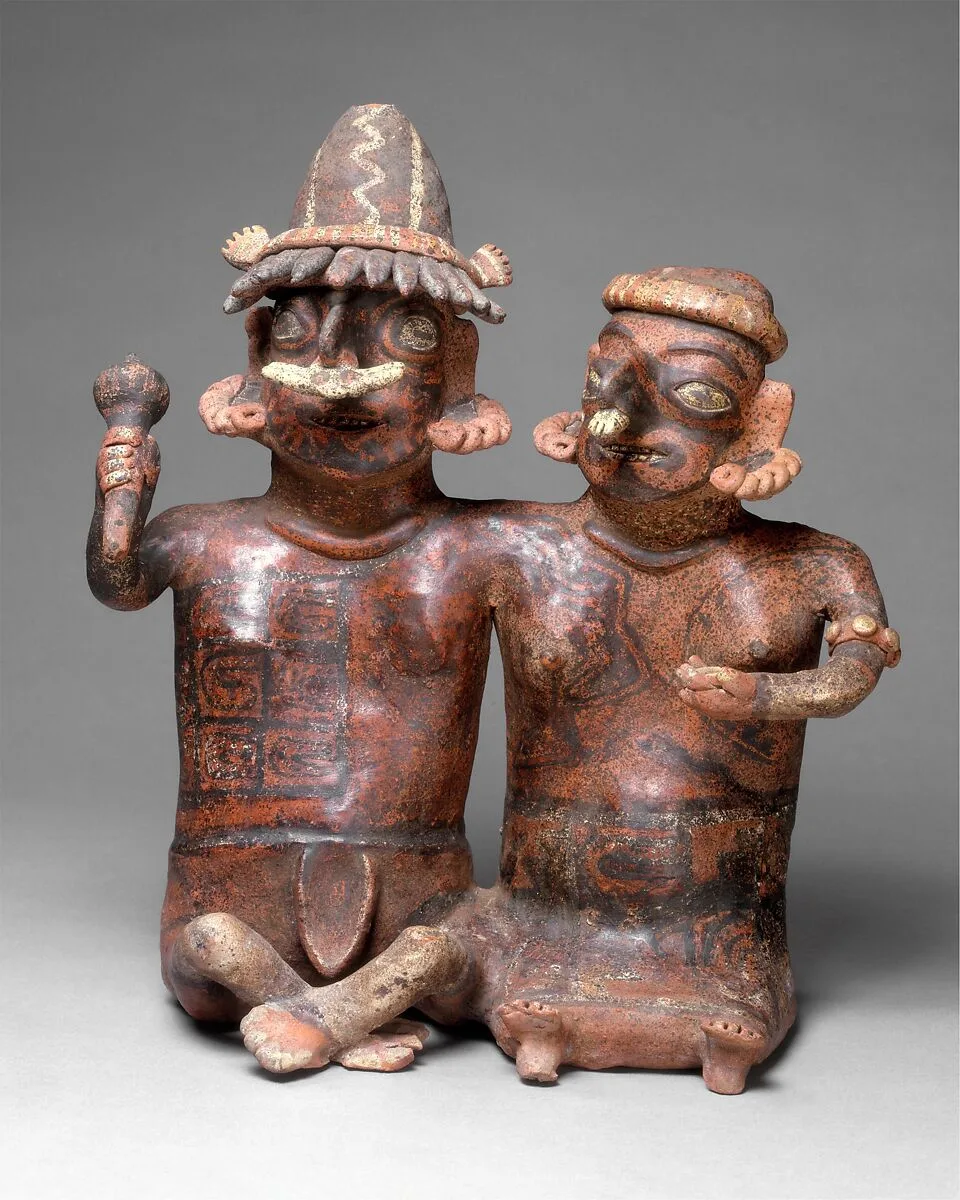
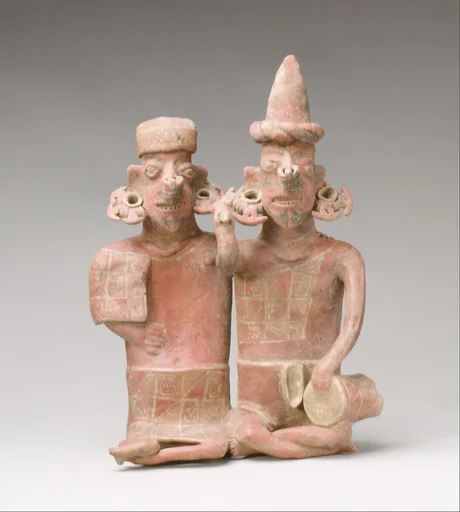
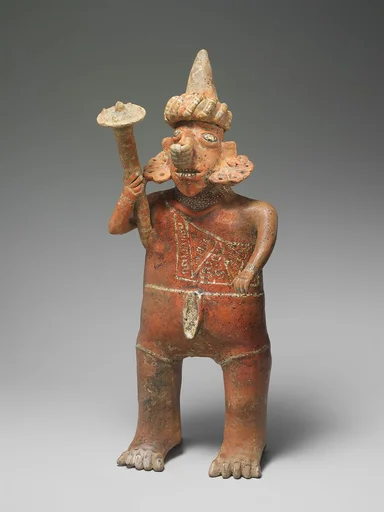
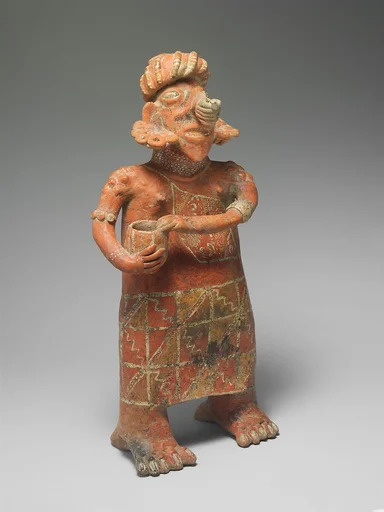
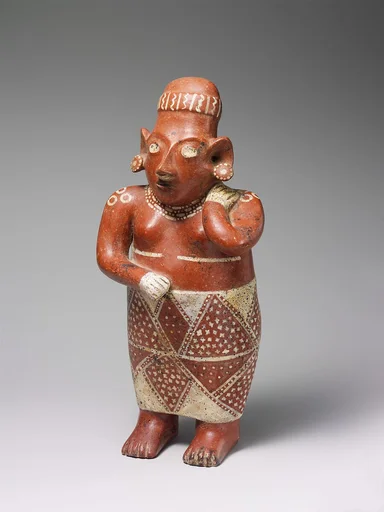
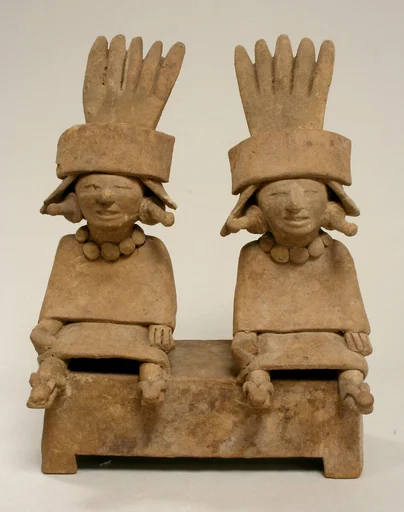
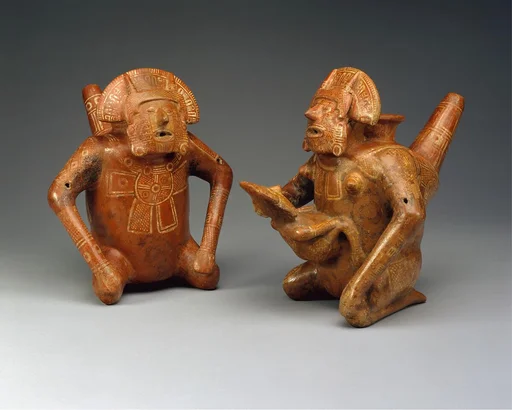
These large, hollow ceramic male and female figures, joined at the shoulders and hips, are thought to represent important ancestors of an ancient West Mexican community. The male is seated cross-legged, and wears a cape or mantle with a slip-painted pattern. His loincloth features an attached, scoop-shaped genital protector. He wears a conical hat with a zig-zag design and a lower fringe, and holds aloft a rattle or conch shell in his right hand. The female sits with legs extended and wears a full-length skirt with traces of an elaborate design. Her left arm is adorned with a band featuring five round elements and she holds small bowl up to her chest. Prominent nose and ear ornaments grace both figures. Some two thousand years ago, the inhabitants of communities in what is now the modern Mexican state of Nayarit buried their revered dead in in one-to-five meter deep shaft-and-chamber tombs in hilltop cemeteries. These tombs could contain multiple burials and numerous offerings of ceramic vessels, ornaments, and other precious items. Large, hollow ceramic figures were a prominent feature of high-status tombs, and they were often made in male-female pairs, or family groups, underscoring the importance of kinship, descent, and ancestors in West Mexican community practice and belief.
- Artist
- Unknown
- Date
- 1st century BCE–3rd century CE
- Medium
- Ceramic
- Culture
- Ixtlán del Río
- Department
- Arts of Africa, Oceania, and the Americas
- Credit line
- Gift of The Andrall and Joanne Pearson Collection, 2005