Necklace
Unknown
10th–16th century · Gold · Arts of Africa, Oceania, and the Americas
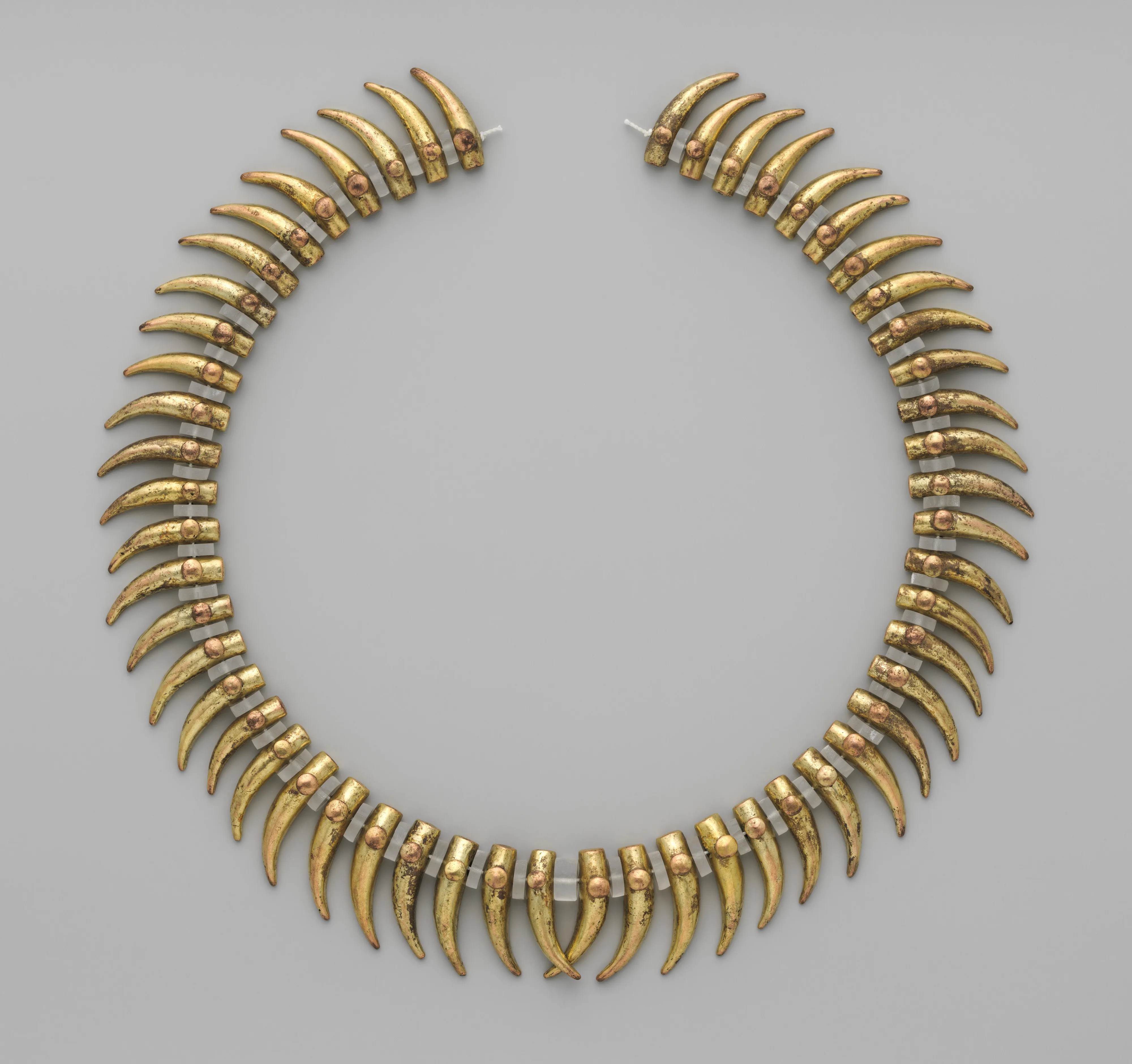
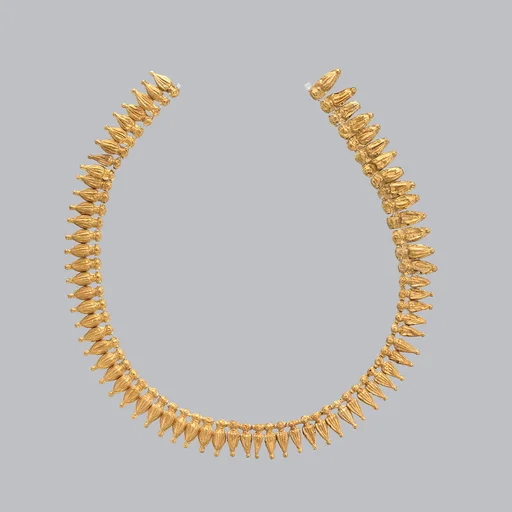
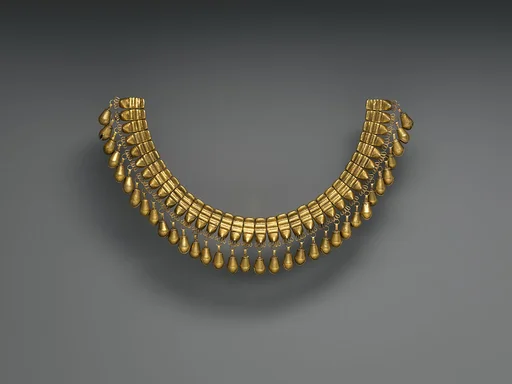
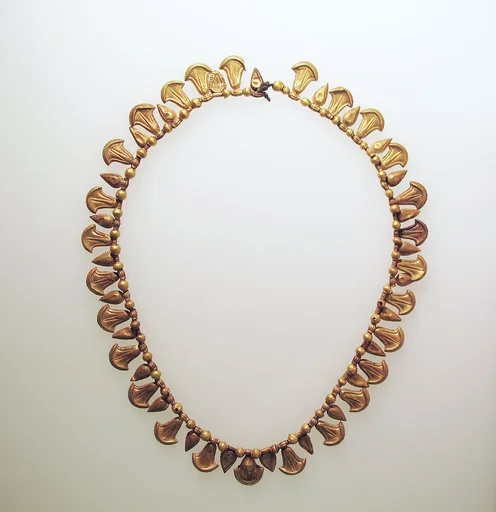
The fifty-four beads forming this necklace are cast of a copper-gold alloy known as tumbaga. The relatively high copper content in the alloy accounts for the pink tonality of the gold. The curved, pointed shape of the beads may represent animal teeth and or claws. A curious, unexplained feature is the projecting knob on top of each bead. The knobs may be ornamental or, more likely, may have had additional decorations such as colorful feathers or threads tied around them. Abrasions on the sides of the beads suggest that flat stone beads, about 1.5 centimeters in diameter, were once placed between the gold ones. The arrangement of the beads here is conjectural. Necklaces made of many repeated elements are common in many parts of Precolumbian America. Beginning in at least the third millennium B.C., they were fabricated in a wide range of styles, shapes, and materials. Among the Tairona, whose culture flourished in the Caribbean coastal plain and foothills of the Sierra Nevada de Santa Marta in northern Colombia, they seem to have had particular cultural importance. Millions of finely made beads of gold, shell, and semiprecious stone such as carnelian, jasper, and agate have been recovered from elite Tairona burials.
- Artist
- Unknown
- Date
- 10th–16th century
- Medium
- Gold
- Culture
- Tairona
- Department
- Arts of Africa, Oceania, and the Americas
- Credit line
- Gift of Jan Mitchell and Sons, in memory of Ellin Mitchell, 2002