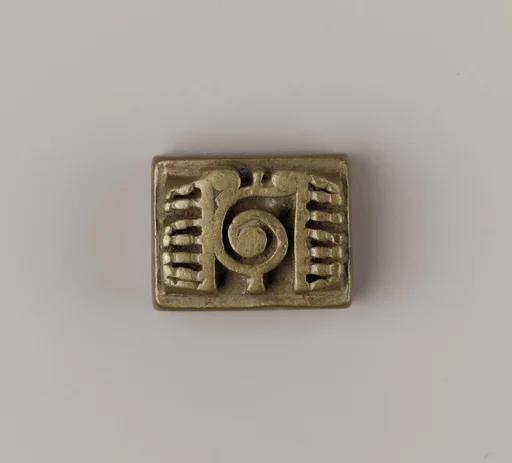
Gold Weight: Geometric
Unknown
16th–17th century · Brass · Arts of Africa, Oceania, and the Americas
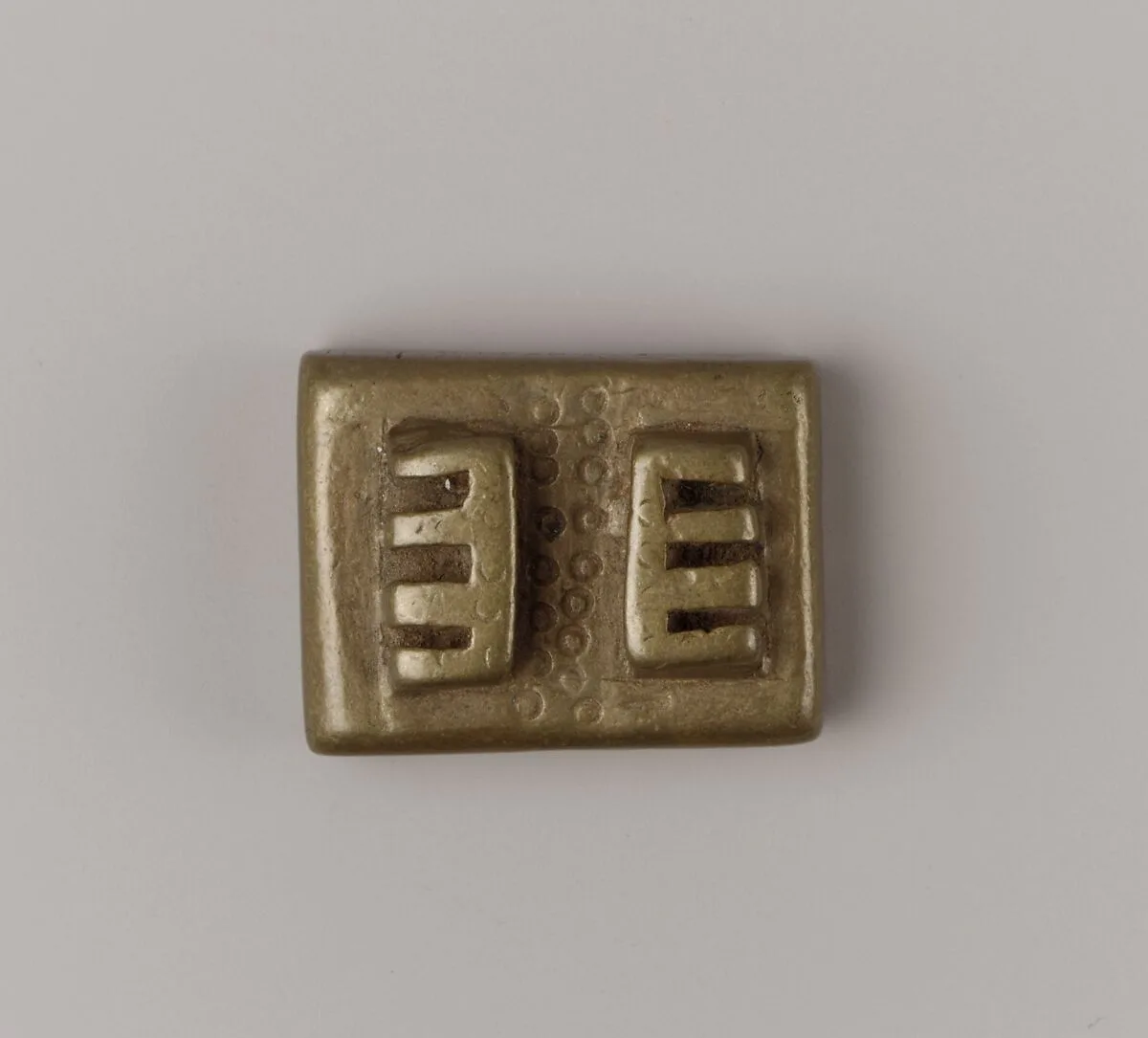
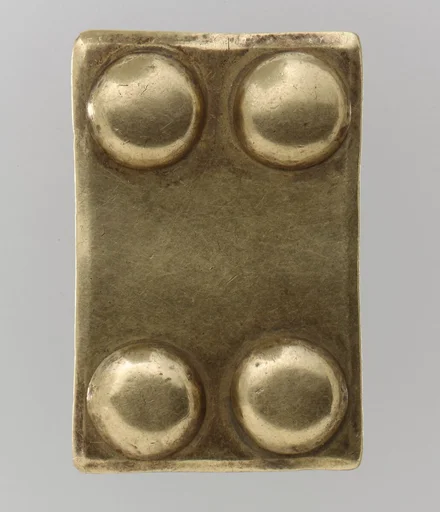
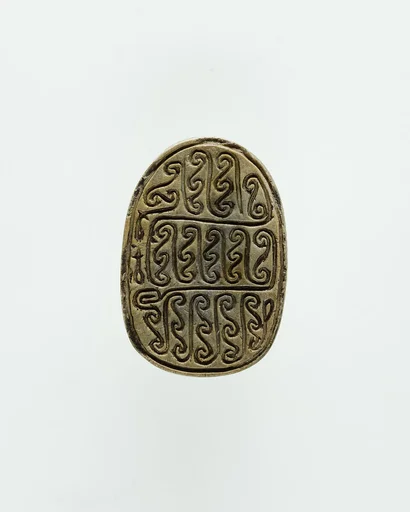
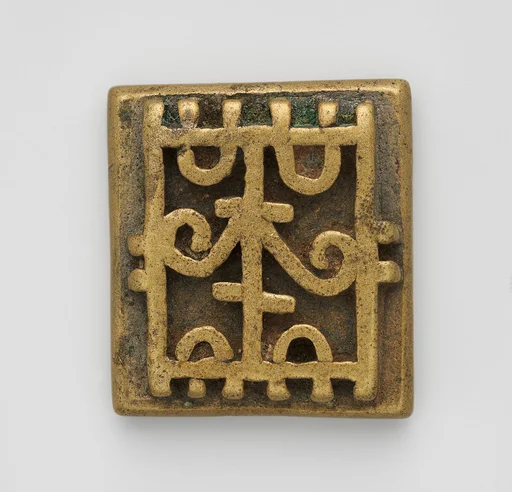
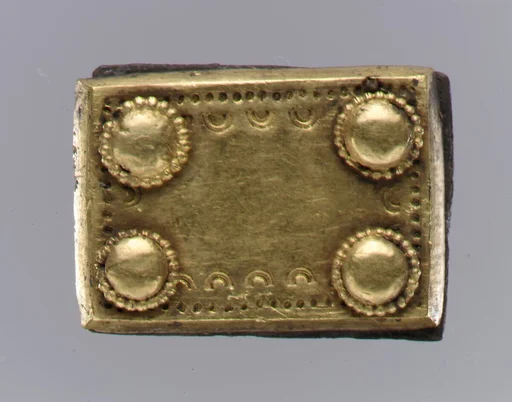
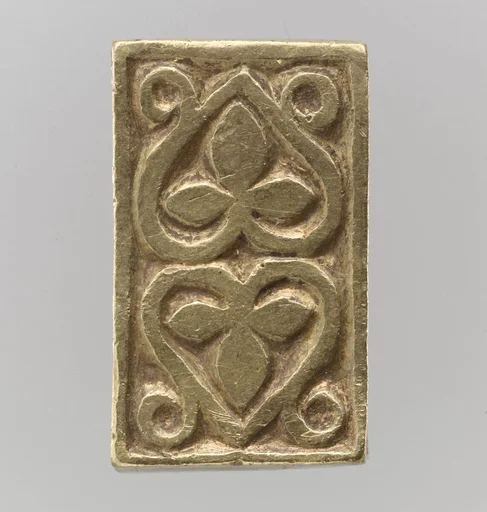
In the fifteenth century, cast Akan gold weights (brass figurines used to measure units of gold dust) were developed in response to the extensive trade in gold mined in Kumasi that was initially transported across Saharan trade routes. Locally, gold was prized for its decorative qualities, status, and because of a strong belief in its inherent power and mystery. The earliest treatment of gold weights was probably in the style seen in these examples—graphic, abstract—as a result of the Islamic influence in the gold trade at this time. This heavy rectangular form has very faint surface designs that were engraved or punched into the metal. Its edges are rounded, indicating extensive human wear. While these miniature artifacts, created as weights, were commonly melted down and recast, historic motifs were valued and constantly reintroduced. Although this example was probably made in the eighteenth or even nineteenth century, its designs are of great longevity.
- Artist
- Unknown
- Date
- 16th–17th century
- Medium
- Brass
- Culture
- Akan peoples
- Department
- Arts of Africa, Oceania, and the Americas
- Credit line
- Gift of Ernst Anspach, 1994