Border Fragment
Unknown
450–175 BCE · Cotton, camelid hair · Arts of Africa, Oceania, and the Americas

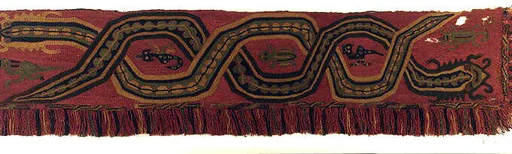
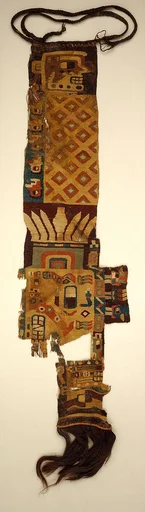
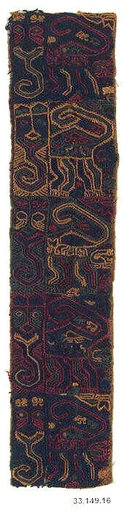
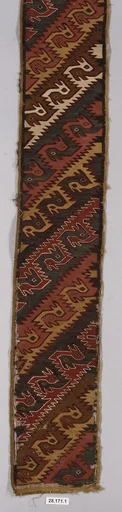
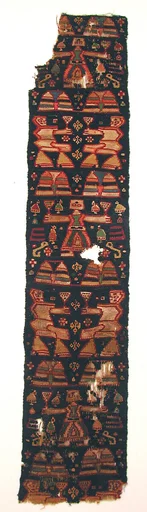
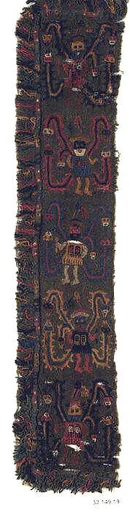
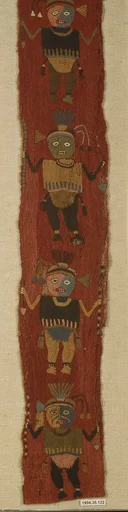
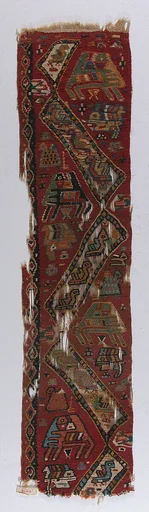
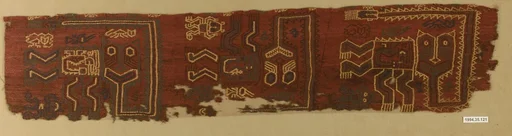
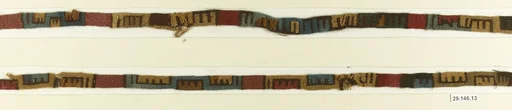
The textiles of ancient Peru were made by a people with an inordinate sensitivity to the complexities of structure, pattern, and color. Fortunately preserved through the centuries by the dry climate of the coastal region where they were interred, the fabrics retain much of this complexity today. Textiles discovered in the necropolis of Wari Kayan on the Paracas Peninsula in the early part of the century are particularly striking. Encompassing a wide range of garment type, they exhibit rich colors imaginatively combined, and compelling designs and imagery. This fragment of a border from an embroidered mantle depicts two backbent figures that alternate position and share but do not alternate color schemes. Thought to represent the same skeletonized figure, they have been variously described as falling, floating, flying, dancing, and drowning.
- Artist
- Unknown
- Date
- 450–175 BCE
- Medium
- Cotton, camelid hair
- Culture
- Paracas
- Department
- Arts of Africa, Oceania, and the Americas
- Credit line
- Bequest of Arthur M. Bullowa, 1993