Bird Pendant
Unknown
1st century BCE–1st century CE · Jade (jadeite) · Arts of Africa, Oceania, and the Americas
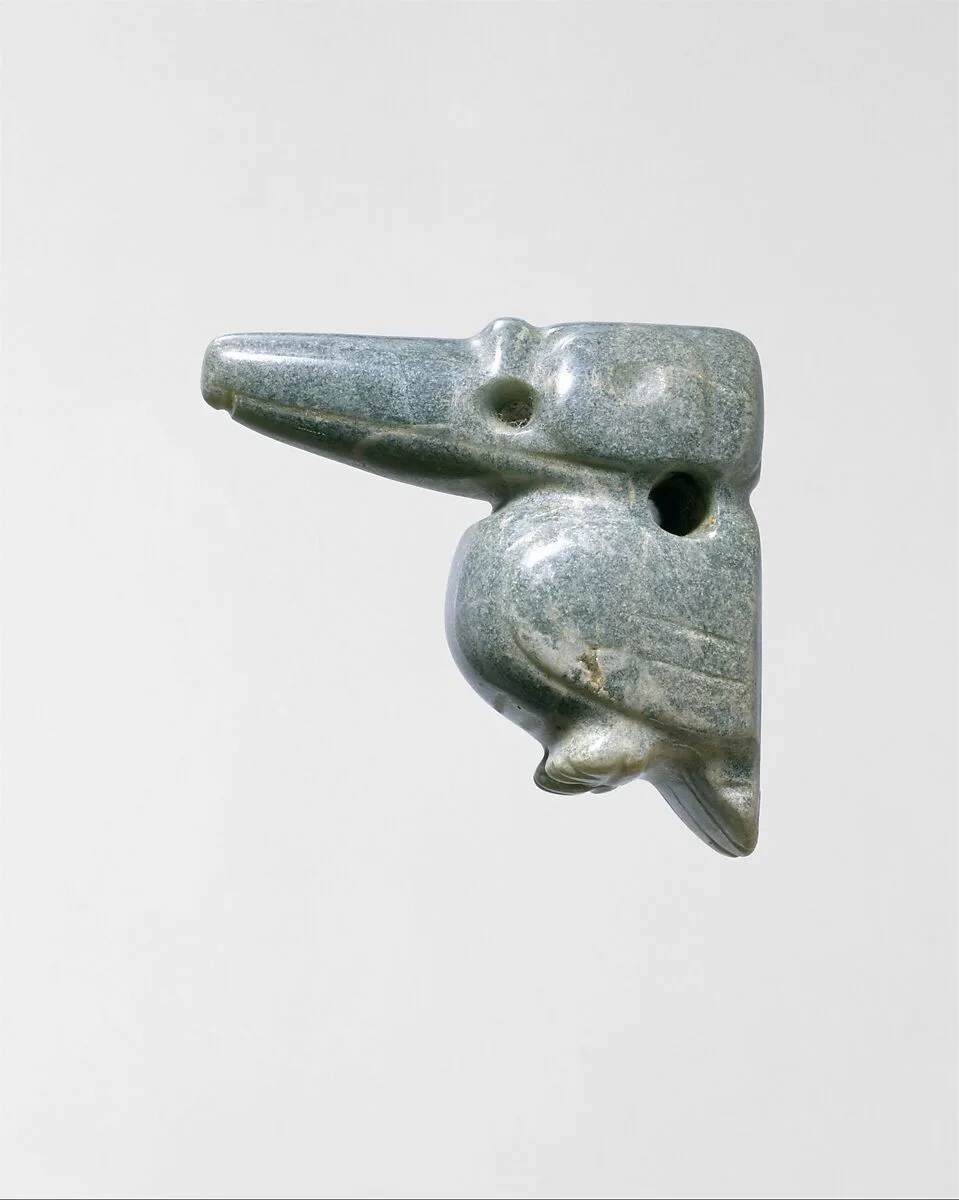
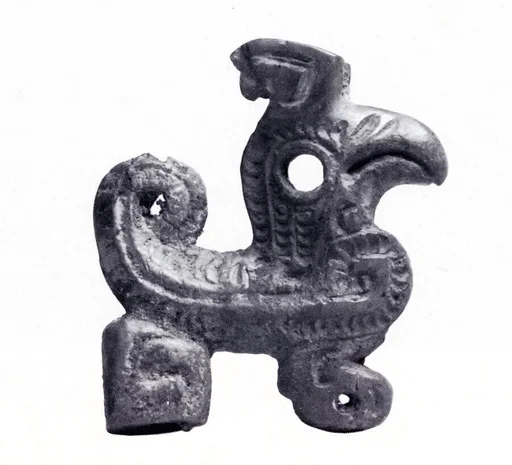
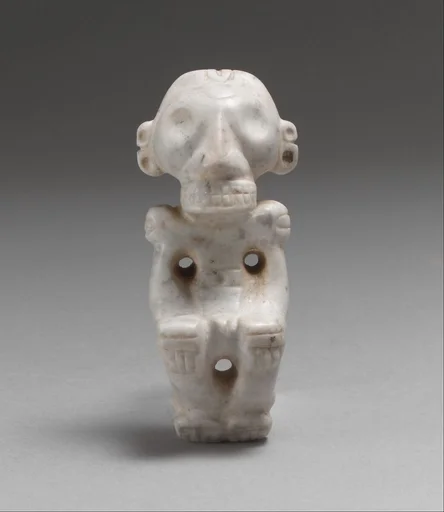
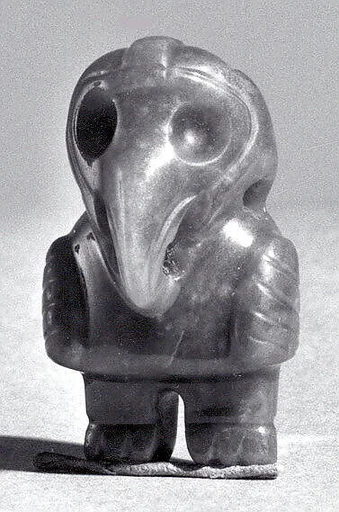
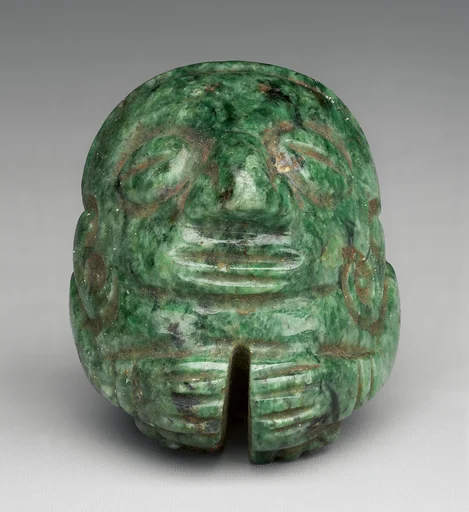
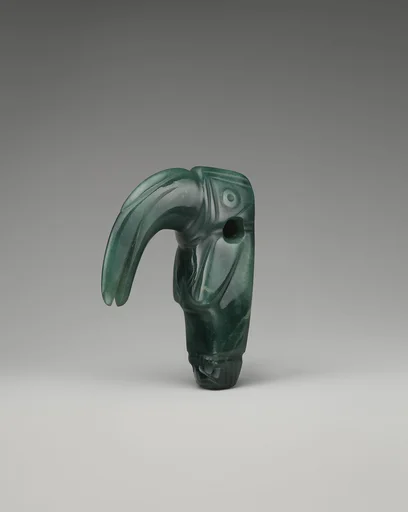
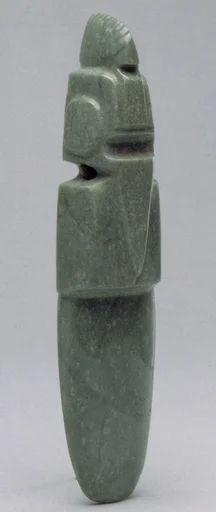
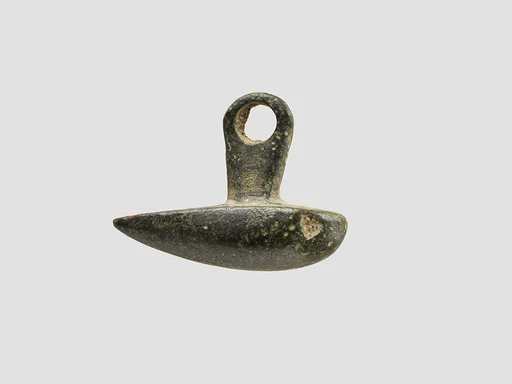
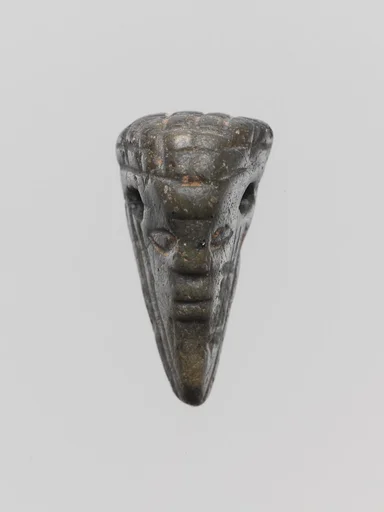
The jade pendants and other ornaments made in the Central American region that is now the country of Costa Rica are among the area's most individual art forms. Archaeological evidence suggests that jade bird-form pendants were made and treasured as early as 500 BCE and remained favorites for hundreds of years. Bird imagery is pervasive throughout this long period, as was the preference for fashioning ornaments out of green-colored stones. Jadeite, which was principally used in Costa Rica, came in many green tonalities, from pale blue-green—as seen here—to intense, almost black greens. This engaging fat bird with a long straight beak is worked almost in profile. Made to be viewed from both sides and suspended through a hole in its neck, it may also have had an additional ornament suspended from its own beak. The pendant is reported to be from Guanacaste Province in northwestern Costa Rica.
- Artist
- Unknown
- Date
- 1st century BCE–1st century CE
- Medium
- Jade (jadeite)
- Culture
- Guanacaste-Nicoya
- Department
- Arts of Africa, Oceania, and the Americas
- Credit line
- Rogers Fund, 1993