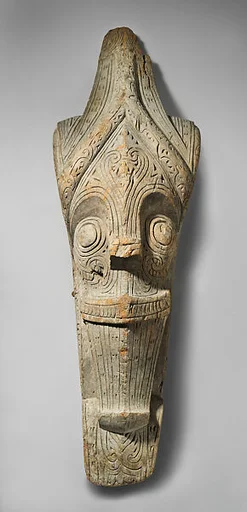
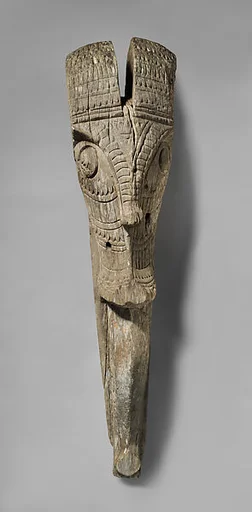
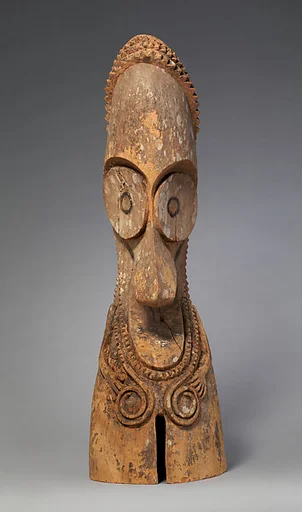
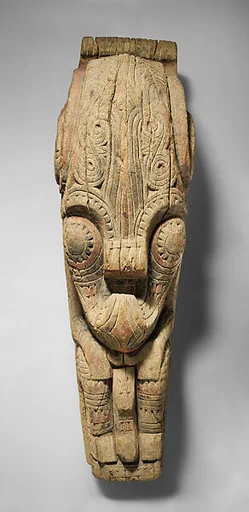
Architectural Ornament (Singa)
Unknown
late 19th–early 20th century · Wood, paint · Arts of Africa, Oceania, and the Americas
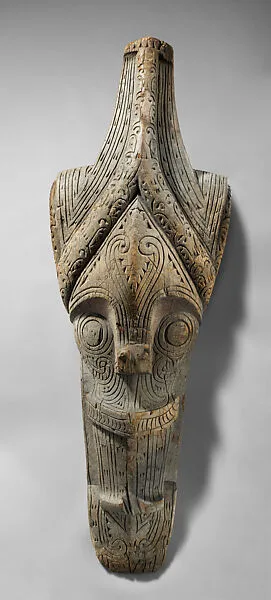
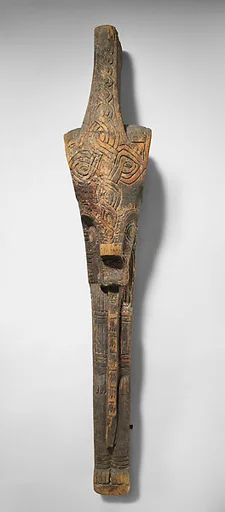
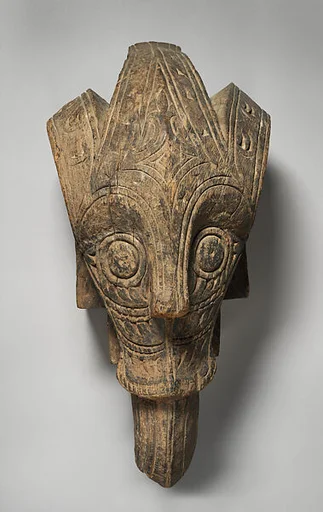
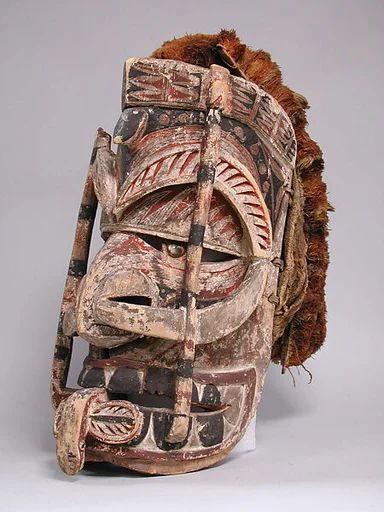
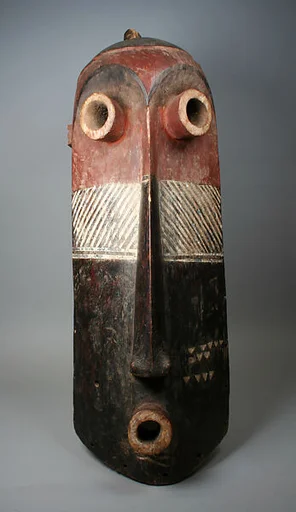
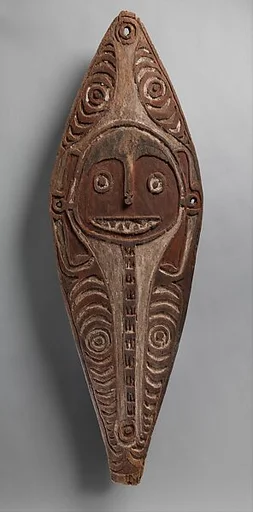
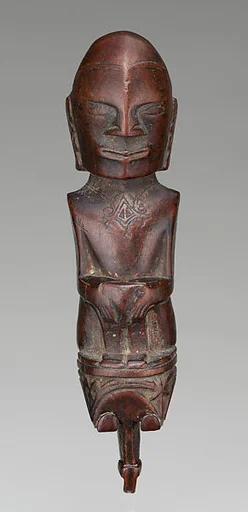
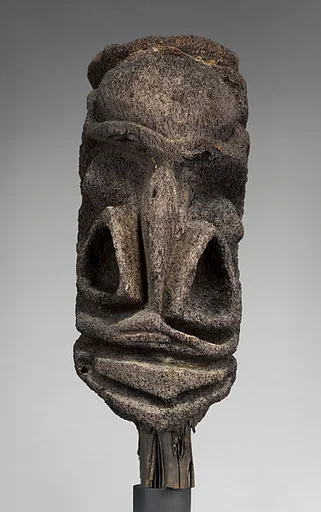
The central image in Toba Batak art is the singa, a supernatural creature whose likeness protects individuals, homes, and communities from malevolent supernatural forces. The name singa derives from the Sanskrit word meaning lion. However, the Toba Batak singa is a fantastic composite that combines features of several different species. Among the defining features of the singa are the three stylized, backward-curving horns that crown the head. Most also have large round eyes, a human-like nose, and a horse-like muzzle with a long protruding tongue that is intended to intimidate supernatural enemies. The singa image occurs on items ranging from finger rings to monumental stone sarcophagi. Some of the most prominent appear on the facades of Toba Batak houses and rice granaries. This large singa head is a facade ornament.
- Artist
- Unknown
- Date
- late 19th–early 20th century
- Medium
- Wood, paint
- Culture
- Toba Batak people
- Department
- Arts of Africa, Oceania, and the Americas
- Credit line
- Gift of Fred and Rita Richman, 1988